How Long Does It Take To Walk Through Manuel Antonio National Park?
A planning guide to walking times in Manuel Antonio National Park: guided pace versus going alone, arrival windows, exit deadlines, and pairing the walk with a boat trip.
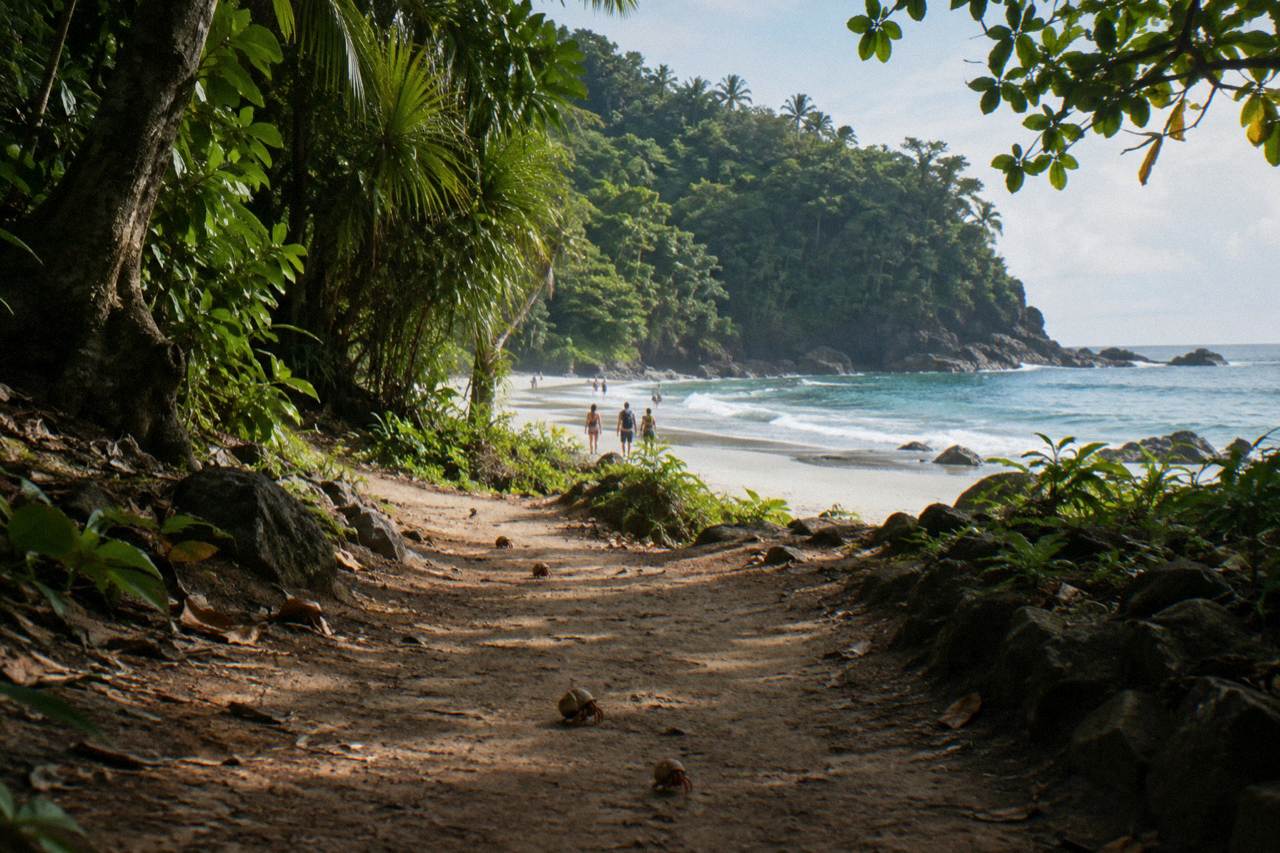
Manuel Antonio National Park is compact, with its main entrance about 7 km east of Quepos, and that compactness is exactly why walking time confuses people. The park closes at 3:00 pm sharp, Wednesday through Monday, and it is closed every Tuesday. A ticket bought through the official SINAC online portal is valid for one entry only, so there is no strolling out for lunch and returning on the same pass. Time, not distance, is the thing to plan.
The walk itself splits into two experiences. Most guided products in the catalogue run about two hours, among them the Manuel Antonio Park Tour and its Amazing Wildlife and Beaches, from $27 per person, rated 4.9 from 1,164 reviews, which finishes with beach time rather than more trail. Visitors who stay on alone after a tour, or skip the guide entirely, typically budget a further hour or two for the beaches and viewpoints. Add the queue at the gate, the walk in from the road, and the exit deadline, and a realistic park visit runs three to four hours door to door.
Plan on two to three hours of actual walking for the main trails, with the park's own operations setting hard edges around that: gates open at 7:00 am, the park closes at 3:00 pm, and it is closed on Tuesdays. A 2-hour guided tour covers the wildlife-rich core; the 4-hour park tour, from $49 per person and rated 4.8 from 4,590 reviews, stretches the same ground across a slower, fuller loop.
The honest answer depends on what "walk through" means to you. A birding or photography walker who stops at every mixed-species flock will stretch two hours of trail into four. A fitness walker who moves steadily and skips the beach stops can be back at the gate in ninety minutes. The official park material describes the sites rather than a fixed route: beaches at Playa Manuel Antonio, Espadilla Sur and Gemelas, viewpoints at Punta Catedral, Punta Serrucho and Puerto Escondido, a seasonal waterfall, and areas of mangrove and lagoon. There is no single circuit everyone walks, which is why tour durations, not trail signs, are the most reliable planning figures available.
One wrinkle matters more than any itinerary: the Punta Catedral trail, the loop around the former island joined to the mainland by a tombolo, is temporarily closed according to the official SINAC park page. Do not build a walking plan around it. The viewpoints at Punta Catedral remain listed among the park's sites, but the trail itself should be treated as unavailable until the official page says otherwise.
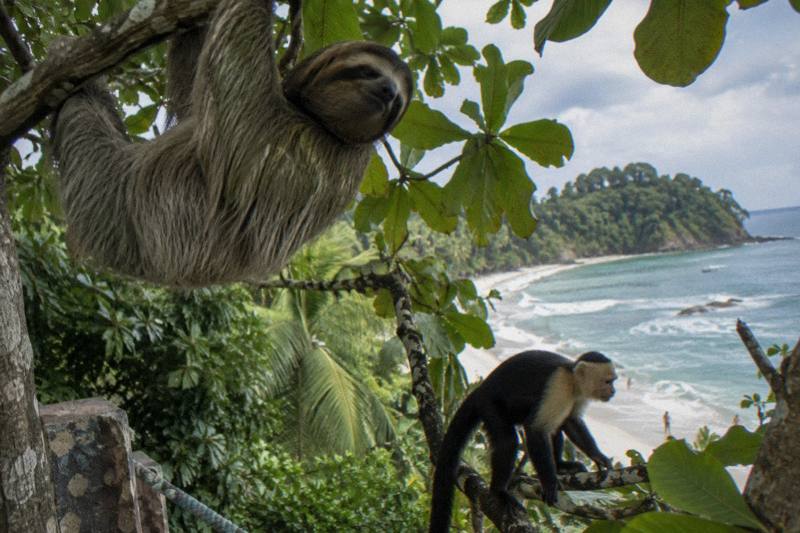
The park's species list explains why walking here is slow, in the best way: roughly 352 bird species, 109 mammals and 346 plants have been recorded, and the titi monkey is the emblem species. Walkers who come only for the cardio miss most of that. A guide with a spotting scope turns a two-hour stroll into a sustained session of finding things, and the difference in what you notice is the single biggest reported gap between guided and unguided visits.
If you are weighing a guided walk against going alone, the deeper comparison, including what a naturalist guide actually adds, sits in do you need a guide for the park. For the broader question of how many days the area deserves, how many days in Manuel Antonio is enough works through the math of combining a park morning with an afternoon on the water.
What Time Should You Arrive At The Park Gates?
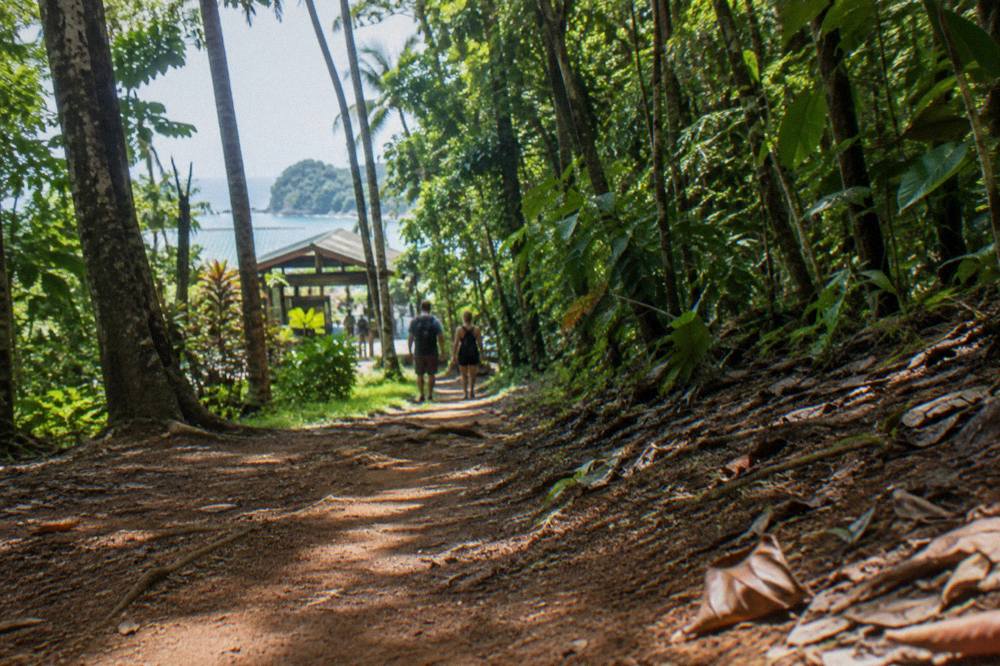
Arrive between 7:00 am and 8:30 am. The park opens at 7:00 am, Wednesday to Monday. Arriving early buys you cooler air, better light for wildlife under the canopy, and a comfortable buffer before the 3:00 pm closure.
Early arrival is not just comfort, it is strategy. Animals are more active in the first hours, and the shade on the forest sections thins out by late morning. The park's own guidance points out that September and October bring fewer visitors, which is the rainy season trade: fewer people on the trails, but afternoon showers that can cut a visit short. The climate record for Quepos shows September and October as two of the wettest months of the year, against a very dry February, so the seasonal logic of going early is doubled in the wet months, when afternoons are the risky half of the day.
Tickets are the other half of arrival planning. They are sold only in advance through the official SINAC online portal, and visitors present an identity document with the ticket; each ticket is valid once. There are no on-site sales, so a same-morning decision to visit can end at the gate. Foreign visitors pay $18.08 including IVA for adults and $5.65 including IVA for children aged 2 to 12, with under-2s free. Several guided tours in the catalogue exclude the park ticket, so read the listing's includes and excludes lines before assuming the price covers entry; the full ticketing picture is laid out in Manuel Antonio National Park tickets.
Time, not just distance, decides which tour combination to book. If the gate deadline of 3:00 pm squeezes your day, a morning walk pairs naturally with an afternoon boat trip, which is the pattern most multi-tour visitors settle into.
How Does A Guided Tour Change Your Walking Time?
A guide slows you down and shortens your doubts at the same time. The 2-hour guided products cover the wildlife core at a stop-and-scope pace, while the 4-Hour Park Tour, Nature Specialist, from $49 per person, rated 4.8 from 4,590 reviews, spreads the same park across a longer, steadier loop with snacks and transport listed. Unguided walkers move faster and see less.
The catalogue's park listings make the comparison easy to read. Beyond the most reviewed park-nature tour, the Manuel Antonio National Park guided tour with entrance-fee options runs 2 to 3 hours from $25 per person, rated 4.8 from 2,229 reviews, with a guide certified by the Costa Rican Tourism Board and an admission option on some tiers. The naturalist-guided version, 4.9 from 1,519 reviews, includes professional pictures taken by your guide and use of a premium high-definition spotting scope, with the entrance fee to be bought in advance unless the option selects it. These are different products, not variations of one: durations, inclusions and departure details differ line by line, and the cheapest tier often excludes the ticket, so the price you compare should always be tour plus entry.
What the guide buys, in time terms, is efficiency of attention. The scope is what changes the walk: wildlife that is invisible to the naked eye becomes the point of it. Two guided hours usually cover less ground than two solo hours, but the guide does the finding.
The beach is the other reason guided time and solo time diverge. The listing for the 2-Hour Wildlife and Beaches Walk explicitly includes beach time to swim, or alternative trails to walk, after the guided portion ends. That structure, walk first, swim after, is the most time-efficient version of a park day: the guide concentrates the finding into two hours, then the ticket's single entry lets you linger on Playa Manuel Antonio, where the park's own material notes snorkeling at the sides and some coral and marine life, before you exit for good.
What Does Two Hours Of Walking Actually Cover?
Two hours comfortably covers the forested corridor between the main entrance and the beaches, with stops at the key viewpoints and time for scope sessions on monkeys, sloths and birds. It does not cover leisurely swimming, a long lunch break (food is restricted to a designated area anyway), or every spur trail at a naturalist's pace. Three hours does.
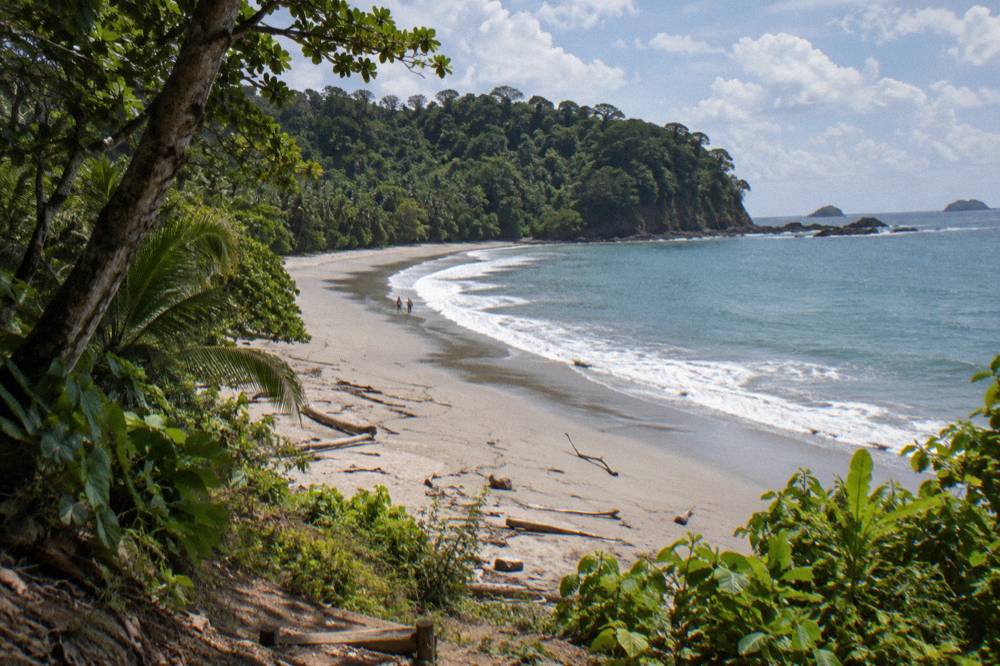
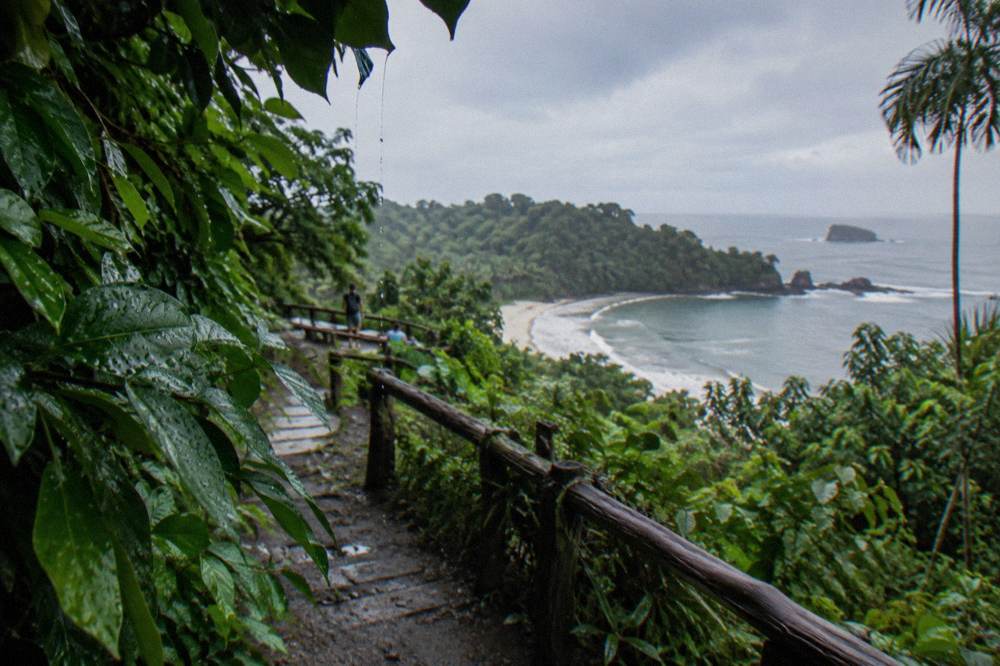
The park's footprint is compact, and its layout funnels everyone along the same productive corridor. Walkers enter near the mangrove and lagoon areas, pass through secondary forest where the titi monkeys and white-faced capuchins are most often reported by guides, and emerge at the beach system: Playa Manuel Antonio, Espadilla Sur and Gemelas, the last of them split in two by a rock formation. The official park page lists drinking-water fountains on the Perezoso trail and on the beach trails, which matters for pacing, since no food or beverages may be brought in beyond the administration's stated conditions.
A practical way to budget the hours:
| Block | What it covers | Time to allow |
|---|---|---|
| Gate queue and ID check | Ticket scan at the entrance, 7 km east of Quepos | 15 to 30 minutes |
| Guided wildlife walk | Forest corridor with scope stops | 2 hours |
| Beach time | Playa Manuel Antonio or Espadilla Sur swim | 45 to 90 minutes |
| Slow exit with photo stops | Viewpoints and final forest stretch | 30 to 45 minutes |
That table lands at roughly three and a half to four and a half hours total, which is why the 4-hour guided products feel generous rather than long: they are built around the park's natural rhythm, not padded. Solo walkers who skip the beach can compress the same visit into under two hours, but the closure time still governs everyone. The guide association at the gate runs guided tours from 7:00 am to 2:00 pm, which tells you the working window the professionals plan around.
For what to carry, and what the park forbids (umbrellas, balls, tents and hammocks are all on the not-allowed list, and soap and shampoo are banned in the showers), see what to bring on a Manuel Antonio tour. Footwear matters for pace too: the official guidance says sandals are not recommended, and a walker in poor shoes loses minutes on every root and wet patch.
Can You Pair The Walk With A Boat Trip On The Same Day?
Yes, and it is the signature move of a Manuel Antonio day. The park's 7:00 am opening leaves the whole afternoon free, and the sailing and catamaran products in the catalogue, from $86 per person, run 3 to 4 hours with meals listed, departing from Marina Pez Vela in Quepos. Walk in the morning, sail in the afternoon, and the timing works.
The pairing works because of the closure, oddly enough. Since the park empties everyone out by 3:00 pm, the afternoon is a natural gap, and the marina is a short drive from the park road. The sailing trip with lunch and open bar, from $95 per person, rated 4.7 from 653 reviews, runs 3 hours 30 minutes with hotel pickup in the Quepos and Manuel Antonio area listed. The Sea Quest catamaran, rated 5.0 from 231 reviews, also from $95 per person, runs 3 to 4 hours with a meal on board and round-trip transport listed. The all-inclusive catamaran, 4.6 from 636 reviews, from $86 per person, carries an onboard naturalist guide, which makes it a neat bookend to a morning park walk: forest guide in the morning, marine guide in the afternoon.
For a different half-day shape, the Damas Island mangrove world sits inland of all this. The mangrove boat tour with lunch, 4.9 from 2,910 reviews, from $75 per person, runs 4 hours with a meal listed, and a shorter 2-hour mangrove wildlife boat, from $65 per person, 4.9 from 198 reviews, fits between a park morning and dinner. The point for time planners: the park walk is the only fixed-deadline item of the day, so schedule it first and let everything else flex around it.
Sunset is the last scheduling fact worth knowing. Sunset runs about 5:10 pm in November to about 6:00 pm in July, moving through the year, so an afternoon catamaran that leaves the marina around 2:00 pm will be on the water for it. Sea temperature barely moves, about 27.7 to 29.4 degrees C across the year, so the swim stop is a year-round option and not a seasonal gamble.
How Do Seasons And Crowds Change Your Walking Pace?
Crowds, not weather, are the main drag on pace in the dry season, December to April, when the single Quepos-to-Manuel-Antonio road gets very busy and gate lines lengthen. In the green season, May to November, the park reports fewer visitors in September and October, and afternoon rain, not congestion, becomes the thing your schedule dodges. Both seasons reward the same move: enter at opening.
The seasonal rainfall pattern frames the risk cleanly. Quepos is at its driest in the first months of the year, with February among the driest, while the wettest stretch runs from June through October. Rain in the afternoon is the typical green-season pattern, which is why morning walks dominate every sensible itinerary. The national weather service's current outlook expects the Central Pacific dry season to establish itself between mid and late November, so travelers booking into December are, on the forecast as it stands, arriving at the start of the dry window.
Season also changes what a slow walk is for. Humpback whales are reported off Quepos by the southern group from roughly July to early November, peaking August to September, and by the northern group from December to March or April, never guaranteed. Dolphins are reported year-round. None of that is visible from the park's trails, but it reshapes the day around the walk: in whale months, the afternoon boat is the headline and the park walk the warm-up; in the deep dry season, the beaches inside the park take over that role.
| Season | Gate crowds | Rain risk | Best walking window |
|---|---|---|---|
| Dry, December to April | Highest, longest lines | Low | 7:00 to 9:00 am entry |
| Green, May to August | Moderate | Afternoon showers | 7:00 to 8:00 am entry |
| Deep green, September to October | Fewest visitors | High, afternoon storms | Opening, plan to exit by early afternoon |
The one fixed error to avoid is Tuesday. The park is closed every Tuesday as a standing schedule, confirmed on the official SINAC pages, and no listing or operator can route around it. Anyone planning a Tuesday arrival should flip the day: boat, mangrove or chocolate-and-coffee tasting (the chocolate, coffee and sugar tour runs 2 hours from $59 per person, rated 5 from 1,161 reviews) on the Tuesday, park on the Wednesday. The full calendar detail, including the guide office's afternoon and night-tour slots, sits in park hours and closures.
The last planning note is transport. The main entrance sits 7 km east of Quepos with no vehicle parking inside the park, and the single road in gets very busy in high season, which can quietly eat 30 to 45 minutes of your morning. Budget for it the way you budget for the gate line, and the two-to-three-hour walk stays exactly what it should be: the best-scheduled small hike on the Pacific coast. Everything on Manuel Antonio Costa Rica Tours that runs in and around the park is organized around these same hours, which is why the tours depart when they do.
Common Questions About Walking Through Manuel Antonio National Park
How long does it take to walk through Manuel Antonio national park?
Most visitors spend two to three hours of walking on the main trails, with guided tours in the catalogue running 2 to 3 hours and the fuller 4-hour tour covering the same ground at a slower pace. Including the gate queue, beach time and a relaxed exit, budget three to four and a half hours door to door.
Can you do Manuel Antonio National Park without a guide?
Yes, a ticket bought through the official SINAC online portal is all the law requires. Guides, however, are where the reported value sits: a naturalist with a spotting scope finds wildlife most solo walkers walk straight past, and the guided listings include photos of what the group spots.
Is the Punta Catedral trail open?
The Punta Catedral trail is temporarily closed according to the official SINAC park page. Build your walk around the beach and viewpoint trails instead, and check the official page before your visit in case the status changes.
What happens if it rains during the walk?
You keep walking, usually. Green-season rain in Quepos is heaviest from June through October and typically arrives in the afternoons, which is why the standard advice is to enter at the 7:00 am opening. Wear proper footwear; the park's own guidance says sandals are not recommended.
Can you leave the park and come back on the same ticket?
No. Tickets are sold only online in advance, shown with an identity document, and each ticket is valid for a single entry. Plan your beach time and food stops inside the park, since re-entry means buying another ticket.