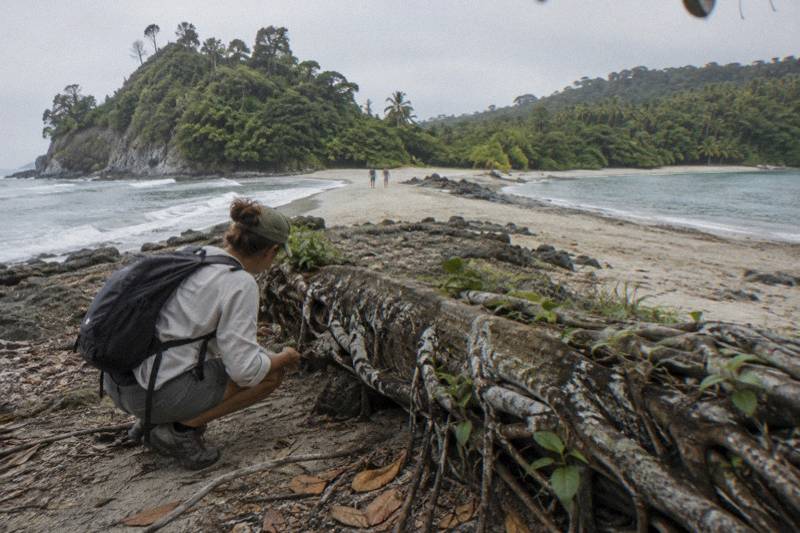
Can You See Sloths In Manuel Antonio National Park?
Yes, sloths live in Manuel Antonio National Park, and guides spot them far more often than solo walkers. Here is where to look, when to go, and which tour raises your odds.
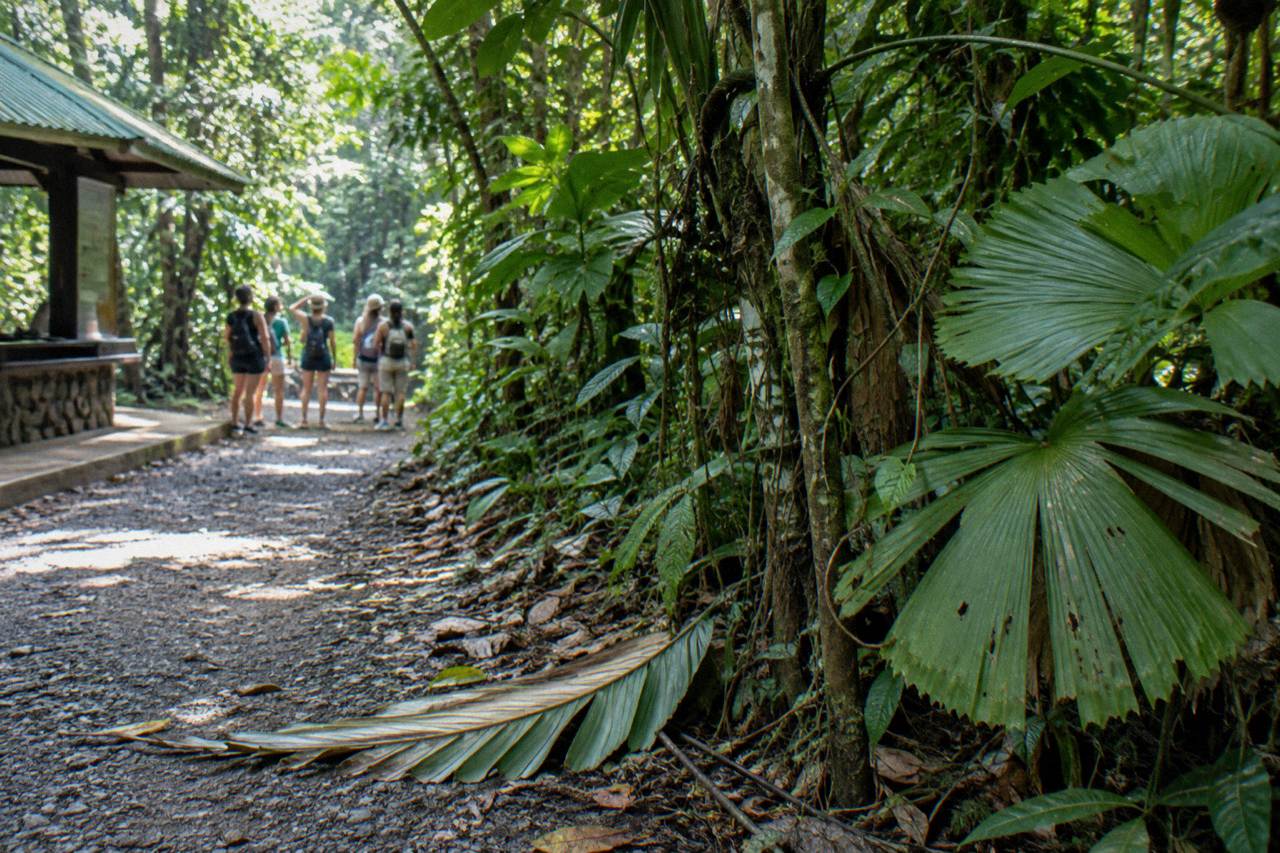
Sloths are one of the main reasons people buy a ticket to Manuel Antonio National Park in the first place, and the park's own official records back the instinct: the species list counts 109 mammals, and both two-toed and three-toed sloths are routinely reported by guides and wildlife pages covering the park. The catch is that a sloth at rest looks exactly like a knot of dry leaves about 20 meters up a cecropia tree. Walkers pass them constantly. This article lays out what the honest odds look like, where in the park the sightings cluster, why a naturalist guide changes the math, what the sanctuary alternative offers when the forest stays quiet, and how the park's own rules shape the whole experience.
Yes, sloths live inside the park and visitors do see them, but sightings are a matter of odds and skill rather than certainty. Official park records list sloths among the park's 109 recorded mammal species, and guides report finding them on regular tours. Nobody can promise a sighting on any given day, because sloths move little and camouflage well.
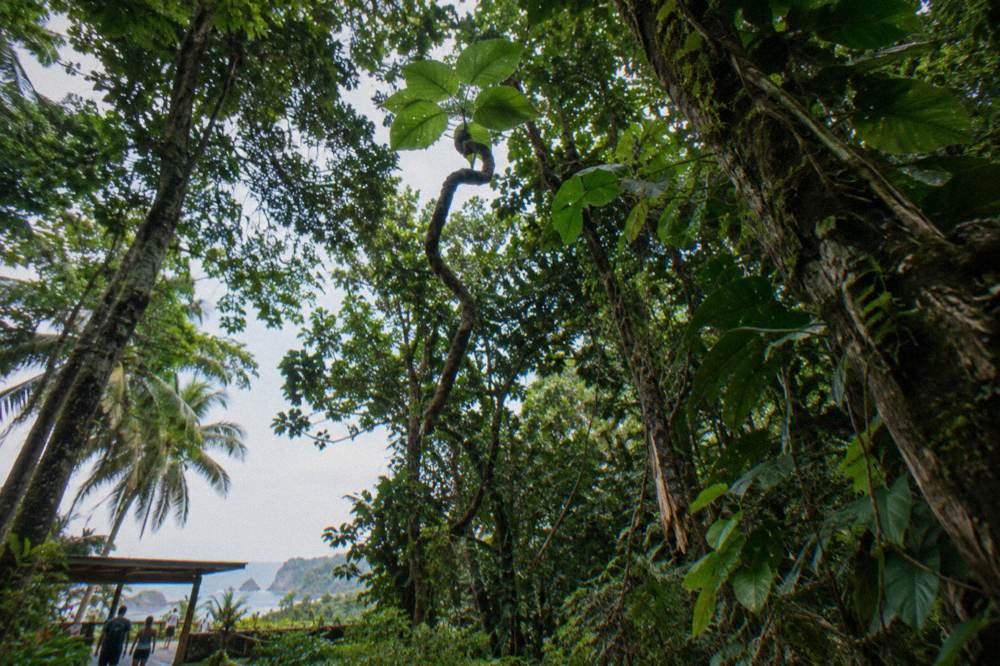
The park is small by national park standards, which works in your favor. Sloths have relatively compact home ranges, and the forest here is young and dense in places, with the kind of secondary growth and cecropia trees that Hoffmann's two-toed sloths and brown-throated three-toed sloths both use. The wildlife pages that track the park, including guides updated as recently as October 2026, describe sloths and monkeys as routinely sighted on guided walks inside the park. That word, routinely, belongs to guided walks specifically. Solo walkers without optics report far more misses.
Two things shape your realistic chances. The first is time in the forest: a two-hour walk covers only a fraction of the trail network, and the people who see sloths tend to be the people standing still while a guide scans the canopy. The second is eyes. A sloth's fur grows algae that match the green-gray of the canopy, and from the ground an unmoving sloth reads as a termite nest or a clump of dead bromeliads. Guides find them because they know the favorite trees and because they spend every working day looking at the same canopy.
That is the honest framing. Sloths are in the park, guided groups report them regularly though no day is guaranteed, and the single biggest lever you control is whether someone who knows the trees is doing the scanning for you. The Manuel Antonio park nature guided tour, rated 4.8 from 4,590 reviews and from $49 per person, exists precisely for this job, and it carries a spotting scope in its listed inclusions. Its four-hour format also gives the guide more canopy to work with than the shorter walks, which matters when the first hour stays quiet.
If you want to compare options in one place, the wildlife guide for Manuel Antonio National Park breaks down the full species picture, and the broader day tours overview covers everything else running in the area.
Where In The Park Sloths Actually Show Up
Sloth sightings cluster along the slow, forested corridors rather than the open beach stretches. The Perezoso trail is named for the animal itself, Perezoso meaning sloth in Spanish, and the wooded stretches between the main entrance and the beaches are where guides spend their scanning time. The mangrove and secondary growth areas also produce sightings.
The trail named Perezoso is the strongest signal in the park's own geography. A park does not name a trail after an animal by accident, and the Perezoso trail follows the kind of shaded, interconnected canopy corridor where three-toed sloths feed and rest. The park's official materials describe roughly 18 hectares of mangrove inside the boundary plus a 14 hectare lagoon, and mangrove edges are another place guides stop and look upward for long stretches. None of this guarantees anything on any given morning, but it tells you where the odds concentrate.
Beach time works against sloth spotting. Playa Manuel Antonio and Playa Espadilla Sur are the park's signature scenes, and they deserve their time, but the canopy above the sand is thinner and the human traffic heavier. Sloths avoid noise and movement when they can. If your priority is a sloth, budget the first half of your visit for the wooded trails and save the swim for after, when the midday heat has the park's mammals resting anyway. The reverse order, beach first and forest later, is the most common planning mistake sloth-focused visitors make, because by early afternoon the guided groups have thinned and the animals have settled into deep cover.
A practical note on the trail network: the official SINAC page for the park states that the Punta Catedral trail is temporarily closed, so do not build a plan around the viewpoints loop. Check the park's official page or your guide's current knowledge before you go, because closures change without much publicity. The official SINAC Manuel Antonio page is the authoritative source for hours, tickets and current trail status. If your heart was set on that loop, the park's other sites, including the Gemelas and Puerto Escondido viewpoints and the seasonal waterfall listed on the official page, still fill a full morning.
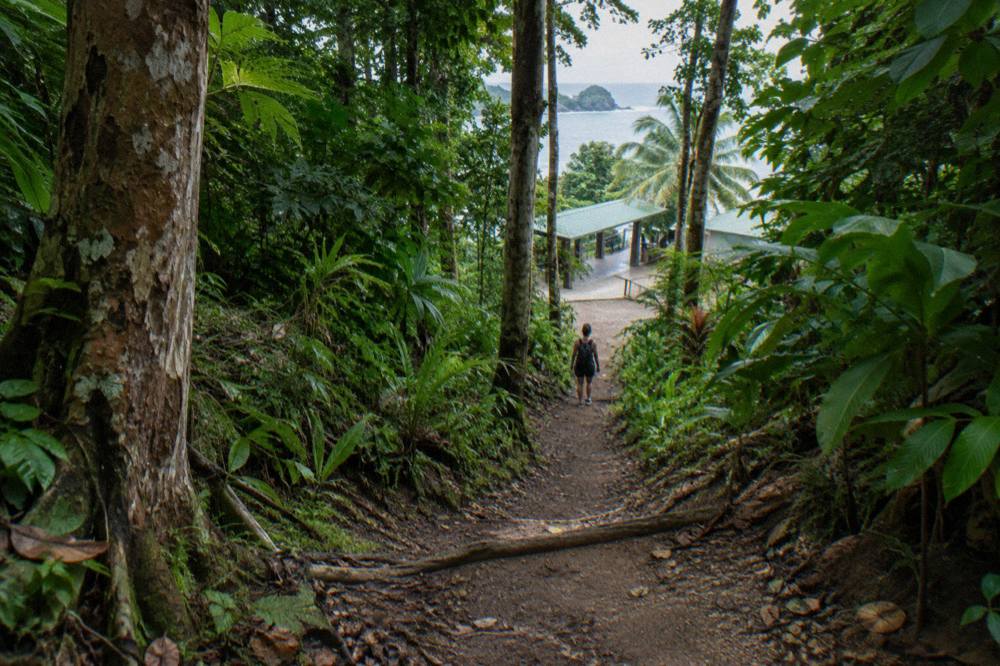
The difference between a good sloth day and a miss is often twenty minutes of standing still in the right corridor while a naturalist works a spotting scope across the canopy. That is a skill, and it is worth paying for.
Why A Guide Spots Sloths You Would Walk Past
A trained guide finds sloths because they combine three things a visitor cannot assemble in a morning: knowledge of the specific trees sloths prefer, daily practice scanning the same canopy, and a high-definition spotting scope that turns a smudge of fur into a face. Guided groups report sightings far more consistently than solo walkers.
Sloths spend most of a day immobile. A guide who walks the park daily knows which cecropia (guarumo) trees have been feeding stations recently, knows the typical height and posture, and, just as useful, knows the other guides. Naturalists in Manuel Antonio radio one another, in effect, when a three-toed sloth with a baby is hanging over the Perezoso trail. A solo walker has none of that network.
The photography point matters too. Several listings include digiscoping, meaning the guide fits a phone to the scope and captures images of the wildlife found, which with a sloth 20 meters up is the only realistic way you leave with a usable photo. Your own phone will render a greenish smudge. The site's park listings vary in what they bundle, so check what each includes before choosing: the 2-hour wildlife and beaches walk from $27 per person, rated 4.9 from 1,164 reviews, lists an HD spotting scope, HD photos and videos of the wildlife found, and a certified local guide, with beach time or further trails after the walk. The ticket-included option from $23 per person, rated 4.8 from 590 reviews, folds the entrance fee into one purchase.
There is a longer discussion of the guided-versus-solo question in whether you need a guide for the park, but the short version as it relates to sloths: the guide is not selling you the forest, which anyone can walk, they are selling you the finding. If sloths are the point of your visit, that distinction is the whole purchase.
The naturalist-guided park tour from $25 per person, rated 4.9 from 1,519 reviews, lists a naturalist guide, a premium high-definition spotting scope and professional pictures taken by your guide among its inclusions, with the entrance fee to be purchased in advance unless an option includes it. Whichever walk you pick, the mechanism is the same: someone whose full-time job is reading this specific canopy, with optics your day bag does not contain.
Best Time Of Day And Season For Sloth Sightings
Go early. The park opens Wednesday to Monday at 7:00 am and closes at 3:00 pm, closed every Tuesday, and the first hours bring cooler air, more active wildlife and thinner crowds. Sloths are most visible mid-morning when they move to feed, and September and October bring the fewest visitors of the year.
The opening-hour logic is simple. Sloths are not strictly nocturnal or diurnal, both species shift activity with temperature, but the cool early hours are when the canopy's other animals are moving, and movement is what draws a guide's eye upward in the first place. A howler monkey crashing through the cecropias, or a troop of titis crossing overhead, makes a guide stop and scan, and a scanning guide is how sloths get found. By late morning the park's human traffic builds sharply on the single road in from Quepos, and wildlife settles deeper into cover.
The Tuesday closure deserves emphasis because it catches people out. The official SINAC page confirms the park is closed every Tuesday on a permanent schedule, and tickets are sold only through the official online portal at serviciosenlinea.sinac.go.cr, with no on-site sales. Foreign visitors pay $18.08 per adult including IVA and $5.65 per child aged 2 to 12, under 2 free, and the ticket is valid once with your identity document. Buying at 6:45 am on arrival is not an option.
Seasonally, the official park guidance notes that September and October see fewer visitors, which is the rainy season. Rain does not bother sloths in the slightest; they live in it. The trade-off is your comfort and trail conditions, not wildlife absence. The green season, roughly May to November, keeps the canopy lush and the crowds down, while the dry season, roughly December to April, delivers reliable weather at the cost of peak crowds.
| Factor | Better for sloths | Why |
|---|---|---|
| Time of day | 7:00 to 9:30 am | Cooler, animals moving, guides scanning, fewer people |
| Day of week | Any day but Tuesday | Park closed every Tuesday |
| Season | Green season, especially Sep to Oct | Fewest visitors per official park guidance; lush canopy |
| Trail type | Forested corridors such as Perezoso | Named for sloths; closed canopy sloths use |
| Group type | Guided walk with spotting scope | Sightings are consistently reported by guided groups |
One honest caveat on the season question: no operator or official body publishes sighting rates. What can be said is structural. Sloths are resident, not migratory. They do not leave the park in any month. The variable is how easily a human finds them, and that is a function of guide quality, timing and how long you spend looking up. The national weather service's seasonal outlook for late 2026 points to the dry season establishing in the Central Pacific between mid and late November, so a December or January visit pairs good weather with the resident sloths, at the price of sharing the trails with more people.
The Sloth And Primate Sanctuary Alternative
If a wild sighting is the goal but not a requirement, the Kids Saving The Rainforest re-wilding center near Naranjito offers close, reliable viewing of sloths and primates in rescue care, from $70 per person over about 2 hours. It is a different experience from the park: enclosed, educational, and immune to the camouflage problem.
The sanctuary listing, rated 4.9 from 292 reviews, includes snacks and close access to the sanctuary animals, with pickup and drop-off available at an extra $5 per person. It is a rescue and re-wilding operation, which means the sloths you see are individuals being rehabilitated or permanent residents that cannot be released. You will stand near them, not 20 meters below them, and a guide will explain each animal's story. For families with small children, photographers with real cameras, or anyone whose mobility makes trail walking hard, this is the dependable option, and there is nothing wrong with choosing dependability.
The two experiences answer different questions, and many visitors do both across a week. The park answers the wild question: a sloth that chose its own tree, found by skill. The sanctuary answers the seeing question: an animal at arm's reach with context you cannot get from a forest floor. If your trip allows only one and a genuine wild sighting is the memory you are chasing, the park with a guide is the play. If you are traveling with a five-year-old whose patience expires after forty minutes, the sanctuary wins.
The park's own rules shape how any wild viewing goes, and they are strict in ways that protect exactly the animals you came for. No feeding of animals, no food or beverages carried in beyond the designated area, no pets, and no intrusive gear. A good guide operates well inside these rules, because the rules and the guide's method are the same thing: quiet, patient, at a distance.
What The Park Rules Mean For Sloth Watching
The official rules ban feeding animals, carrying food and beverages, pets, and intrusive gear, which keeps wildlife behaving naturally and keeps sloths where guides can find them. Tickets are online-only, valid once, shown with your identity document, and the park is open 7:00 am to 3:00 pm Wednesday to Monday.
These rules are not fine print; they are why Manuel Antonio still delivers wildlife in a park that receives intense visitation. The ban on feeding matters most for sloths specifically, because a fed animal changes its behavior and its range, and sloths that associate humans with food stop behaving like the animals guides have learned to find. The manzanillo tree on the beach is toxic, per the official park page, one more reason the guided interpretation earns its fee. Sandals are not recommended footwear, per the same page, and the drinking-water fountains sit on the Perezoso vehicle trail and the beach trails, which is worth knowing since you cannot carry beverages in.
There are no on-site sales at all. You buy through the official portal, present the ticket with your identity document, and the ticket works once. Several listings on this site exclude the park ticket, including the 2-hour-30-minute guided tour with ticket option from $27 per person, rated 4.8 from 631 reviews, whose exclusions state the entrance fee must be bought online in advance. Only listings whose title or inclusions say the ticket is included, such as the ticket-included guided tour option from $23 per person, rated 4.8 from 590 reviews, fold that purchase in. Read the listing, not the assumption.
Night walks are a separate category worth a sentence, because sloths are not the target there but other nocturnal life is. Most bookable night walks run on private reserves, while the park's own guide office runs night tours only Wednesday to Friday in the November to April season; the listings carry several, including a naturalist-led night walk from $55 per person, rated 4.9 from 336 reviews, with reserve entrance and flashlights included. If your question is strictly about sloths, daylight in the park remains the answer. There is a fuller rundown in the night tours guide if the dark-side of the forest interests you too.
Planning the practical side well makes the wildlife side easier. The Quepos climate record shows the wettest months are September and October at over 500 mm each, with the driest months January through March, so pack and schedule around rain rather than around wildlife calendars. Sloths do not read the rainfall table.
Putting it together: buy the ticket online for a non-Tuesday, arrive for 7:00 am, walk the forested corridors with a guide carrying a scope, budget real standing-still time, and keep the sanctuary in reserve. That is the highest-odds sloth plan this area supports, and Manuel Antonio Costa Rica Tours keeps the full set of walks that run it.
Common Questions About Sloths In Manuel Antonio National Park
Can You See Sloths In Manuel Antonio National Park?
Yes. Sloths are resident inside the park year-round and are routinely reported by guided tours, though no sighting can be promised on any given day. A guided walk with a spotting scope raises your odds substantially.
Is a guide really necessary to see a sloth?
Not strictly, but the difference is large. Guides know the favored trees, scan the canopy professionally every day, and carry spotting scopes. Most consistent sightings reported in the park come from guided groups.
When is the best time of day to look for sloths?
Arrive for the 7:00 am opening. Cooler early hours mean more wildlife movement, which draws guides' eyes upward, and crowds stay thinner before mid-morning.
Does the park close on any day?
Yes. The park is closed every Tuesday and open 7:00 am to 3:00 pm Wednesday to Monday, per the official SINAC page. Tickets are sold only online in advance.
What if we do not see a sloth in the park?
The Kids Saving The Rainforest re-wilding center offers close, reliable viewing of sloths and primates in rescue care, from $70 per person over about 2 hours, as a dependable complement to the wild experience.