Manuel Antonio National Park Wildlife: Sloths, Monkeys And Honest Odds
Manuel Antonio National Park is small, busy and absurdly dense with animals. This guide separates the wildlife almost every visitor reports from the sightings that depend on season, luck and a good guide with a scope.
Short answer
The park records about 352 bird species, 109 mammals and 346 plants. Sloths, white-faced capuchins, howler monkeys and titi monkeys are commonly reported on guided walks. A certified guide with a spotting scope from about $25 per person sharply improves the odds.
Manuel Antonio National Park packs about 352 recorded bird species, 109 mammals and 346 plants into one of the smallest national park territories in Costa Rica, and that ratio is the entire reason the place has a global reputation. The park sits 7 km east of Quepos on a hillside that drops straight into the Pacific, so a single morning walk can move from deep secondary forest to mangrove to beach in under two hours, and each band of habitat carries its own animals. What trips most visitors up is not whether wildlife exists here, it is how much of it is invisible without help. That is the honest gap this guide closes: what is common, what is luck, and what a guide with a spotting scope actually changes.
The most reviewed way to close that gap is the park nature guided tour with a nature specialist, rated 4.8 from 4,590 reviews and priced from $49 per person, which runs four hours and includes a spotting scope, snacks and an air-conditioned vehicle. It is the featured listing on this site for good reason: a scope turns a green wall of leaves into a face. There are cheaper ways in and quieter ways in, but every serious answer to "what will we see" starts with who is looking with you.
What Wildlife Lives In Manuel Antonio National Park?
The park's own species records list about 352 bird species, 109 mammal species and 346 plant species inside its boundaries, an unusually high count for a park this size, and the emblem species is the titi monkey, the endangered squirrel monkey. Those numbers come from the official park inventory rather than tour marketing, and they explain why a two-hour walk can feel crowded with life even on a busy Tuesday-adjacent morning. The mammal list runs from the three monkey species visitors actually meet, capuchins, howlers and titis, down to two-toed and three-toed sloths, agoutis, white-nosed coatis, anteaters, bats and, far more rarely, cats. The bird list spans toucans, trogons, motmots, hawks and a long roll of hummingbirds, while reptiles include basilisks, iguanas, and both eyelash pit vipers and boa constrictors for those with sharp-eyed guides.
None of that guarantees a sighting. What the counts do guarantee is density: with 109 mammal species compressed into a few square kilometers of forest between Quepos and the beach trail, the odds of crossing several of them on any given morning are simply better than almost anywhere else on the Central Pacific coast. Sloths and monkeys are the headline acts because they are diurnal, slow or loud, and largely unbothered by people.
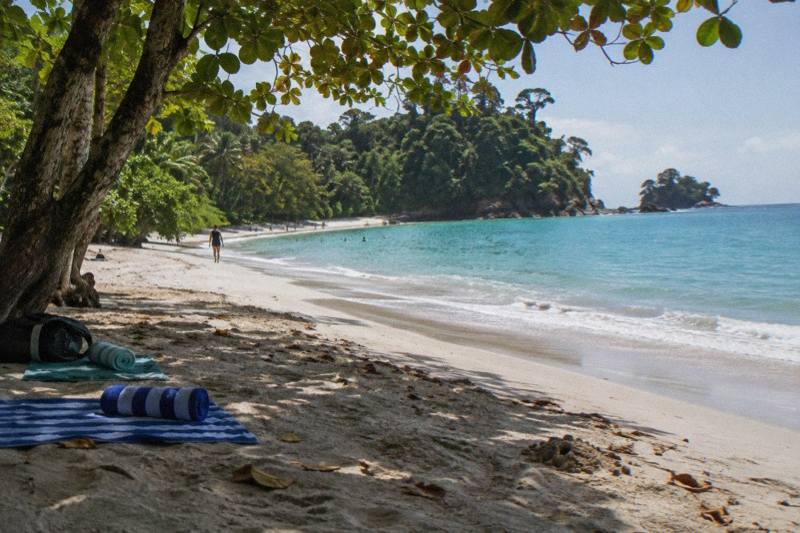
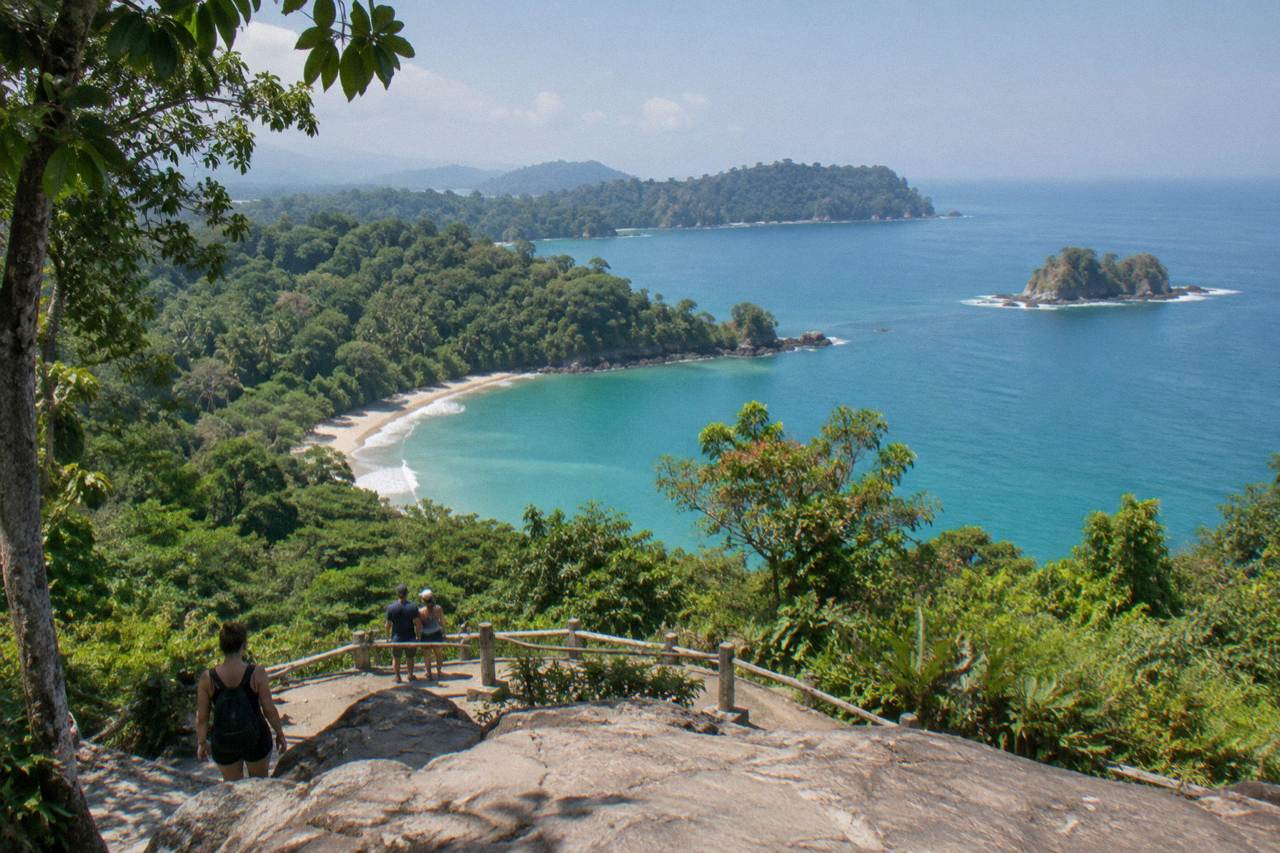
Habitat variety does a lot of the work. The park holds about 18 hectares of mangrove in red, pinuela and gentleman species, a 14-hectare lagoon, three beaches inside the boundary and a tombolo that connects the former island of Punta Catedral to the mainland. Each of those bands feeds different mouths. The mangrove edge is where herons and kingfishers work, the beaches carry ghost crabs and the toxic manzanillo tree the park warns about, and the canopy over the main trail is where the monkey troops route their day. For a wider picture of the trails and how they are walked, see the park trails guide.
| Group | Recorded in the park | Realistic on a day visit |
|---|---|---|
| Monkeys | Capuchin, howler, titi (squirrel) | Commonly reported on guided walks |
| Sloths | Two-toed and three-toed | Commonly reported, high in canopy |
| Birds | About 352 species | A handful of loud, colorful species most walks |
| Reptiles | Iguanas, basilisks, vipers, boas | Iguanas and basilisks common, snakes are luck |
| Small mammals | Coatis, agoutis, anteaters, raccoons | Coatis and agoutis near trails and beaches |
What Are You Actually Likely To See On A Visit?
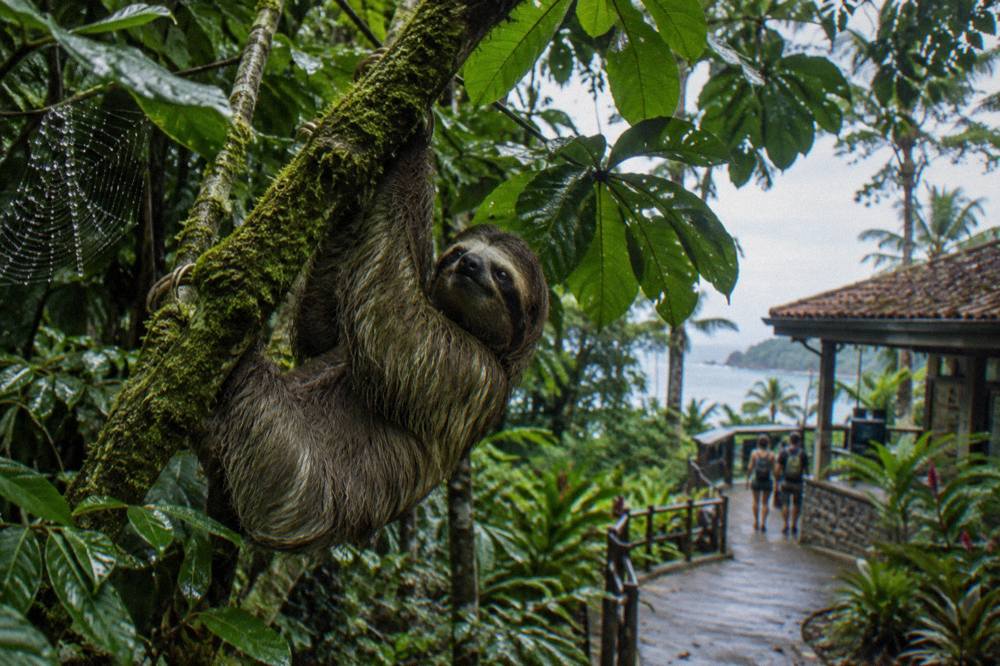
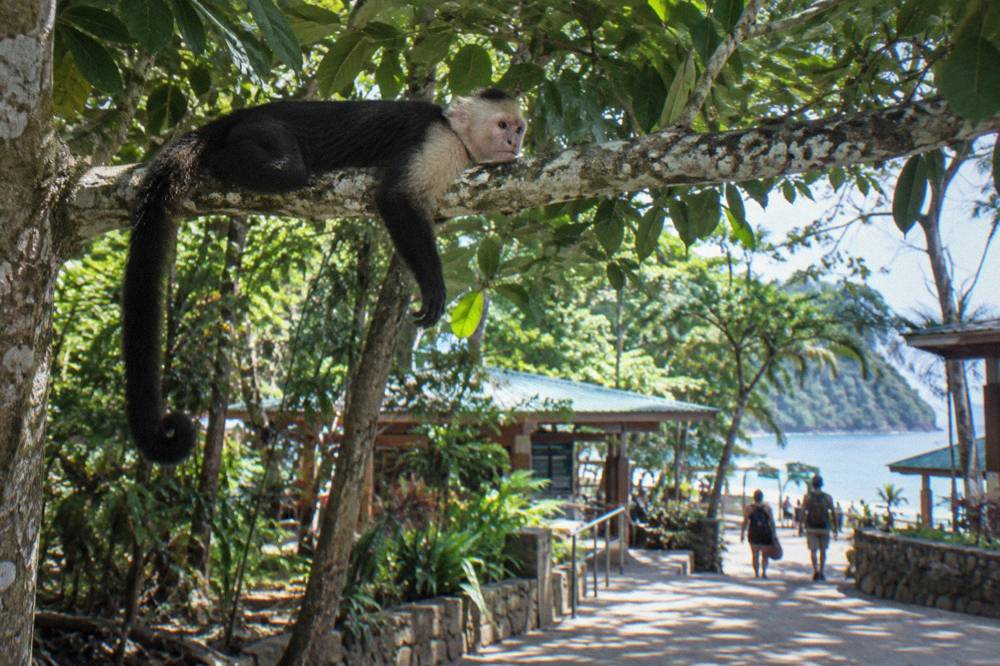
On most guided morning walks visitors report the three monkey species, at least one sloth, coatis or agoutis near the trails, iguanas and basilisks, and a set of loud birds including toucans and scarlet macaws flying over, while snakes beyond the common lizards, nesting sea turtles and any cat are genuinely uncommon and depend on timing and the guide's eye. That is the honest base rate built from what guides and guest reviews describe, not a promise. Monkeys are the closest thing to a reliable encounter because the capuchin troops habitually work the beach and main trail area for food opportunities the rules say humans must not provide, and howlers announce themselves audibly from hundreds of meters away. Sloths are common but counterintuitive: they are everywhere and simultaneously invisible, a gray-green knot high in a cecropia tree that most unguided walkers stroll straight past.
The luck column is real and worth naming. Sea turtles nest on area beaches in season, but the park's beaches are not a guaranteed hatch site and sightings are incidental. Snakes, including the beautifully camouflaged eyelash pit viper, are found by guides who know the exact bromeliads and branches to scan, which is why nearly every memorable snake photo from this park has a scope and a certified naturalist in the story. Owls, kinkajous and most bats are night creatures, and the national park closes at 3:00 pm, so they belong to the night tours on private reserves instead.
Time of year shifts the odds less than visitors expect on land and more at sea. September and October bring the fewest visitors because of rain, the two wettest months in the Quepos rainfall table, and the park itself recommends arriving early in that quiet period. Off the coast, southern humpback whales are reported roughly July to early November with the peak in August and September, and the northern group from December to March or April, which matters if you are pairing a park morning with an afternoon on the water; the catamaran tours guide covers that side. On land, the resident monkeys and sloths do not migrate, so the species list in January and the species list in July are largely the same list.
Why Does A Spotting Scope Guide Matter So Much?
A guide with a high-definition spotting scope routinely shows visitors animals that unguided walkers walk past, because sloths, roosting owls, vipers and half the bird list sit motionless thirty or more meters up in a canopy that reads as blank green without optics, and a certified naturalist also knows yesterday's fruiting tree and the troop's route. The scope itself is the mechanical difference. Set on a two-toed sloth curled into a bromeliad, it resolves individual claws and fur. Pointed at a distant trogon, it turns a red dot into a bird. Most park listings on this site include scope use in their inclusions precisely because it is the single biggest upgrade a few dollars buys: the 2-hour wildlife and beaches walk from $27 per person includes an HD spotting scope plus photos and videos of what it finds, and the naturalist-guided option from $25 per person includes a premium scope and professional pictures taken by your guide.
The certification is the second half of the value. Several listings state outright that the guide is certified by the Costa Rican tourism authorities, and the park works with the local Quepos guide association whose office runs guided tours from 7:00 am to 2:00 pm. A certified naturalist can name the species, explain the titi monkey's restricted range, point out the manzanillo tree before a child touches it, and, just as usefully, tell you when the knot in the tree is actually a termite nest. Guides also police the rules by proxy: no feeding, no flash harassment, no chasing the capuchins for a selfie, all of which keeps the animals where visitors can genuinely see them.
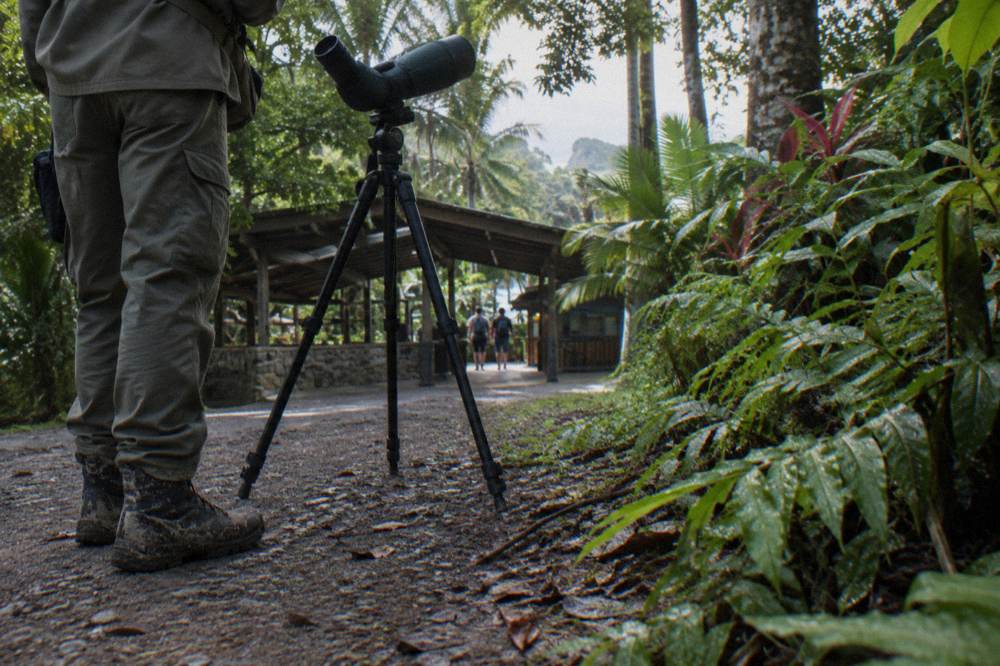
For readers weighing guided versus independent, the blog post do I need a guide for Manuel Antonio National Park works through the decision in detail. The short version: the park ticket is the same either way, adults pay $18.08 including IVA and children 2 to 12 pay $5.65, bought only through the official SINAC online portal and shown with your identity document, and the guide question is purely about how much of the canopy you want decoded. The full ticketing mechanics live in the national park tickets guide.
The scope-and-specialist format at the top of the market is the 4-hour park nature guided tour, rated 4.8 from 4,590 reviews, from $49 per person, with free cancellation listed. Budget travelers get nearly the same optical advantage from the naturalist option at from $25 per person, rated 4.9 from 1,519 reviews, in a 2 to 3 hour walk. Both beat the unguided visit on the only metric that matters for this page: how many animals you actually find.
When Is The Best Time Of Day For Wildlife In Manuel Antonio?
Early morning, from the 7:00 am opening, is the best window for wildlife in Manuel Antonio National Park, because monkeys feed actively in the first hours, the forest is cooler and louder with birds, and both the heat and the human crowds build through late morning, while the park closes at 3:00 pm and the afternoon rewards only the quieter midweek lull. The park opens Wednesday to Monday at 7:00 am and closes at 3:00 pm, Tuesday excepted, so the day's wildlife window is fixed and short. The first two hours carry the most activity: howler calls carry in the still air, capuchin troops move through their feeding circuit, and mixed bird flocks pass through the canopy before the heat suppresses movement. By late morning the crowds on the main trail grow thick enough that animals shift their routes away, a habit the resident monkeys have refined over years of being the main attraction.
Afternoon has one specific thing going for it: numbers drop. Visitors stream out for lunch and beach time, and on a Wednesday or Thursday the 1:00 to 2:00 pm stretch can feel almost private, which suits the quiet watcher more than the photographer chasing activity. The Quepos guide association lists afternoon tours at 3:30 pm only on Saturday, Sunday and Monday, a schedule that exists precisely because the in-park day ends at 3:00 pm. For the full opening-hours picture including the Tuesday closure, see the park hours and closures guide.
| Time window | Wildlife activity | Crowds | Notes |
|---|---|---|---|
| 7:00 to 9:00 am | Highest, monkeys feeding, birds loud | Low at opening, building | Best window; book the earliest guide slot |
| 9:00 to 11:00 am | Good, activity tapering | High | Scope earns its keep finding resting animals |
| 11:00 am to 1:00 pm | Slower in heat | High, thinning at lunch | Iguanas and basilisks still active near water |
| 1:00 to 3:00 pm | Quietest in park | Low midweek | Park closes 3:00 pm, last entries earlier |
Night is a separate world the park itself does not offer, since it closes mid-afternoon. The nocturnal half of the species list, kinkajous, owls, frogs, insects, snakes on the hunt, lives on the private reserves around Manuel Antonio instead, reached through night tours like the jungle night tour from $58 per person, rated 5.0 from 43 reviews, entrance fee included, or the naturalist-led night walk from $55 per person, rated 4.9 from 336 reviews, with reserve entrance and flashlights included. The night tours guide compares them all.
Can You See Sloths In Manuel Antonio National Park?
Yes, sloths are commonly reported in Manuel Antonio National Park, both the two-toed and three-toed species, and they are one of the most reliably found animals on guided walks, but they sit high in the canopy and move so little that unguided visitors frequently miss them entirely, which is why the scope listings and the sloth sanctuary exist. Guides find them by shape and habit rather than motion: a gray-green knot in a cecropia or guarumo tree, often with an algae tint, sometimes with a baby clinging to the chest. Guest reviews of the guided park listings regularly name sloths as the sighting that justified the guide fee, in the phrasing of one recent review, the guide found five in a single walk that the visitors would have walked past alone. Different tours, different days, honest odds. If you want to dig into where to look and which guided walk actually raises your odds, the guide to spotting sloths in Manuel Antonio National Park lays out exactly that.
Because sloths are the animal most visitors name as their target, the listings have a product built specifically around close viewing, and it is honest about being a different thing: the KSTR re-wilding center sloth and primate park north of Manuel Antonio in Naranjito, from $70 per person, rated 4.9 from 292 reviews, where the listing includes getting close to the sanctuary animals. That is a rescue and re-wilding facility, not wild spotting, and for a family with small children or a photographer who needs a frame rather than a silhouette sixty meters up, it is the dependable option. The wild version is cheaper and wilder: any of the guided park walks from $23 to $49 per person can produce sloths, with the odds tilted hardest toward the walks that run at opening time. The full index of guides sits on Manuel Antonio Costa Rica Tours.
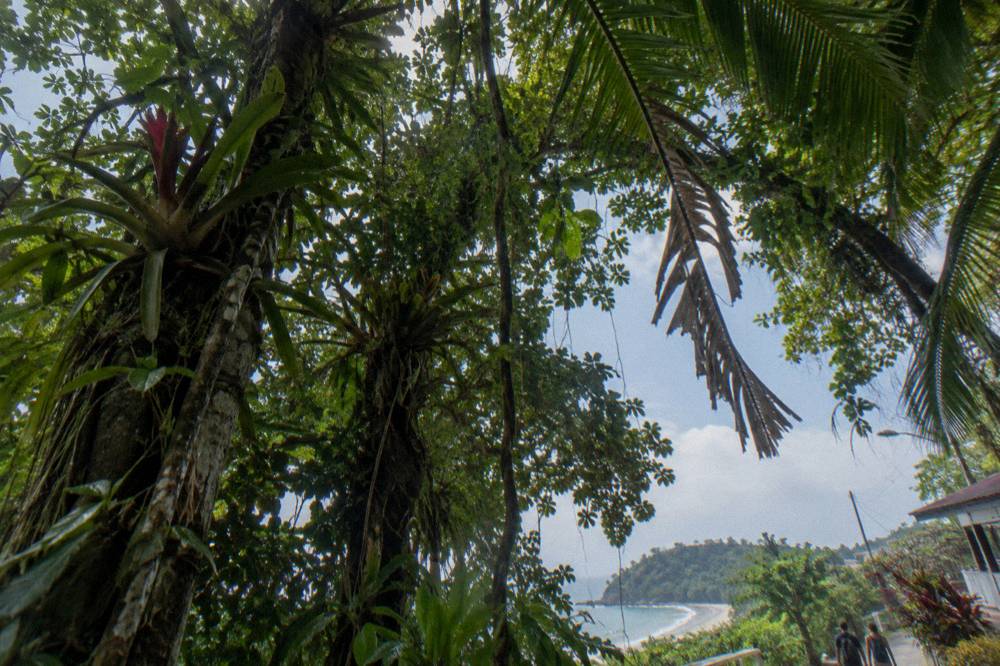
The sloth question has enough depth, seasonality and misidentification traps that this site gives it a full post, can you see sloths in Manuel Antonio National park. The short decision: wild sloths with a scope guide at 7:00 am, sanctuary sloths at arm's length at the re-wilding center, or both on a two-day stay.
What About Monkeys, Birds And The Rest?
The three monkey species are the park's daily theatre, capuchins working the trails and beaches, howlers calling from distance, and the endangered titi squirrel monkeys moving in fast troops, while the bird list rewards patience with toucans, trogons, motmots and macaws overhead, and the herp life runs from beachside basilisks to canopy vipers that guides treat as prized finds. Capuchins are the ones you will remember because they are bold, social and permanently auditioning for whatever food the rules say you must not give them. Howlers you will hear before you see, a prehistoric roar from a modest monkey. Titis are the conservation story: this tiny strip of Central Pacific forest is their core range, the park's emblem species, and the reason habitat corridors outside the boundary matter as much as the boundary itself.
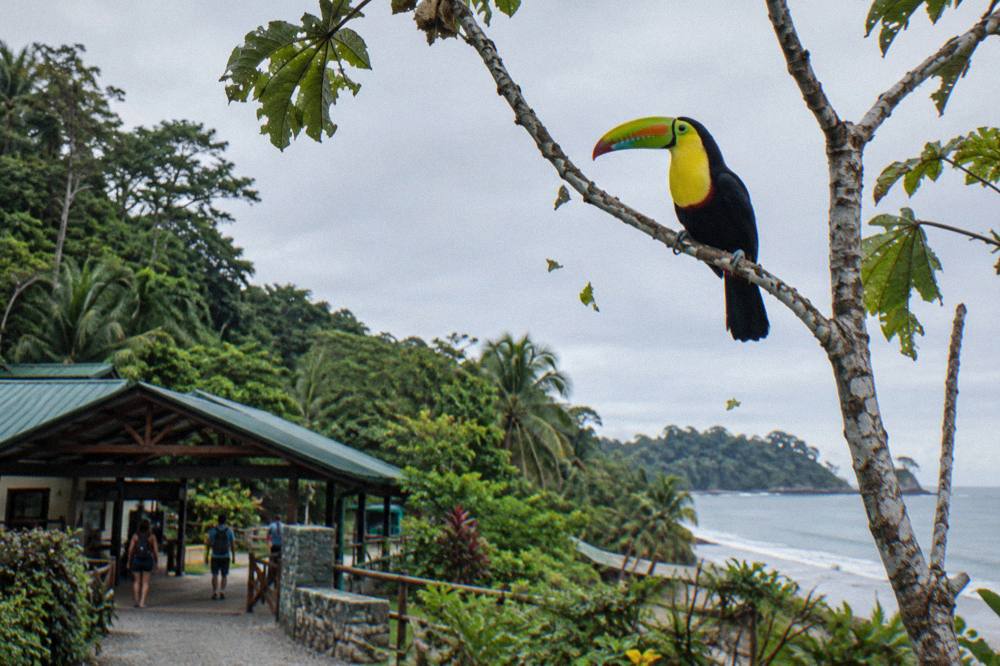
Birds divide neatly by habitat. The mangrove and lagoon edge, about 18 hectares of it, holds herons, kingfishers and ibis; the interior forest holds trogons, antbirds and the mixed flocks that pass through in bursts; the open sky over the tombolo carries frigatebirds, pelicans and, in flight, scarlet macaws whose range includes this coast. Reptiles are a heat story: iguanas and black basilisks bask openly near water all day, while the snakes, the eyelash pit viper coiled in a heliconia, the boa stretched along a limb, are the finds that separate a scoped walk from a walk. The species-by-habitat breakdown sits in the table above and in the park's own published counts, and the wider itinerary picture lives in things to do in Manuel Antonio.
| Animal | Where in the park | Best window | Odds on a guided walk |
|---|---|---|---|
| White-faced capuchin | Trails and beaches | Morning feeding | Commonly reported |
| Mantled howler | Canopy, heard first | Dawn and late afternoon | Commonly reported |
| Titi squirrel monkey | Mid-canopy troops | Morning, fruiting trees | Commonly reported, troops move fast |
| Three-toed sloth | High canopy, cecropias | All day, static | Commonly reported with a scope |
| Two-toed sloth | Canopy, more nocturnal | Morning rests | Regularly reported |
| Scarlet macaw | Flyovers, coast | Morning and evening | Reported in flight |
| Eyelash pit viper | Heliconias, low branches | Morning | A luck find, guide-dependent |
| Sea turtle | Area beaches | Nesting season | Incidental, luck |
What Rules Protect The Wildlife In The Park?
The park bans entering with food or beverages of any kind, feeding animals, pets, fires, weapons, alcohol, smoking and drugs, fishing, hunting, umbrellas, balls, tents and hammocks, restricts soap and shampoo in the showers, and asks for proper footwear rather than sandals, with tickets sold only online through the official SINAC portal and valid once, shown with your identity document. The full rule set is published on the official SINAC park page (see the official Manuel Antonio National Park page), and the food ban is the one with teeth for wildlife: a capuchin troop that learns to associate backpacks with chips becomes an aggressive troop, and the park's famously close monkeys stay viewable precisely because the rules hold. Feeding any animal is prohibited outright, and the manzanillo tree on the beach, toxic to touch, is marked for the same reason the rules exist.
The ticketing rules matter to wildlife in a subtler way. Online-only sales through the official portal, one entry per ticket, identity document required, keep the visit countable and the entry orderly, and the Wednesday-to-Monday 7:00 am to 3:00 pm schedule with Tuesday closed gives the park a weekly full day without visitors. Visitors planning the practical side, water fountains on the Perezoso trail and the beach trails, food only in the designated eating area from 7:30 am to 3:30 pm, should read the what to bring guide.

That density, and not any individual animal, is the product.
Which Wildlife Tour Should You Actually Book?
For most visitors the best single booking is a guided morning park walk with scope included, from $23 to $49 per person depending on duration and inclusions, paired optionally with a night walk on a private reserve or the sloth sanctuary if close-up viewing matters more than wild odds. The park walk formats differ in ways the listings state plainly: the ticket-included options bundle the $18.08 SINAC admission into one purchase, the budget options leave you buying the ticket yourself on the official portal, and only the listings whose includes line says transportation actually carry pickup. Duration runs from 2 hours on the wildlife and beaches walk to a full 4 hours on the nature specialist tour, and group size caps appear only where the listing states them, such as up to 12 on the ticket-included scope-and-photos option.
| Listing | Price from | Duration | Scope | Ticket included | Rating and reviews |
|---|---|---|---|---|---|
| Park nature guided tour | $49 per person | 4 hours | Yes, spotting scope | No, park ticket excluded | 4.8 from 4,590 reviews |
| Wildlife and beaches walk | $27 per person | 2 hours | Yes, HD scope | No, buy SINAC ticket separately | 4.9 from 1,164 reviews |
| Naturalist guided tour | $25 per person | 2 to 3 hours | Yes, premium scope | Excluded unless a ticket option is selected | 4.9 from 1,519 reviews |
| 2-Hour Park Walk, Ticket Extra | $27 per person | 2 hours | Not stated | No, excluded per listing | 4.9 from 786 reviews |
| Park Walk, Scope And Photo Album | $28 per person | 2 to 2.5 hours | Yes, optical equipment | No, excluded | 4.9 from 273 reviews |
| Night walking tour | $55 per person | 2 to 2.5 hours | Flashlights, reserve entrance | Reserve entrance included | 4.9 from 336 reviews |
| Sloth and primate sanctuary | $70 per person | 2 hours | Close-up sanctuary access | Reserve entry included | 4.9 from 292 reviews |
Free cancellation is listed on every option in that table except where noted on the operator's own page, so the usual strategy costs nothing: book the earliest slot of your day now, then adjust if your plans shift. Age limits, kid pricing and medical policies vary by listing, so check the listing for those before booking with young children. If your trip has room for a second wildlife surface, the mangrove side adds a different species set entirely; the Damas Island mangrove boat tour runs 4 hours with lunch included, rated 4.9 from 2,910 reviews, from $75 per person, and covers the estuary animals the hillside forest cannot offer.
For pairing park and sea in one day, the sailing trip with lunch and open drinks from $95 per person, rated 4.7 from 653 reviews, runs the same afternoon and adds the offshore layer, dolphins are reported year-round by operators and humpbacks roughly July to early November, never guaranteed. Between the canopy, the mangrove and the open water, the Central Pacific coast stacks three wildlife surfaces within twenty minutes of Quepos, and the strongest itineraries sample at least two.
Common Questions About Manuel Antonio National Park Wildlife
What animals is Manuel Antonio National Park known for?
The park is known for its three monkey species, white-faced capuchins, mantled howlers and the endangered titi squirrel monkey, plus two-toed and three-toed sloths, coatis, agoutis, iguanas, basilisks and a bird list of about 352 recorded species. The titi monkey is the park's emblem species.
Are you guaranteed to see sloths and monkeys in Manuel Antonio?
No sighting is ever guaranteed. That said, sloths and all three monkey species are commonly reported on guided walks, and guides with spotting scopes find them far more reliably than unguided visitors, who frequently walk past canopy sloths without noticing them.
Do I need a guide to see wildlife in Manuel Antonio National Park?
You do not need one to enter, but a guide with a spotting scope materially changes what you see. Most listings from $23 to $49 per person include scope use, and the certification listed on several listings means the guide can find and decode animals hidden in the canopy.
What is the best time of day to see animals in the park?
Early morning, from the 7:00 am opening, when monkeys feed actively and bird activity peaks before the heat. The park closes at 3:00 pm and is closed Tuesdays, and the afternoon hours reward the patient midweek visitor with thinner crowds.
Can you see wildlife at night in Manuel Antonio?
The national park closes mid-afternoon, so night wildlife lives on the surrounding private reserves. Night tours from $55 to $58 per person include a naturalist guide, flashlights and reserve entrance, and target the nocturnal half of the species list, including frogs, owls, kinkajous and hunting snakes.
When is whale season off Manuel Antonio?
Southern humpbacks are reported roughly July to early November, peaking August and September, and the northern group from December to March or April, per operator reporting. Sightings are never guaranteed, and dolphins are reported year-round.