Manuel Antonio Weather By Month: Rain, Sea And Tour Days
Rainfall on this coast swings from about 25.8 mm in February to about 544.3 mm in September, and that single number shapes almost every tour decision you will make here.
Short answer
Manuel Antonio has a dry season roughly December to April and a green season May to November. September and October are the wettest months, with about 544.3 mm and 533.5 mm of rain respectively, while February is the driest at about 25.8 mm. Sea temperature stays warm all year, about 27.7 to 29.4 C. Most tours run year round; the park closes Tuesdays.
Manuel Antonio sits on Costa Rica's Central Pacific coast at about 9 degrees north, which means the year divides into two broad seasons rather than four. The dry season runs roughly December to April and the green season May to November, and the difference between them is not temperature, the sea stays between about 27.7 and 29.4 C all year, but rain. The Quepos climate table records about 25.8 mm of rain in February and about 544.3 mm in September, a twentyfold swing that changes which hours of the day are usable and which tours feel comfortable.
That matters for planning because almost everything visitors book here happens outdoors. The most reviewed listing on this site, the Manuel Antonio Park Nature Guided Tour with a Nature Specialist, rated 4.8 from 4,590 reviews and priced from $49 per person, is a four-hour walking experience in a park that closes at 3:00 pm. A sailing trip with lunch and an open bar, from $95 per person, depends on sea state. The Savegre rafting trip, from $129.95 per person, depends on river levels that rise through the green season. Weather is not background information in Manuel Antonio, it is the planning variable.
This guide walks through the year month by month, using the climate record for Quepos, official park rules from SINAC, and the seasonal patterns operators themselves describe. Where something varies, like whale sightings or afternoon storms, it says so plainly rather than promising conditions nobody can guarantee.
What Is The Weather Like In Manuel Antonio During The Dry Season?
The dry season, roughly December to April, brings the lowest rainfall of the year, with the Quepos climate table recording about 45.9 mm in January, about 25.8 mm in February, about 40.0 mm in March and about 156.9 mm in April, alongside sea temperatures of about 28.0 to 29.4 C and the year's most reliable afternoon sunshine.
The transition into the dry season is gradual, and it starts earlier than many visitors expect. The national meteorological institute, IMN, forecast in late October 2026 that the Central Pacific dry season would establish itself between 13 and 30 November 2026, which means December arrives with soils drying out and the first weeks of genuinely settled weather. December still carries about 159.7 mm of rain on the climate record, much of it early in the month, so the first half of December behaves more like a tapering green season than full dry season. January through March are the committed dry months.
Rain in this period, when it comes at all, tends to be brief and afternoon-oriented. Mornings are typically clear, which is why the park's guided walks and boat departures cluster before noon. February is the standout: about 25.8 mm across the whole month is drier than most visitors assume a tropical beach town can be. The trade-off is crowds and prices, since this is peak season, and the single road from Quepos to Manuel Antonio gets very busy, as the park's own official information notes.
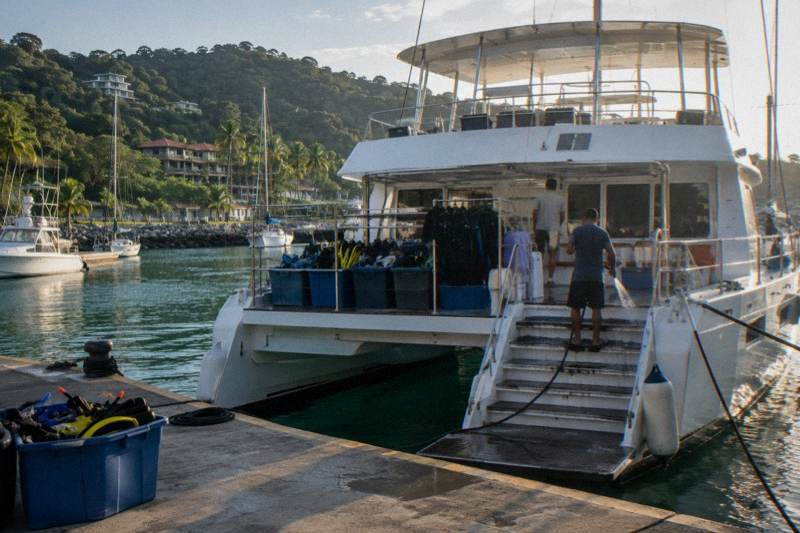
Sea conditions in the dry season are usually the calmest of the year, which suits the catamaran and sailing tours. The sailing, snorkeling tour with lunch and open bar (4.7 from 653 reviews, from $95 per person), the Sea Quest catamaran (5.0 from 231 reviews, from $95 per person) and the all-inclusive catamaran eco adventure (4.6 from 636 reviews, from $86 per person) all run in this window, and snorkel visibility around Biesanz Beach is generally reported at its best when the ocean has been quiet. None of that is a promise; sea state varies week to week and operators decide go or no-go on the day.
This is also the window for the northern humpback group, reported roughly December to March or April, and dolphins are described by operators as possible year round. Again, sightings are never guaranteed, but the seasonal pattern is real and operators report it consistently.
For a fuller comparison of what runs in this window, see Manuel Antonio day tours across the year.
What Is The Weather Like In Manuel Antonio During The Green Season?
The green season, roughly May to November, is when rainfall climbs steeply: the Quepos record shows about 389.0 mm in May, about 468.7 mm in August and a peak of about 544.3 mm in September, with rain typically arriving in afternoon showers and thunderstorms while mornings often stay usable for tours.
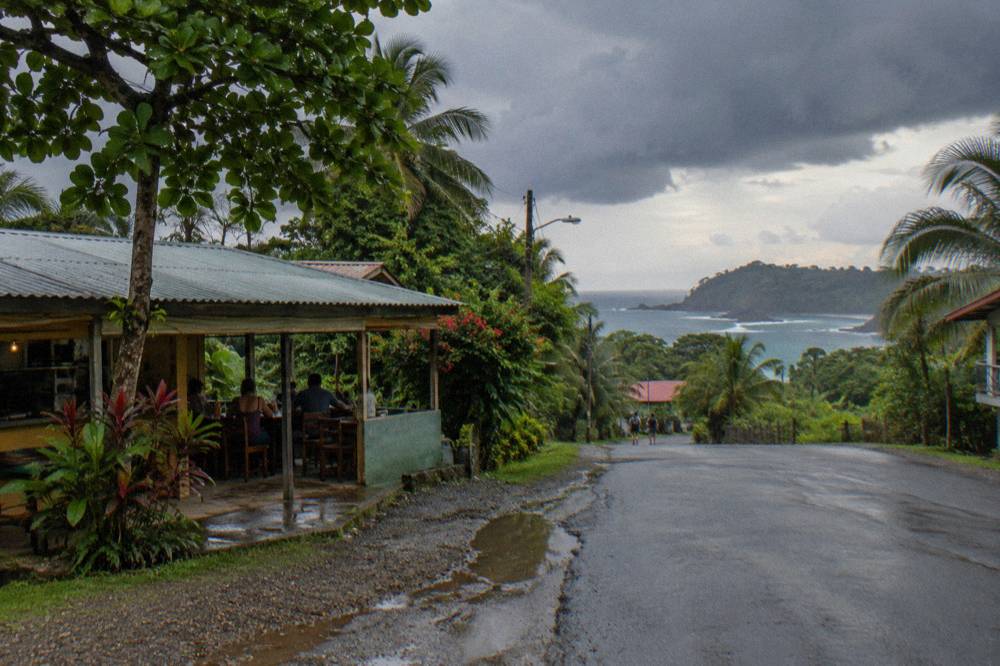
Green season rain on this coast is not an all-day drizzle. The dominant pattern is a clear or partly cloudy morning followed by building cloud and afternoon convection, and the IMN's weather advisories through October 2026 described exactly this shape: scattered afternoon showers and possible thunderstorms over the Central Pacific, with estimated totals of 25 to 50 mm in a single event and up to 80 mm in the heaviest cells, on saturated soils. October 2026 advisories repeatedly flagged that pattern, which is textbook for the tail of the wet season.
The practical reading is simple. Book the morning slot. The park opens 7:00 am and closes 3:00 pm, and guided walks with a certified naturalist, spotting scope and snacks, like the 4-hour park nature tour, work well as early departures because wildlife activity and weather both favor the first hours. Afternoon slots in September and October carry real risk of getting soaked, though rain here is warm and tours rarely stop for it.
May through August is the middle of the green season and, in many ways, the value window. Rainfall is high but the heaviest months are still ahead, landscapes are at their greenest, and visitor numbers drop, which the official park guidance itself acknowledges: SINAC notes September and October have fewer visitors and recommends arriving early. The two-hour wildlife and beaches walk (4.9 from 1,164 reviews, from $27 per person) and the naturalist-guided park tour (4.9 from 1,519 reviews, from $25 per person) are short enough that a rain-free morning window usually covers them.
One planning note that catches people out: the park is closed every Tuesday, year round, regardless of weather. Tickets are sold only through the official SINAC online portal, and a foreign adult ticket is $18.08 including IVA, a child 2 to 12 is $5.65 including IVA, under 2 is free. Several guided-tour listings exclude the ticket, so check whether your chosen tour includes it before assuming. The details are in the park tickets guide.
How Much Rain Does Each Month Actually Get?
Monthly rainfall in Quepos, from the climate record, runs about 45.9 mm in January, 25.8 mm in February, 40.0 mm in March, 156.9 mm in April, 389.0 mm in May, 413.3 mm in June, 444.9 mm in July, 468.7 mm in August, 544.3 mm in September, 533.5 mm in October, 349.0 mm in November and 159.7 mm in December, an annual total of about 3,571 mm.
Those numbers deserve context, because a bare millimeter figure does not tell you when the rain falls. The record counts about 219.4 rain days a year, so in the green season some rain on most days is normal, but the character differs: June and July deliver frequent short bursts, while September and October deliver the heavy, sustained events that the IMN was still advising about in late October 2026. Note also that this table is a single secondary source; another well-known travel weather series shows lower figures on a different basis, so treat these as "about" numbers for planning, not forecasts.
| Month | Rainfall (about) | Season feel | What it means for tours |
|---|---|---|---|
| January | 45.9 mm | Full dry season | Best all-round month; book park and boat trips early slots |
| February | 25.8 mm | Driest month | Peak crowds; sea usually calm for sailing |
| March | 40.0 mm | Dry, warm | Sea at about 29.4 C, its warmest |
| April | 156.9 mm | Transition begins | Brief afternoon storms return; mornings still solid |
| May | 389.0 mm | Green season starts | Green landscapes, lower crowds, lower rates |
| June | 413.3 mm | Green season | Short frequent showers; rafting flows build |
| July | 444.9 mm | Green season | Whale season building; good mixed month |
| August | 468.7 mm | Wet but busy | Southern humpback peak; book ahead anyway |
| September | 544.3 mm | Wettest month | Fewest visitors; park quiet, tours run mornings |
| October | 533.5 mm | Very wet | Wettest alongside September; flexible plans help |
| November | 349.0 mm | Tapering | Dry season forecast to start mid to late month |
| December | 159.7 mm | Transition to dry | Early month showery, late month dry season |
The July figure in the climate record sits close to June's, which surprises visitors who have read about a "little dry season" or veranillo in July. The pattern is reported widely on the Pacific coast, but on this specific record it does not show as a sharp drop, so plan for green-season conditions in July and treat any drier spell as a bonus.
What Is The Sea Temperature And When Is It Best For Boat Trips?
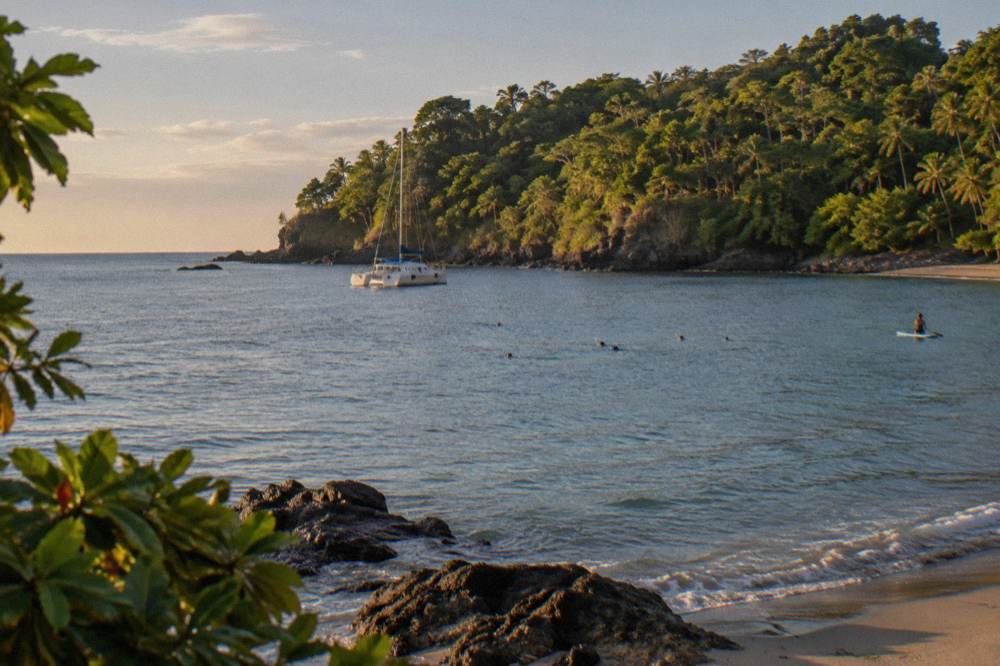
Sea temperature off Quepos stays warm all year, averaging about 28.0 C in January, rising to about 29.4 C in March, holding near 28.8 to 28.9 C through the middle of the year, and dipping only to about 27.7 C in November, so water warmth is never the deciding factor; sea state and visibility are.
What changes is surface calm and underwater clarity. Extended rain, especially in September and October, can cloud nearshore water with runoff, which affects snorkeling more than it affects sailing. Boat operators still run; the mangrove and Damas Island trips are estuary-based and barely notice ocean swell at all.
The Damas Island mangrove boat tour with lunch (4.9 from 2,910 reviews, from $75 per person) is the site's clearest bad-weather hedge: it is a covered-boat estuary trip with a meal included, and wildlife spotting there does not depend on sea state. The ocean kayak and snorkel tour to Biesanz Beach (4.7 from 86 reviews, from $65 per person) is the opposite, an open-water paddle best matched to the dry season months when the Pacific is typically flatter.
Sunset timing also shapes boat choices. Sunset here runs from about 5:10 pm in November to about 6:00 pm in July, computed for Quepos and rounded to the nearest five minutes. A sunset sailing departure in November starts in late afternoon light well before 5:00 pm; the same trip in July has a full extra hour of daylight. The catamaran cruise with meal (4.6 from 187 reviews, from $95 per person, up to 66 guests) and the wooden sail yacht cruise (4.9 from 104 reviews, from $148 per person) both run to the season's clock, so check departure times against the sunset table for your month.
| Month | Sea temperature (about) | Sunset (about) |
|---|---|---|
| January | 28.0 C | 5:35 pm |
| February | 28.6 C | 5:45 pm |
| March | 29.4 C | 5:50 pm |
| April | 29.3 C | 5:45 pm |
| May | 29.2 C | 5:50 pm |
| June | 28.8 C | 5:55 pm |
| July | 28.8 C | 6:00 pm |
| August | 28.9 C | 5:55 pm |
| September | 28.8 C | 5:40 pm |
| October | 28.0 C | 5:20 pm |
| November | 27.7 C | 5:10 pm |
| December | 28.1 C | 5:20 pm |
For a deeper look at the sailing options specifically, the Manuel Antonio sunset cruise guide breaks down departure windows and what each boat includes.
Which Month Is Best For Wildlife And Whales?
Southern humpback whales are reported off Quepos roughly July to early November, peaking August to September, while the northern group is reported roughly December to March or April; May and June are described by operators as the low months for whales, and dolphins are described as possible year round, with no sighting ever guaranteed.
This seasonal split is one of the few genuinely decisive weather-adjacent facts for choosing a month. If humpbacks are the goal, August and September pair the southern peak with the quietest park crowds of the year, though they also carry the heaviest rain. If you want whales and dry weather together, the December to March window is the alternative, with the same caveat that operators describe these as seasons when sightings are commonly reported, never as certainties.
Land wildlife is less seasonal. Sloths, both two-toed and three-toed, and the park's monkeys, including the titi monkey that is the park's emblem species, are described on guide pages as routinely sighted on guided walks year round. The official park record lists about 352 bird species, 109 mammals and 346 plants. What changes through the year is behavior around rain: the hours after a shower, and the first cool hours of the morning, are when guides most often report activity.
Night tours follow their own weather logic. The night walking tour with a naturalist guide (4.9 from 336 reviews, from $55 per person) runs on a private reserve, not inside the national park, which closes mid afternoon and is closed Tuesdays. Frog and insect activity is generally described as better in the green season, when humidity is high, and these tours supply flashlights and include the reserve entrance fee. The jungle night tour from Manuel Antonio Beach (5.0 from 43 reviews, from $58 per person) includes the entrance fee as well.
How Does Weather Affect Rafting And Adventure Tours?
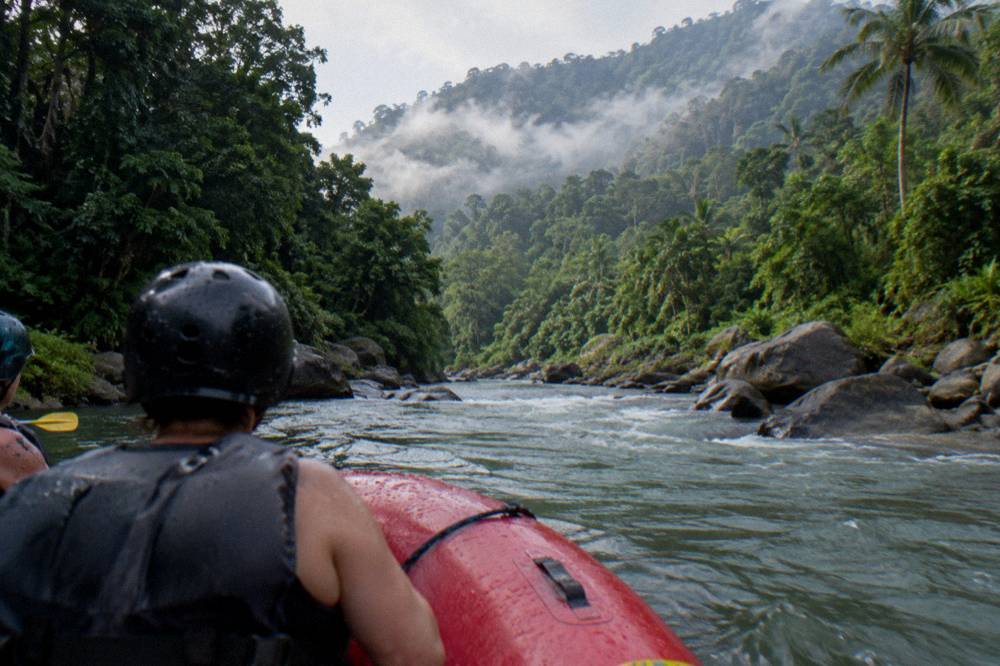
Weather does not just affect the tour lineup, it powers part of it: the Savegre rafting trip, 5 from 831 reviews and from $129.95 per person, runs Class II-III water that green-season rain energizes, while the dry season brings lower, gentler levels, and operators state they modify or cancel trips for safety when flows demand it.
River context from operator and guide pages describes the Savegre near Quepos as typically Class II-III, with green-season flows potentially pushing rapids up in the heaviest September and October rain, and dry-season levels dropping lower. No public real-time river gauge exists for these runs, so the operator's judgment on the day is the only authoritative word on conditions, and age, weight and fitness limits should be checked on each listing.
Ziplines are less weather-dependent than rafting but not weather-proof. The twin zip line canopy tour (5.0 from 1,685 reviews, from $95 per person) runs in rain, and light green-season showers rarely stop it, but electrical storms do, and operators hold or reschedule accordingly. The zipline and canyoning combo at ADR Adventure Park (5 from 842 reviews, from $158.20 per person) includes hotel pickup from selected hotels and lunch, which makes a weather-delayed day easier to absorb. General advice for any canopy operator, anywhere: ask about harness checks, guide-to-guest ratios and stated weight limits before booking.
Waterfall trips are the opposite of a rain problem. The Nauyaca Waterfall tour (5 from 456 reviews, from $155 per person, 7 hours, entrance fees and lunch included) is arguably better in green season, when the falls run fuller; the all-day swim tour at Nauyaca (4.9 from 128 reviews, from $130 per person) pairs the same logic with a full day at the pools. ATV tours, like the 4-hour rainforest and waterfalls ride (4.8 from 167 reviews, from $124.30 per person) with a Costa Rican lunch included, run through the green season too, with mud as a feature rather than a defect.
What Should You Pack For Manuel Antonio Weather?
Pack for heat, humidity and sudden rain rather than for cold: quick-dry clothing, a light rain layer for green-season afternoons, reef-safe sun protection for the dry season, secure footwear for park trails, and a dry bag for electronics on boat and kayak trips, with the park itself recommending proper footwear over sandals.
The official park rules are specific on a few points worth repeating here. Sandals are not recommended on the trails, food and drinks of any kind may not be carried in beyond the administration's designated exceptions, and feeding animals is prohibited. The packing list follows from the weather: a rain jacket earns its place from May to November, and sun protection earns its place from December to April. Drinking-water fountains exist on the Perezoso trail and the beach trails, which matters because you cannot carry drinks in.
A fuller checklist, including what changes between seasons, is in what to bring on a Manuel Antonio tour. The short version for this page: morning layers stay light all year, afternoon rain gear matters half the year, and the sea is warm enough that swimwear works in every month.
Which Month Should You Actually Choose?
Choose December to April for the most reliable sun, calmest seas and the northern whale window; choose May to August for green landscapes, fewer crowds and building river flows; choose September or October for the quietest park, the southern whale peak and the fewest visitors, accepting the heaviest rain, roughly 533.5 to 544.3 mm per month.
There is no wrong month, only wrong expectations. A February visitor who books a sunset sail should expect crowds and should book early. A September visitor should expect afternoon downpours, book morning park tours, and keep the mangrove boat as a fallback. August splits the difference: the Savegre rafting and the catamaran trips both run steadily through it.
| If you want... | Best months | Example tour |
|---|---|---|
| Calm seas and snorkeling | December to April | Ocean kayak to Biesanz Beach, from $65 |
| Southern humpback season | August to September | Catamaran cruise with meal, from $95 |
| Quietest park visits | September to October | Park nature guided tour, from $49 |
| Fullest rafting rivers | June to October | Savegre rafting with waterfall stop, from $129.95 |
| Fewest crowds with decent weather | May, June, November | Mangrove kayak tour, from $65 |
| Driest, brightest overall | January to March | Wooden sail yacht cruise, from $148 |
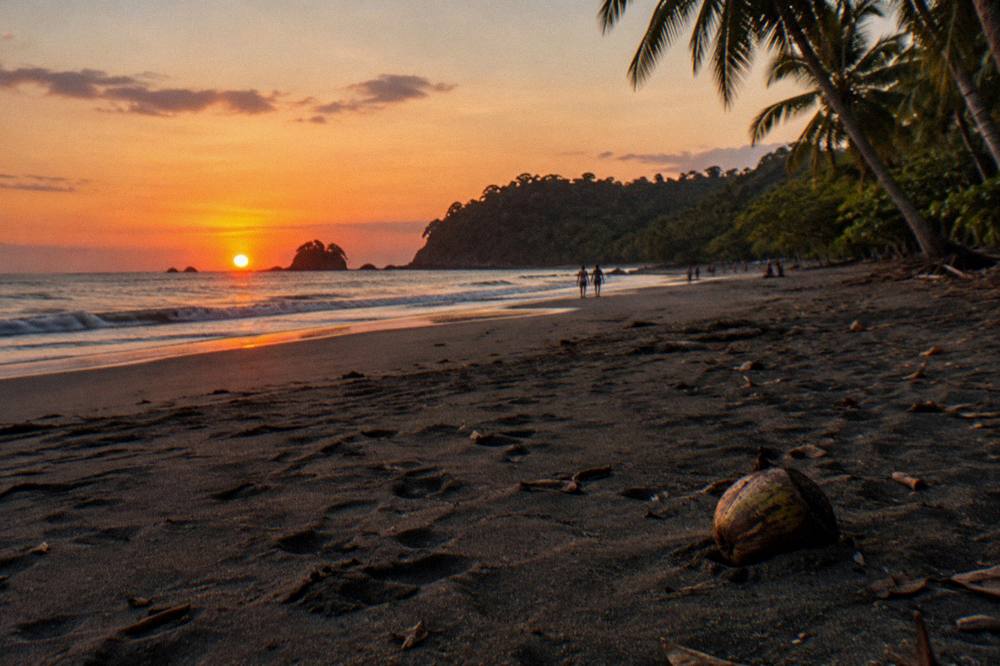

The other thing worth saying plainly: this coast's weather rewards looseness in an itinerary. Travelers who lock in a full day-by-day schedule for September often end up rescheduling something. Travelers who book the morning-sensitive tours, the park walk, the rafting, for mornings, and keep boat trips flexible, rarely lose a booking. Free cancellation is listed on most of this site's trips, including the park nature tour, the sailing trip and the Savegre rafting, so weather-driven changes usually cost nothing if made in time. Check each listing's cancellation window before you rely on it.
Whatever month you land in, the honest summary is that Manuel Antonio's weather is a tool for scheduling, not a reason to stay away. The site's homepage comparison on Manuel Antonio Costa Rica Tours lays out all 35 tours by category if you want to match specific listings to your dates.
Common Questions About Manuel Antonio Weather By Month
What Is The Rainiest Month In Manuel Antonio?
September, with about 544.3 mm of rain on the Quepos climate record, followed closely by October at about 533.5 mm. Both months still see usable mornings, and the park is at its quietest then.
What Is The Driest Month In Manuel Antonio?
February, with about 25.8 mm of rain. January and March are nearly as dry at about 45.9 mm and 40.0 mm respectively.
Is The Sea Cold In Manuel Antonio At Any Time Of Year?
No. Sea temperature off Quepos averages between about 27.7 C in November and about 29.4 C in March, warm enough for swimming every month.
Does It Rain All Day In The Green Season?
Typically no. The dominant pattern is clear mornings with afternoon showers and thunderstorms. IMN advisories in October 2026 described exactly this afternoon-convection shape for the Central Pacific.
Do Tours Still Run When It Rains?
Most do. Rafting benefits from green-season flows, ziplines run in light rain, and mangrove boat tours barely notice weather. Boat operators decide sea-state calls on the day, and free cancellation is listed on most trips here.
When Is Hurricane Season A Concern?
Costa Rica's Pacific coast sits below the main Atlantic hurricane belt, and the Central Pacific around Quepos is not a hurricane-track region. The relevant risk here is heavy rain from tropical waves and the intertropical convergence zone, concentrated September to October.