Is It Better To Stay In Quepos Or Manuel Antonio?
A practical comparison of staying in Quepos versus Manuel Antonio: tour departure points, beach access, food and nightlife, transport and what each base means for your tour plans.
The honest answer is that Manuel Antonio wins for beach-at-your-door convenience and Quepos wins for almost everything logistical: tour departures, transport, food prices and the marina. The two towns sit about seven kilometers apart on a single busy road, so neither choice cuts you off. If your days will be tour-heavy, Quepos is the more practical base; if your days will be beach-heavy, Manuel Antonio pays back its higher prices.
The distance matters more than the map suggests. No vehicle parking exists in the national park, and the single road gets very busy in high season. That one sentence shapes the whole decision. A traveler sleeping in Manuel Antonio is closer to the park entrance, and a traveler sleeping in Quepos is closer to the marina, the bus station and the town's cheaper restaurants.
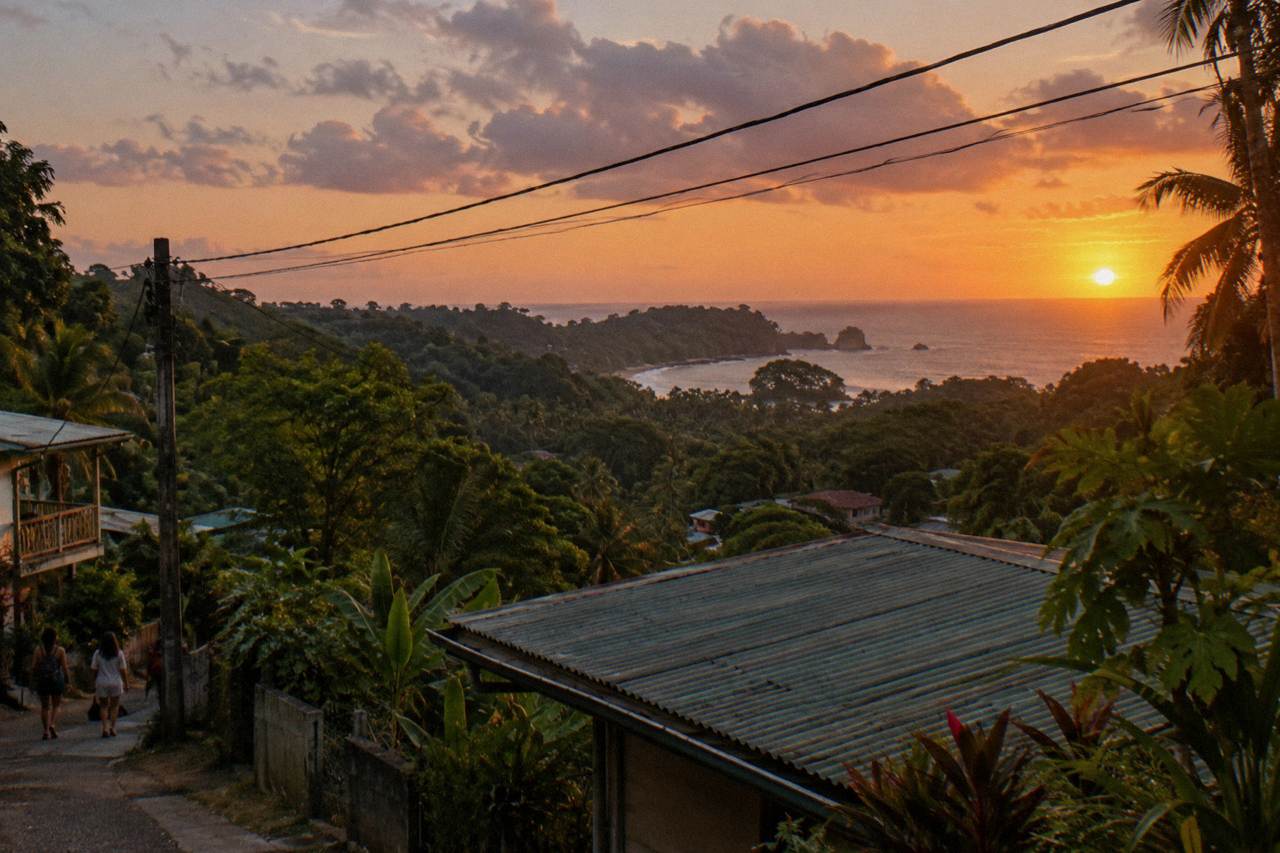
The two places also feel different. Quepos is a working Costa Rican port town: banks, hardware stores, the fish market, the marina, the Tracopa bus terminal. Manuel Antonio is the hillside strip of hotels, restaurants and viewpoints that climbs east out of Quepos toward the national park, with Playa Espadilla running along the foot of it. Neither is a village of a few houses and neither is a city. They are two halves of one corridor, and most visitors move between them several times without thinking about it.
Your tours barely care where you sleep, with one exception worth knowing up front. Of the listings on this site, the marina trips (the sailing tour with lunch and open drinks from $95 per person, the Sea Quest catamaran from $95 per person, which leaves from Paseo del Mar) depart from the Quepos side, while the national park tours cluster at the park entrance on the Manuel Antonio side. That split, tour type by town, is the spine of this comparison.
Where Do The Tours Actually Leave From?
Departure points split by activity: national park tours meet at the park entrance, boat tours leave from Marina Pez Vela or Paseo del Mar, mangrove tours work the Damas Island estuary just north of Quepos, and adventure trips like rafting and ziplining pick up in both towns when the listing says pickup is included. Busier operators cover the Quepos and Manuel Antonio hotel zones, so your base mainly changes your morning, not your options.
Start with the park, because most first-time visitors book at least one park morning. The most reviewed listing on this site, the park nature guided tour with a nature specialist, rated 4.8 from 4,590 reviews and from $49 per person, meets at the park entrance, with free cancellation. The photo-album guided tour, rated 4.9 from 273 reviews and from $28 per person, excludes hotel pickup.
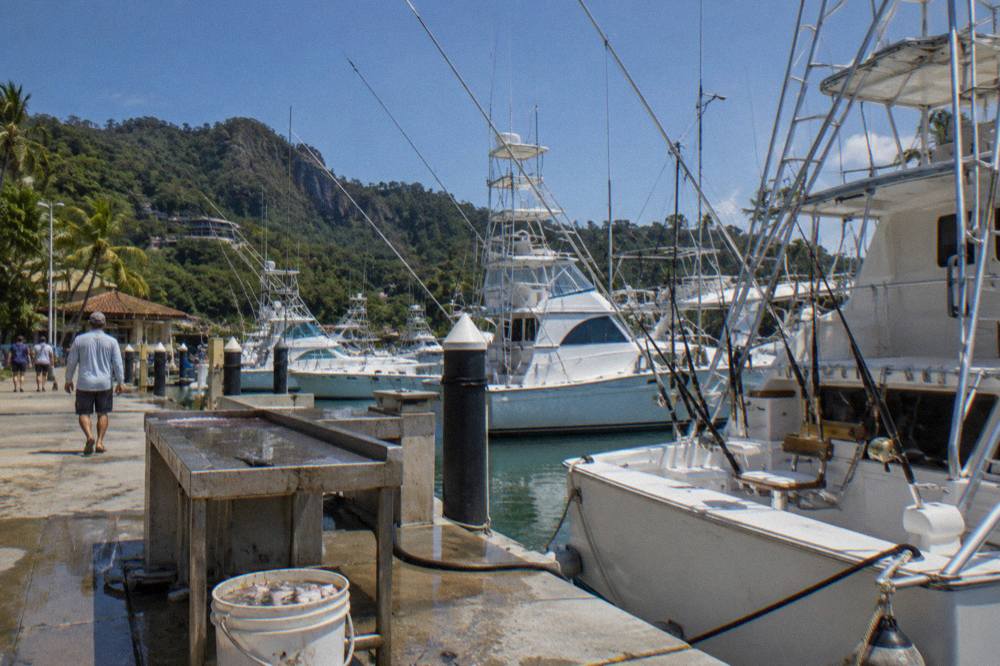
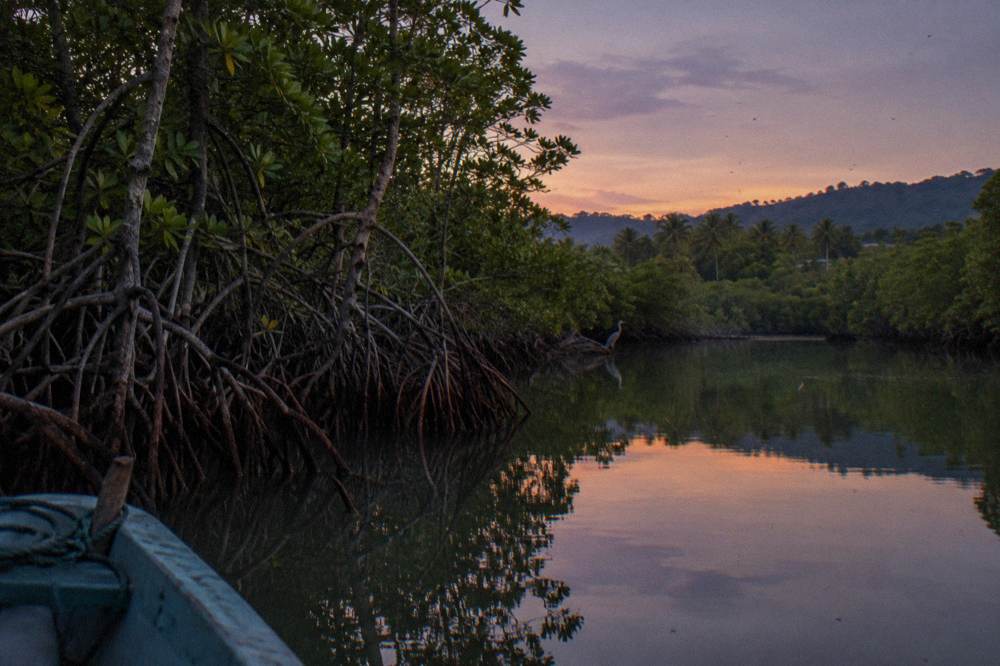
The mangrove and boat side leans Quepos without apology. The Damas Island mangrove boat tour with lunch, rated 4.9 from 2,910 reviews and from $75 per person, departs from the Damas Island mangrove near Quepos. The sailing and snorkeling trip with lunch and open drinks departs Marina Pez Vela. If your ideal week is half park walks and half time on the water, Quepos puts you within a short drive of both departure zones at once.
Adventure tours are pickup-driven. The Savegre rafting trip with a waterfall stop, rated 5 from 831 reviews and from $129.95 per person, lists hotel pickup and drop-off, as does the Titi canopy zipline from $90 per person. Where pickup is not stated on a listing, the answer is simply to check the listing for transport before booking, because a few cheaper park options expect you to make your own way to the gate.
Which Base Is Closer To The National Park?
Manuel Antonio is the closer base, sitting just a few minutes' drive from the park entrance, with some hotels near the beach end close enough to walk, while the main entrance lies roughly seven kilometers, about 4.34 miles, east of Quepos. Since the park welcomes visitors from 7:00 am to 3:00 pm Wednesday to Monday, staying in Manuel Antonio also makes it easier to arrive early and beat the crowds.
Those hours and the Tuesday closure come from the official park page, and they matter to both bases equally. A Manuel Antonio hotel lets you stroll to the gate for a 7:00 am start, which is the single best crowd-avoidance move available anywhere in this comparison. A Quepos hotel means a taxi or a tour vehicle at 6:20 am, which sounds worse than it is; tour pickups exist precisely because most guests do not stay at the gate.
Tickets are the same price and process from either town. The official SINAC portal is the only sales channel, there is no on-site sales point, and a foreign adult ticket works out to $18.08 including IVA with children 2 to 12 at $5.65 including IVA, each valid once and shown with your identity document. Several guided listings exclude the ticket, while others include it in the price; the ticket-included option from $23 per person, rated 4.8 from 590 reviews, is one that bundles it, which spares you the separate portal purchase.
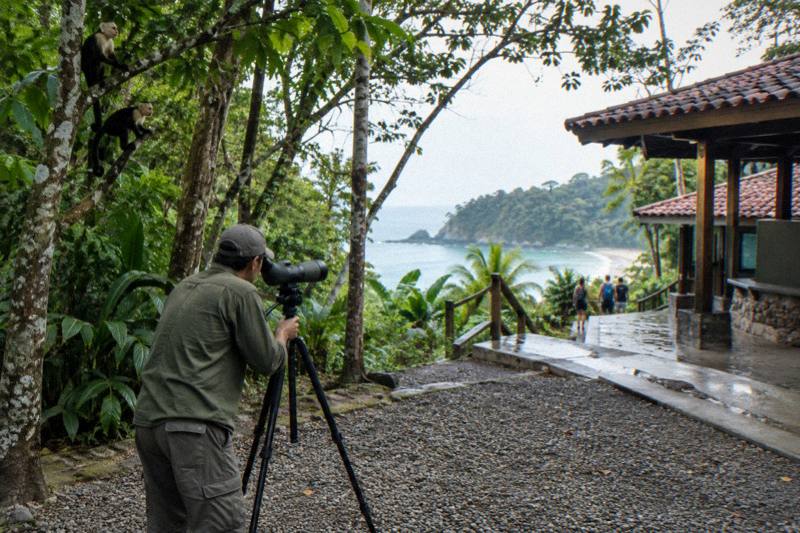
The planning detail people miss is the walking distance inside the gate versus outside it. Official park records list roughly 352 bird species, 109 mammals and 346 plants, and the titi monkey as the emblem species, so the walk itself is the attraction and a guide's spotting scope is what turns dense forest into visible wildlife. Whether you slept in Quepos or Manuel Antonio changes nothing once you are past the checkpoint. For more on that decision, see whether you need a guide and the park wildlife guide.
What About Beaches, Food And Nightlife?
Manuel Antonio's beach advantage is real and specific: Playa Espadilla runs continuously along the town's foot and the park's own beaches, including Playa Manuel Antonio with its side-of-cove snorkeling, sit just past the entrance. Quepos has fewer swimming beaches but a deeper, cheaper, more local food scene around the town center, fish market and marina, and nightlife is modest in both, concentrated in hotel bars and a handful of independent spots.
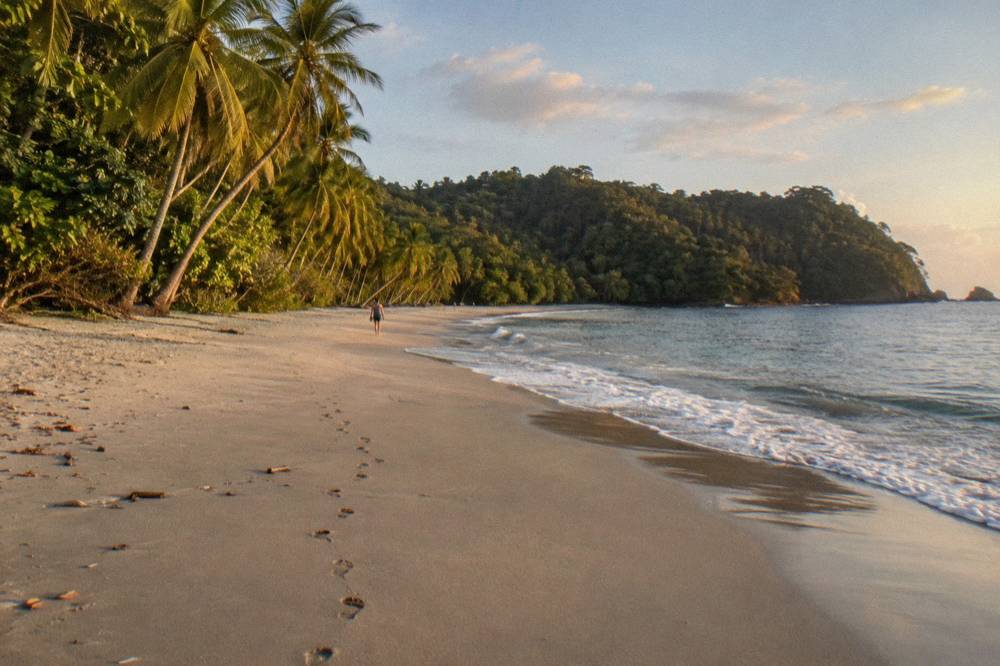
The beach math favors Manuel Antonio for a simple reason: the sand is attached to the hotels. Playa Espadilla, the long public beach outside the park, is free to walk at any hour and is the town's default evening plan, with sunset over the ocean somewhere around 5:10 pm in November to about 6:00 pm at the July peak. Inside the park, the official pages describe Playa Manuel Antonio as having snorkeling at the sides and some coral, Playa Espadilla Sur as wide at low tide and less crowded, and Playa Gemelas as split in two by a rock formation. The beaches guide breaks these down one by one.
Quepos counterpunches on price and authenticity rather than sand. The town center is where bank branches, pharmacies and the fish market live, and meals a block or two off the marina generally cost less than the hillside restaurants of Manuel Antonio. For the practical side of walking around town at night, the piece on street safety in Quepos covers daylight timing, valuables and licensed taxis without any rose tinting.
Nightlife in both towns is honest but limited. Manuel Antonio's scene is restaurant and bar driven, stretching along the road in discrete clusters rather than one walkable strip, so a night out often means a short taxi anyway. Quepos has a handful of local bars near the center and the marina's restaurant row. Neither town is a party destination.
How Do You Get To Quepos And Manuel Antonio In The First Place?
Most arrivals funnel into Quepos first, by bus, shuttle or the roughly 30-minute SANSA flight from San Jose to Quepos's La Managua airport, and then continue the last few kilometers to Manuel Antonio by taxi or the local bus along the same road. Coming from San Jose by road means Ruta 34, the coastal highway, which is currently carrying announced works including bridge interventions at Parrita and Savegre, so treat drive-time estimates as flexible.
The bus terminal, the airport and the marina are all on the Quepos side of the corridor, and that is the quiet structural argument for Quepos as a base: every arrival and departure link lands there. Tracopa's official schedule lists multiple daily San Jose departures toward Manuel Antonio and Quepos, with times including 06:00, 09:00 and 10:30 in the listed schedule. SANSA's own site confirms daily direct flights on the San Jose to Quepos run with a flight time of about 30 minutes and seasonal frequency.
The road picture is worth a paragraph because it affects both towns identically. The public works authority announced about $35 million of works on Ruta 34, including slope stabilization and bridge interventions at several points, two of them, Parrita and Savegre, on the approach to Quepos. The San Jose to Manuel Antonio guide covers the options in full.
Once you are in the corridor, the local bus and taxis cover the seven kilometers between towns cheaply and constantly, though high season crowds the single road. This is also why so many listings sell pickup: the sailing trip with lunch and open drinks includes hotel pickup and drop-off in the Quepos and Manuel Antonio main hotel area, and the Savegre rafting trip lists pickup from selected hotels. Read each listing's own transport line rather than assuming.
| Consideration | Staying In Quepos | Staying In Manuel Antonio |
|---|---|---|
| Distance to park entrance | About 7 km (4.34 miles) east of Quepos | Closest hotels a short drive or walk from the gate |
| Marina and boat departures | Marina Pez Vela and Paseo del Mar on your side | Short drive or included pickup on many listings |
| Bus terminal and local airport | Both in Quepos | Reached by taxi or local bus |
| Swimming beach access | Limited in town itself | Playa Espadilla continuous along the town |
| Food scene | Cheaper, local, fish market, marina row | Hillside restaurants, higher prices, sea views |
| Park tours with pickup listed | Only a few, and only on premium or private options | Covered when the listing states pickup |
What Does The Choice Mean For Your Tour Budget?
Your tour budget stays roughly the same no matter which base you choose, since identical pricing applies from both towns: park tours run $23 to $49 per person, mangrove trips $65 to $75, catamarans $86 to $148, and adventure listings $85 to $158.20. The real savings gap comes from lodging, with Manuel Antonio generally pricier and Quepos cheaper on rooms and meals, though it can add daily taxi fares to the beach.
Those tour figures are listing endpoints, not a curve to shop along. The cheapest park listing, the ticket-included scope-and-photos option at from $23 per person, rated 4.8 from 590 reviews, bundles the SINAC ticket, so comparing it against a from $27 listing without a ticket is not apples to apples until you add $18.08 for a foreign adult ticket. The tour prices guide untangles every category.
What each base adds is mostly transport friction. A Quepos base with tour pickups included is close to zero-friction: the vehicle comes to you. A Manuel Antonio base without pickup on a given listing means either the local bus or taxis, and during the busiest weeks that single road can turn a seven-kilometer hop into a slow crawl. Families booking the ocean kayak and snorkel trip to Biesanz Beach, from $65 per person and rated 4.7 from 86 reviews, should note its listing excludes transportation and lunch, so plan your own way to the beach where it starts.
One soft saving is worth naming. Travelers based in Quepos can book afternoon or evening activities without the return-taxi question hanging over them, and the night-tour listings are a good example. The naturalist-led night walk, rated 4.9 from 336 reviews and from $55 per person, lists hotel pickup and drop-off as an option, and most bookable night walks run on private reserves, while the park's own guide office runs night tours only Wednesday to Friday in the November to April season. The night tours guide covers what those walks actually involve.
Which Base Suits Which Traveler?
Choose Manuel Antonio if the trip is short, beach-centered and you want a short hop to the park gate for a 7:00 am start; choose Quepos if the trip is tour-heavy, longer, budget-conscious, or built around the marina, mangroves and transport links. Split stays are also entirely reasonable on visits of a week or more, since moving seven kilometers is a single taxi ride.
The short-trip case for Manuel Antonio is strong. On a two or three night visit, being walkable to Playa Espadilla and minutes from the park entrance removes most of the daily logistics, and the premium on rooms buys time. The piece on how many days is enough suggests the length at which the calculus changes, and the where to stay guide maps the neighborhoods in detail.
The longer or tour-heavier case belongs to Quepos. A week that includes the park, the Damas Island mangrove boat with lunch, a catamaran day, the twin zip line canopy tour and the Savegre rafting trip involves departures from the park entrance, the estuary, Marina Pez Vela and the hills behind Quepos respectively; sleeping in Quepos puts you within a short hop of every one of them, near the bus and airport if you arrive overland or by air, and near the cheaper kitchens for the nights you are not on a tour that includes a meal.
Weather barely discriminates between the towns, because there is seven kilometers of difference. Both share the same dry season, roughly December to April, and green season, roughly May to November, and the national forecaster's current outlook puts the Central Pacific dry-season start between 13 and 30 November this year. If you are visiting in the green months, either base leaves you equally likely to dodge or catch an afternoon shower; plan mornings for tours either way.
Whichever you choose, book from the listings themselves rather than from where you happen to be sleeping. The operator's live listing states pickup, meals, cancellation terms and group size for each specific product, and on a site where one town's convenience is another town's taxi ride, the listing is the only source that is always about your exact tour. Manuel Antonio Costa Rica Tours keeps all 35 tours side by side so the base decision and the booking decision stay in one place.
Common Questions About Choosing Between Quepos And Manuel Antonio
Is It Better To Stay In Quepos Or Manuel Antonio?
Quepos is the more practical base for tour-heavy trips, transport links and cheaper food; Manuel Antonio is better for beach access and a short hop to the national park gate. The towns are about seven kilometers apart on one road, so neither choice is wrong, and split stays work well on longer visits.
How Far Is Quepos From Manuel Antonio National Park?
The park's main entrance is 7 km, or 4.34 miles, east of Quepos, and the park sits 157 km south of San Jose. The single road between Quepos and Manuel Antonio is busy in high season, so allow extra time for morning departures.
Do Tours Pick Up From Both Quepos And Manuel Antonio?
Many listings on this site state hotel pickup, including the Savegre rafting trip from $129.95 per person and the Titi canopy zipline from $90 per person. Where a listing does not state pickup, check the listing for transport before booking.
Which Town Is Closer To The Marina And Boat Tours?
Quepos. Marina Pez Vela and Paseo del Mar, the departure points for the sailing, snorkeling and catamaran listings including the trip with lunch and open drinks from $95 per person, sit on the Quepos side of the corridor.
Is One Town Cheaper Than The Other?
Tour prices are identical from either base; the differences are in rooms, food and taxis. Quepos generally costs less for meals and lodging near the center, while Manuel Antonio trades higher prices for beachfront convenience and sea-view restaurants.