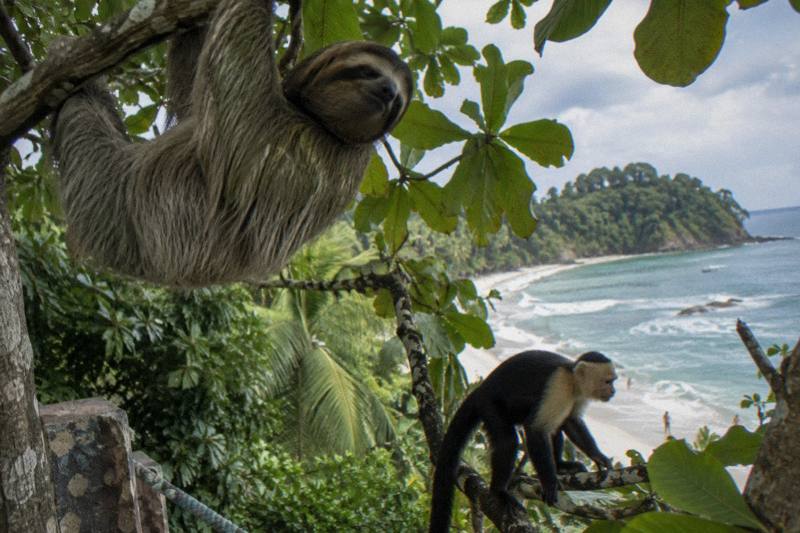
Manuel Antonio Beaches: Espadilla, Playitas And Biesanz
Manuel Antonio squeezes several very different beaches into a few kilometers of coastline, from the long public stretch at Espadilla to small coves reached on foot or by kayak, and the right one depends on whether you want to swim, surf, snorkel or simply find shade.
Short answer
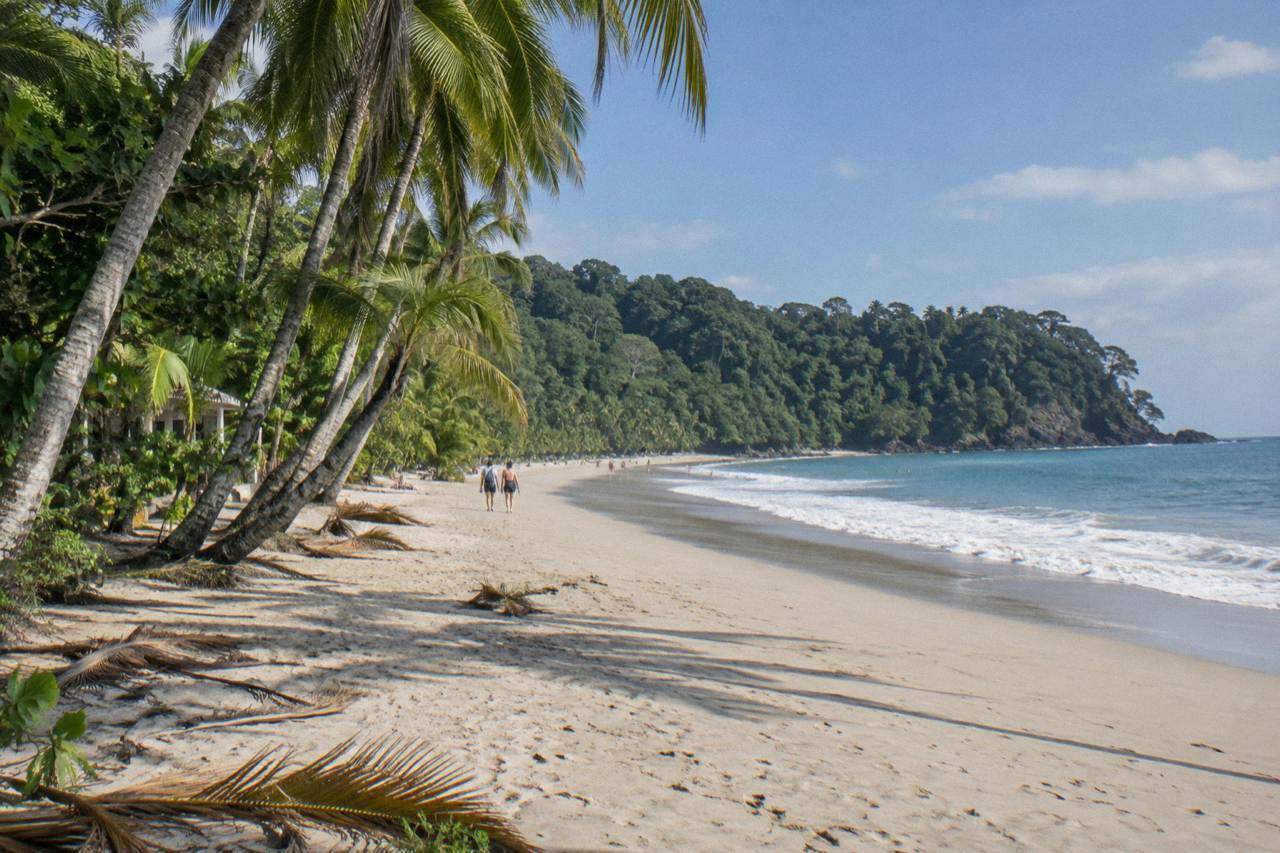
Playa Espadilla is the free public beach closest to Quepos, wide and busy. Playitas, at the far north end, is quieter. Biesanz is a small cove reached by a short path, popular with kayakers and snorkelers. Inside the national park, Playa Manuel Antonio, Espadilla Sur and Gemelas are reached with a park ticket, from $18.08 including IVA for foreign adults.
Manuel Antonio's coastline packs more variety into a few kilometers than most beach towns manage in fifty. The main public strand, Playa Espadilla, runs along the road's end below hotels and restaurants, while smaller coves hide at either end of it and inside the national park itself. Choosing between them is mostly a question of what kind of day you want, because the sand changes character dramatically from one end of the road to the other, and the park beaches sit behind a ticket line and a gate.
The water is warm all year. The Quepos sea temperature table averages about 27.7 to 29.4 degrees Celsius across the twelve months, so a swimsuit matters more than a wetsuit. What changes through the year is rain and crowd flow: the dry season runs roughly December to April, and the national weather service's latest outlook puts the Central Pacific dry-season start between mid and late November 2026. September and October are the quietest months, the park's own official page notes, though they sit at the wettest end of the year on the Quepos rainfall table.
This guide walks through each stretch of sand, the swimming, surf and shade trade-offs, how the park beaches work with a ticket, and the boat, kayak and snorkel trips that turn a beach day into a water day. Through all of it, Manuel Antonio Costa Rica Tours treats the beaches as the base and the tours as the add-on, not the other way around.
Which Manuel Antonio Beach Is Best For Swimming?
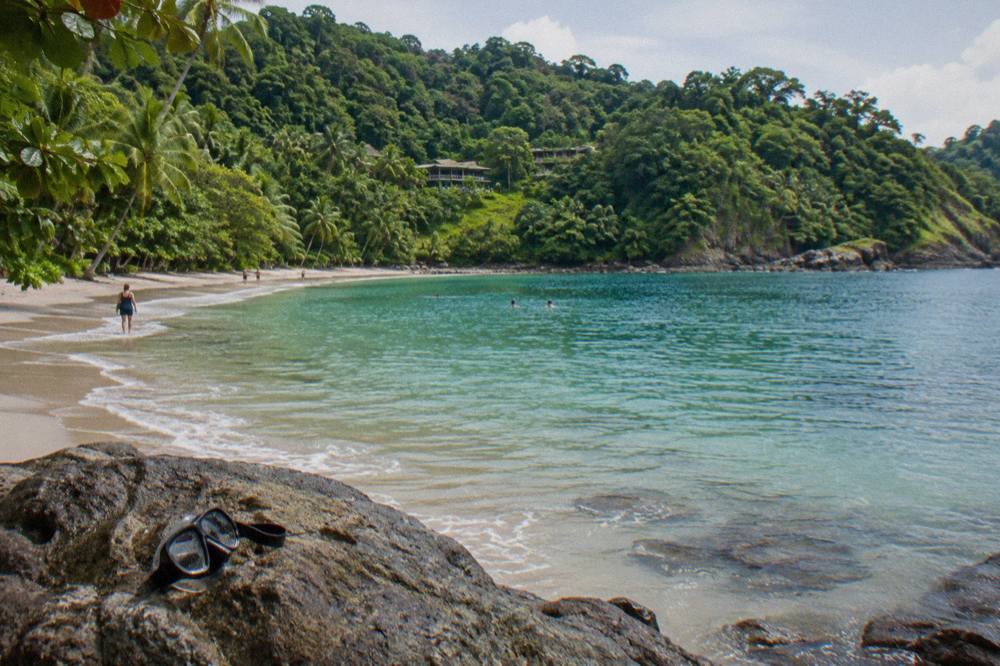
For calm-water swimming inside a protected setting, Playa Manuel Antonio in the national park is the classic answer, with the official park page noting snorkeling at its sides and marine life around some coral; outside the park, the Biesanz cove is the sheltered option kayakers paddle to, reached by a short path or by water with the ocean kayak and snorkel tour to Biesanz Beach. Espadilla is swimmable but faces the open Pacific.
Playa Manuel Antonio sits at the end of the park's main trail system, backed by rainforest, and the official SINAC page for the park describes it with snorkeling at the sides and marine life including some coral. The forest comes right down to the sand there, which means shade is part of the deal rather than a resource to fight over. The trade-off is entry: the park is open Wednesday to Monday, 7:00 am to 3:00 pm, closed Tuesdays, and foreign adults pay $18.08 including IVA, children 2 to 12 pay $5.65 including IVA, under 2 free, bought only in advance on the official SINAC online portal.
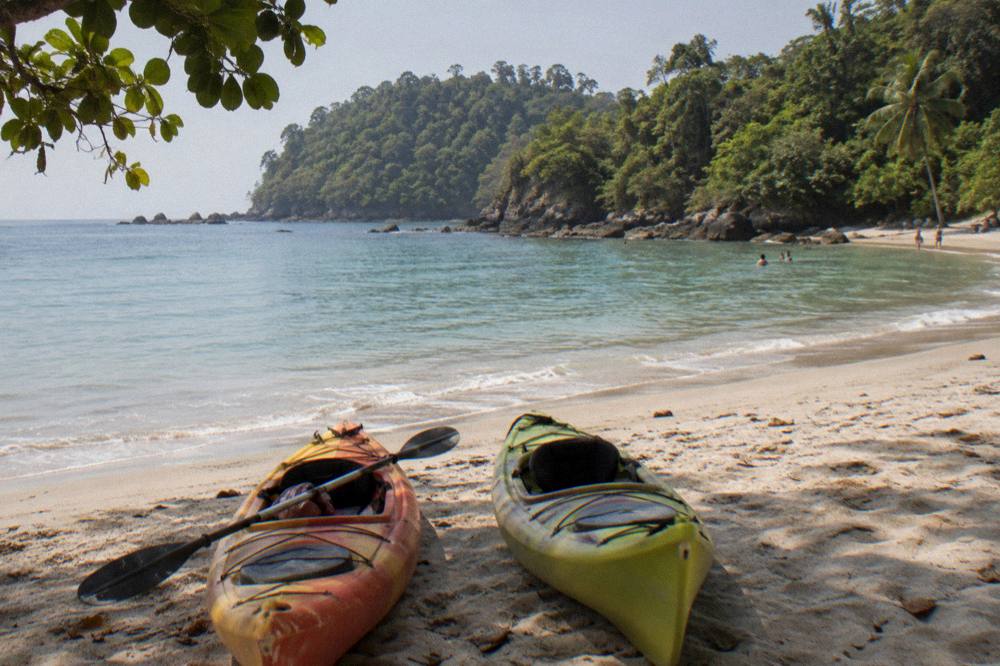
Biesanz sits outside the park boundary. It is the beach the kayak trips aim for: the Manuel Antonio ocean kayak and snorkel tour to Biesanz Beach runs about 3.5 hours, from $65 per person, with kayak and snorkel gear, a fruit snack and a bilingual guide included; transport and lunch are excluded, and free cancellation listed. Rated 4.7 from 86 reviews on its listing, it is one of the few products in the catalogue that is genuinely beach-shaped rather than park-shaped or boat-shaped.
Espadilla, the long public beach, is the everyday option. It is free, it is steps from the bus stop and the restaurants, and it faces open water, so conditions depend on the day. Swim near lifeguarded or busy sections and ask locally about currents, because the ocean here is the real Pacific, not a lagoon.
| Beach | Access | Water character | Shade | Crowd level |
|---|---|---|---|---|
| Playa Manuel Antonio (in park) | Park ticket, Wednesday to Monday | Calmer, snorkeling at sides per official page | Forest edge | Moderate, thins out late afternoon |
| Playa Espadilla Sur (in park) | Park ticket | Wide at low tide, some strong waves in some seasons per official page | Limited | Less crowded than Playa Manuel Antonio |
| Playa Gemelas (in park) | Park ticket | Split by a rock formation | Limited | Often quiet |
| Biesanz cove | Short path or by kayak | Sheltered cove | Some | Moderate, kayakers and locals |
| Playa Espadilla | Free, public | Open Pacific, varies daily | Rental umbrellas, palms | Busiest |
Where Can You Surf Around Manuel Antonio?
Espadilla is the local surf beach, with board rentals and lessons concentrated along its public stretch, and the breaks working best in the green season when the swell is more consistent; there is no surf listing in this catalogue, so surf lessons are bought separately from local operators, while this site's water products cover kayaking, snorkeling and catamaran sailing instead.
The public beach at Espadilla faces southwest into the Pacific, and its sandbars reshape with the swell. Local surf schools line the road above it, and rental stands cluster where the beach meets the parking area. This catalogue does not sell surf lessons, so that purchase happens directly with the schools on the ground.
What the catalogue does sell gets you onto the same water in different ways. The Ocean King catamaran trip, from $86 per person for about 3.5 hours with lunch, drinks and snorkel gear listed, puts you past the break line and along the coast. The sailing trip with lunch and open drinks, from $95 per person and rated 4.7 from 653 reviews, departs from Marina Pez Vela and includes hotel pickup in the Quepos and Manuel Antonio hotel zone as well as snorkeling stops. Both give you the coastline the surfers see from the water.
If surfing matters to your trip, plan it around season. Green season, May to November, brings the more consistent swell on this coast; the dry season is flatter and better for swimming and snorkeling visibility. The weather by month guide breaks the rainfall table down month by month, and the rain numbers matter here: the Quepos climate table shows a large swing between the wettest late-season months and the driest weeks of February, a gap worth knowing for anyone booking a board.
Is Playa Espadilla The Same As Manuel Antonio Beach?
In practice yes: when people say "Manuel Antonio beach" they almost always mean Playa Espadilla, the long free public beach at the end of the road past Quepos, though strictly the name belongs to the whole stretch of coast including the smaller Playitas at its north end and the park beaches behind the gate at its south end.
Espadilla is the working beach. It is where the buses stop, where the restaurants and juice stands are, and where most hotel guests walk to. It is free, needs no ticket, and is open every day, including Tuesdays when the national park next door is closed. That Tuesday detail matters more than visitors expect: on a Tuesday, Espadilla carries everyone.
Playitas, at the northern end of the same strand, is the quieter extension, a short walk further from the parking and the crowds. The south end of Espadilla approaches the park entrance, where the ticket office path begins and the coves start.
The practical split is simple. Espadilla and Playitas cost nothing and close never. The park's beaches cost a ticket bought online in advance and close at 3:00 pm. The park's official rules also apply inside: no food or beverages of any kind beyond the designated eating area, no feeding animals, no umbrellas, balls, tents or hammocks, and the manzanillo tree on the beach is toxic, so do not touch it or eat its fruit. The national park tickets guide walks through the online purchase step by step.
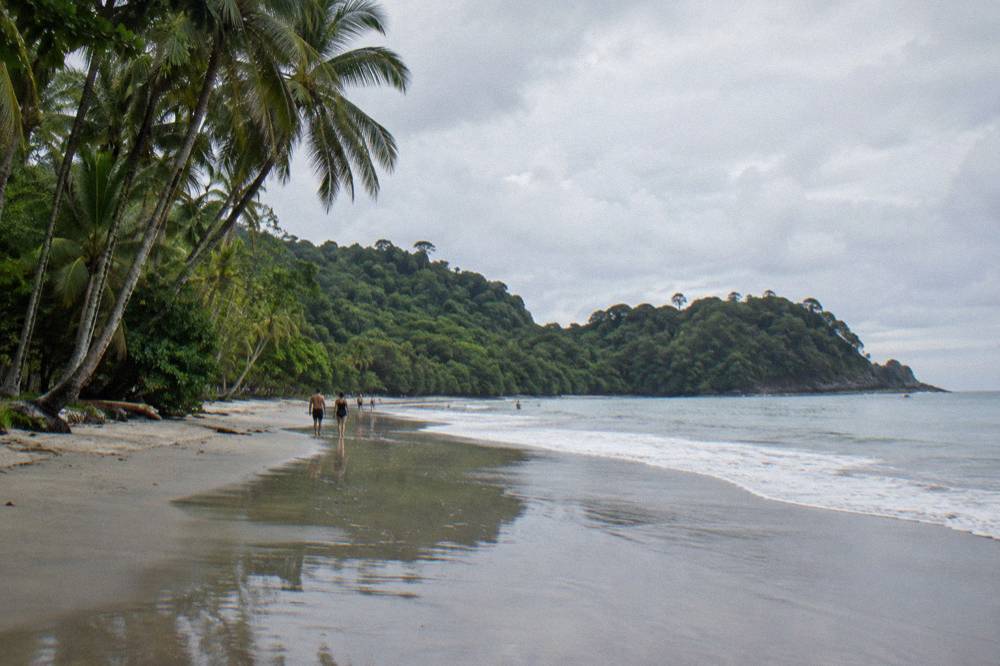
A beach day on Espadilla pairs naturally with a park morning, since the gate is a 15 minute walk along the sand. Most visited mornings, a guided walk such as the park nature guided tour, rated 4.8 from 4,590 reviews, from $49 per person for four hours with free cancellation listed, ends near the beach inside the park, leaving the afternoon free for swimming. The park ticket itself is excluded on that listing, so buy it separately on the SINAC portal.
Which Beaches Are Inside The National Park?
Three named beaches sit inside the park: Playa Manuel Antonio, Playa Espadilla Sur and Playa Gemelas, per the official SINAC park page, all reached on foot from the main entrance after a ticket purchased online, with the park open Wednesday to Monday 7:00 am to 3:00 pm and closed every Tuesday.
The official page describes each. Playa Manuel Antonio is the headline beach, with snorkeling at the sides, marine life and some coral. Espadilla Sur is wide at low tide, can carry some strong waves in some seasons, and is less crowded than its famous neighbor. Gemelas is split in two by a rock formation, which gives it two small sand pockets rather than one strand.
Getting to them is a walk, not a drive. The main entrance sits 7 km east of Quepos, there is no vehicle parking in the park, and the single road from Quepos to Manuel Antonio gets very busy in high season, so going early is standard advice. The park's other features sit around the beaches: the Punta Catedral headland with its viewpoints (the trail is temporarily closed per the official English page, so do not plan around it), La Trampa, a low-tide indigenous fish trap, a seasonal waterfall, roughly 18 hectares of mangrove and a 14 hectare lagoon.

What Is The Best Time Of Day For A Manuel Antonio Beach?
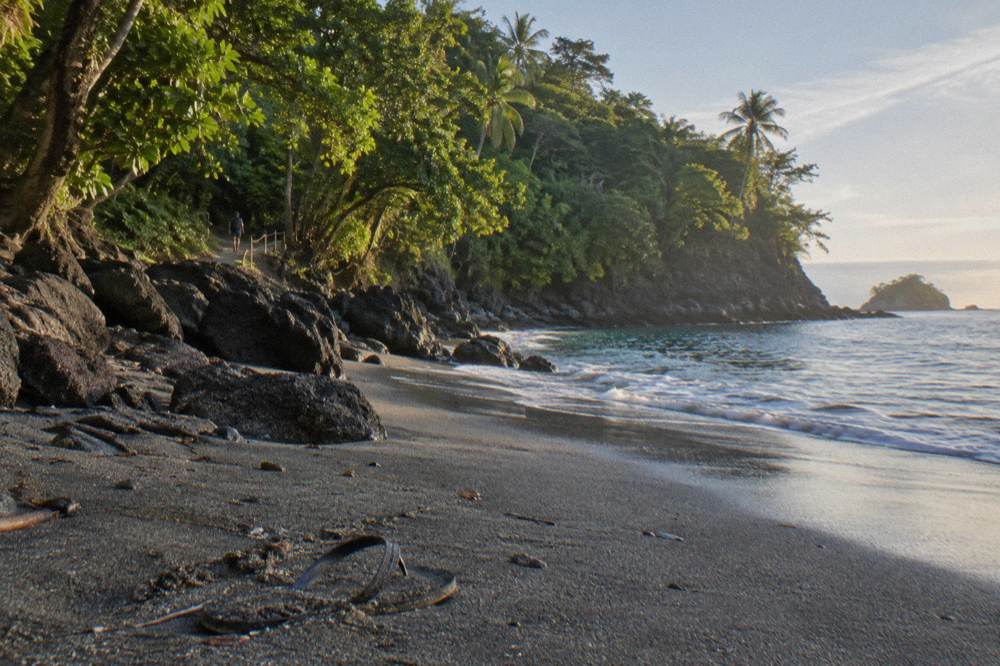
Early morning is the best time on every beach here: the park opens at 7:00 am and its official page advises arriving early, the sand is coolest, wildlife activity around the forest edge is highest before midday, and afternoon rain in the green season typically builds after lunch, while sunset falls between about 5:10 pm and 6:00 pm across the year.
The park-side logic is straightforward. Gates open at 7:00 am and close at 3:00 pm, so a late start on a park beach shortens the day twice over. September and October see fewer visitors, the park notes, though they sit at the wettest end of the Quepos rainfall table.
The free beaches run on a different clock. Espadilla is at its softest before about 10 am, before the day-trip crowds arrive and before the sand heats up. Afternoons in the green season belong to the sky: the weather service's advisories through October 2026 repeatedly flagged afternoon showers and thunderstorms for the Central Pacific with saturated soils, a pattern that repeats most of the wet half of the year.
Sunset closes the day. Computed for this latitude, sunset runs from about 5:10 pm in mid November to about 6:00 pm in mid July, rounded to the nearest five minutes.
| Time of day | Public beaches (Espadilla, Playitas) | Park beaches | Notes |
|---|---|---|---|
| 7:00 to 9:00 am | Cool, quiet | Gate opens, guided tours start | Best wildlife and light |
| 9:00 am to 12:00 pm | Crowds build | Peak visitation | Book shade or arrive early |
| 12:00 to 3:00 pm | Hot sand, busy | Park closes at 3:00 pm | Green season rain risk |
| Late afternoon | Soft light, locals | Closed | Sunset about 5:10 to 6:00 pm |
Can You Snorkel From Manuel Antonio Beaches?
Yes, in defined spots: the official park page lists snorkeling at the sides of Playa Manuel Antonio with marine life and some coral, and the Biesanz cove is the local go-to for shore and kayak snorkeling outside the park, while the clearer water generally comes with the dry season and with boat trips that reach points beyond the beaches.
Shore snorkeling here is honest rather than spectacular. Playa Manuel Antonio's sides hold fish and some coral, per the official SINAC description, and Espadilla Sur and Gemelas offer rocky edges worth a look. Visibility depends on swell and runoff, which is why the dry season, roughly December to April, is the steadier window, and why the sea temperature staying about 28 degrees Celsius year-round means comfort is never the issue.
The two ways to upgrade the snorkeling both involve the catalogue. One is the Biesanz kayak trip already described, which paddles you into the cove with gear in the boat. The other is a sailing or catamaran day: the catamaran cruise with meal, from $95 per person for four hours and rated 4.6 from 187 reviews with transport and naturalist guide listed, includes swim and snorkel time off the boat. The all-inclusive catamaran eco adventure, from $86 per person, includes snorkel gear, hotel pickup and a full lunch, with beer available to purchase at $4 a can per its listing and carbonated drinks excluded.
For a deeper comparison of the boat options, the snorkeling tours guide lines up the whole category, and the catamaran tours guide does the same for the sailing side. The marina where most of them depart, Marina Pez Vela in Quepos, lists the catamaran and sailing activities on its own official things-to-do page, which is the best primary reference for what currently runs from its docks.
Are The Manuel Antonio Beaches Good For Families With Kids?
They are, with the right pick: the calmer, sheltered water at the park's Playa Manuel Antonio and at Biesanz suits younger swimmers better than open Espadilla, park entry for children 2 to 12 is $5.65 including IVA with under 2 free, and family-friendly listings include the four-hour park nature guided tour from $49 per person with free cancellation listed.
Sheltered water is the deciding factor with children. The park beach and the Biesanz cove both sit in more protected corners of the coast. Espadilla Sur carries some strong waves in some seasons, the official page notes, so it is a watch-the-conditions beach rather than a default. Espadilla's open stretch demands the usual vigilance anywhere on this coast.
The park's food rules shape a family day more than people expect: no food or beverages of any kind inside beyond the designated eating area, which operates 7:30 am to 3:30 pm. Plan the picnic accordingly, either at the designated area or back on the free beach. Drinking-water fountains sit along the Perezoso trail and the beach trails, per the official page, but pack bottles anyway.
Wear proper footwear, the park advises, sandals not recommended, and that applies double for kids on hot sand and rooty paths. For a fuller packing list, the what to bring guide covers footwear, rain gear and the park-specific restrictions in one place.
How Do You Get To The Beaches From Quepos?
The road from Quepos runs about 7 km to the park's main entrance, with Playa Espadilla and Playitas along the last stretch of it before the gate, and travel is by local bus, taxi or a walk of roughly an hour from central Quepos to the sand; the road gets very busy in high season per the official park page, and there is no vehicle parking inside the park.
The local bus runs the Quepos to Manuel Antonio road regularly through the day and drops passengers at the beach road's end. Taxis cover the same run in minutes. Many listings also list hotel pickup: among the beach-relevant ones, the sailing trip with lunch and open drinks lists hotel pickup and drop-off for the Quepos and Manuel Antonio main hotel area.
Where you stay changes the walk. The Quepos versus Manuel Antonio comparison weighs the two bases, and the where to stay guide maps the neighborhoods against the sand. In short, staying in Manuel Antonio puts the beaches at the door; staying in Quepos trades the walk for restaurants, the marina and the bus terminal.
One road note worth keeping: the transport ministry announced in late September 2026 roughly $35 million of works on Ruta 34, the coastal highway, including slope stabilization and bridge work at Parrita and Savegre. No closures affecting local access were announced in the October window, so treat it as background rather than a plan-changer, and check current conditions when driving down from San Jose.
Should You Combine A Beach Day With A Boat Or Snorkel Trip?
Yes, and it is the single best upgrade to a Manuel Antonio beach day: the coastline's quiet coves and clear-water points are easier to reach from the water, and the catalogue's beach-adjacent listings span from the $65 Biesanz kayak and snorkel trip to sailing days from $95, several with hotel pickup, meals and free cancellation listed.
The logic is geographic. The best water sits in coves and points that are either behind the park gate or around headlands, and boats and kayaks erase both barriers. A morning kayak into Biesanz, a midday park beach, or a sunset sail are the three classic combinations, and they stack cleanly because their times do not overlap.
| Listing | Price from | Duration | What the listing includes |
|---|---|---|---|
| Ocean kayak and snorkel to Biesanz Beach | $65 per person | 3.5 hours | Kayak and snorkel gear, fruit snack and drinks, bilingual guide, free cancellation |
| Ocean King catamaran | $86 per person | 3.5 hours | Lunch or dinner, by departure, 4 alcoholic drinks or cocktails, non-alcoholic drinks, snorkel gear, hotel pickup, free cancellation |
| Sailing with lunch and open bar | $95 per person | 3.5 hours | Unlimited drinks (open bar), lunch, snacks, snorkel gear, hotel pickup in Quepos and Manuel Antonio area, free cancellation |
| Sea Quest catamaran | $95 per person | 3 to 4 hours | Meal on board, alcoholic drinks, soda, snacks, round-trip transport, snorkel gear, free cancellation |
Every price above is the from-price on the operator's live listing, and ratings print with their review counts. The Biesanz kayak trip holds 4.7 from 86 reviews; the Ocean King 4.4 from 316; the sailing day 4.7 from 653; the Sea Quest 5.0 from 231.
For the fuller water picture, the things to do guide ranks the whole area's options, and the day tours guide groups them by format. If your beach day is really a wildlife day in disguise, the park wildlife guide explains what the forest behind the sand holds.
Common Questions About Manuel Antonio Beaches
Which Manuel Antonio beach is best for swimming?
The sheltered pick inside the park is Playa Manuel Antonio, which the official park page describes with snorkeling at its sides and marine life; outside the park, the Biesanz cove is the calm-water option. Espadilla is swimmable but faces the open Pacific, so conditions vary daily.
Can you swim on Manuel Antonio beaches for free?
Yes. Playa Espadilla and Playitas at its north end are free public beaches with no ticket and no closing gate, open every day including Tuesdays when the national park next door is closed. The park's own beaches require an online ticket, $18.08 including IVA for foreign adults.
What is the best time of day for a Manuel Antonio beach?
Early morning. The park opens at 7:00 am and its official page advises arriving early, the sand is cooler, and green-season rain typically builds in the afternoon. Sunset falls between about 5:10 pm and 6:00 pm across the year.
Can you snorkel from the beach in Manuel Antonio?
Yes, at the sides of Playa Manuel Antonio inside the park, per the official park page, and from the Biesanz cove outside it. Visibility is generally steadier in the dry season, roughly December to April, and boat trips reach clearer points beyond the beaches.
Is the beach inside Manuel Antonio National Park worth the ticket?
For most visitors yes: the forest comes down to the sand, the official page describes three named beaches including the less crowded Espadilla Sur, and the wildlife behind the beach is the park's main draw. Children 2 to 12 pay $5.65 including IVA, under 2 free.
Can you surf at Manuel Antonio?
Playa Espadilla is the local surf beach, with rental stands and schools along the public stretch, most consistent through the green season. Surf lessons are sold separately by local operators; this site's catalogue covers the kayaking, snorkeling and sailing side of the same water.