Manuel Antonio Snorkeling Tours: What You Can Actually See
Snorkeling around Manuel Antonio means boat trips to rocky reef stops near Biesanz Bay, warm Pacific water year round, and visibility that swings with tide and season rather than with luck.
Short answer
Snorkeling tours from Manuel Antonio and Quepos run from $65 per person for an ocean kayak and snorkel trip to Biesanz Beach up to $148 per person for a wooden sail yacht cruise with watersports. Most boat trips include gear and food. Expect reef fish at rocky points rather than Caribbean-style coral, with the clearest water in the dry season, December to April.
Snorkeling in Manuel Antonio is not the Caribbean. The Central Pacific coast gives you warm water, about 27.7 to 29.4 degrees Celsius across the year at Quepos, rocky reefs at the headlands, and clouds of reef fish where the rocks drop away. What it does not give you, most days, is the glass-clear, coral-wall visibility travelers picture from brochures. That gap between expectation and reality is exactly what this guide addresses.
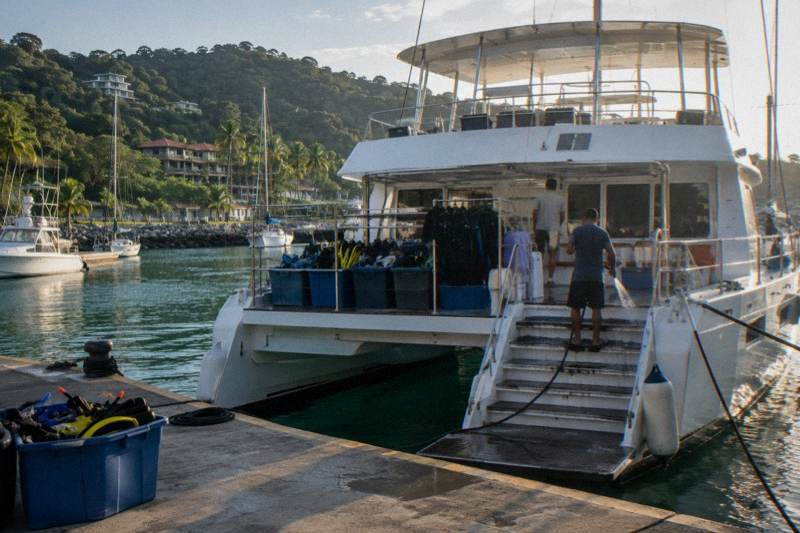
The short version: nearly all serious snorkeling here happens from boats. The best-known stops cluster around Biesanz Bay and the rocky points inside and beside the national park, reached by catamaran, sailboat or kayak from Marina Pez Vela in Quepos or the beach in Manuel Antonio. Visibility depends heavily on tide, swell and season, and no honest operator will promise it. What you can count on is warm water all year, gear included on the listings that say so, and a genuinely good afternoon on the water for a wide range of budgets.
Where Can You Actually Snorkel Around Manuel Antonio?
Snorkeling around Manuel Antonio happens at three kinds of places: the sheltered beach inside the national park, the rocky reef corners of Biesanz Bay, and deeper reef and rock stops reached only by boat along the coast between Quepos and the park. Each has a different character, and only one of them, the park beach, is reachable on foot. The rest require a tour, a kayak or a hire boat, which is why almost every snorkeling product sold here is a boat product.
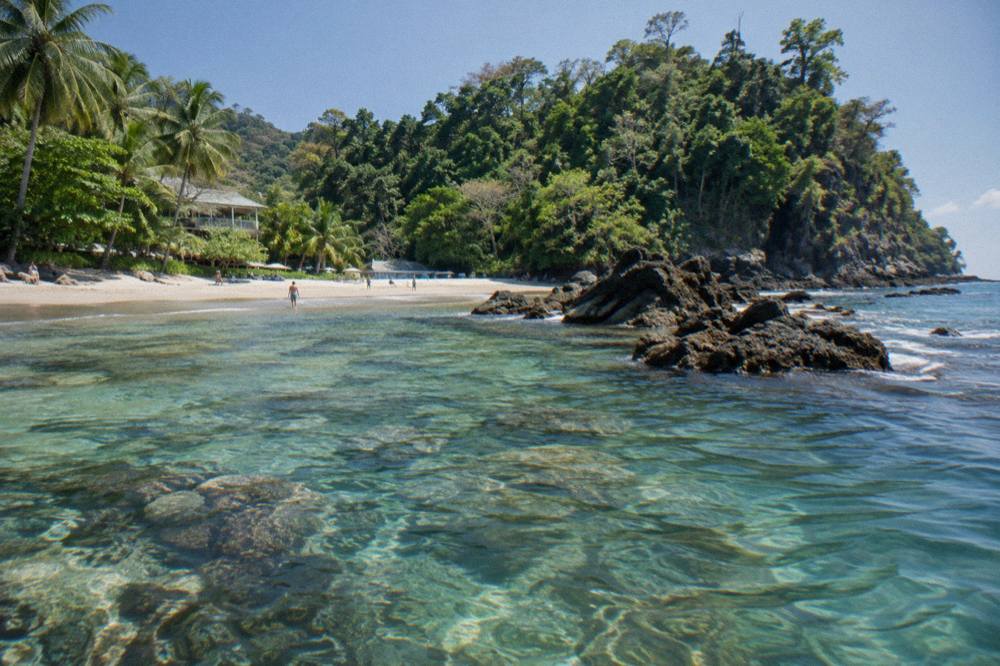
Start with the geography. Playa Manuel Antonio, the beach inside the national park, is described on the official SINAC park page as having snorkeling at its sides, with marine life and some coral. The same page warns that the manzanillo tree on the beach is toxic, one of several reasons the park is a look-don't-touch place. Park rules also prohibit food and beverages of any kind inside, so a snorkel visit there is a swim-and-goggles outing, not a picnic trip. Tickets are sold only online through the SINAC portal, and the park is closed Tuesdays, open 7:00 am to 3:00 pm Wednesday to Monday.
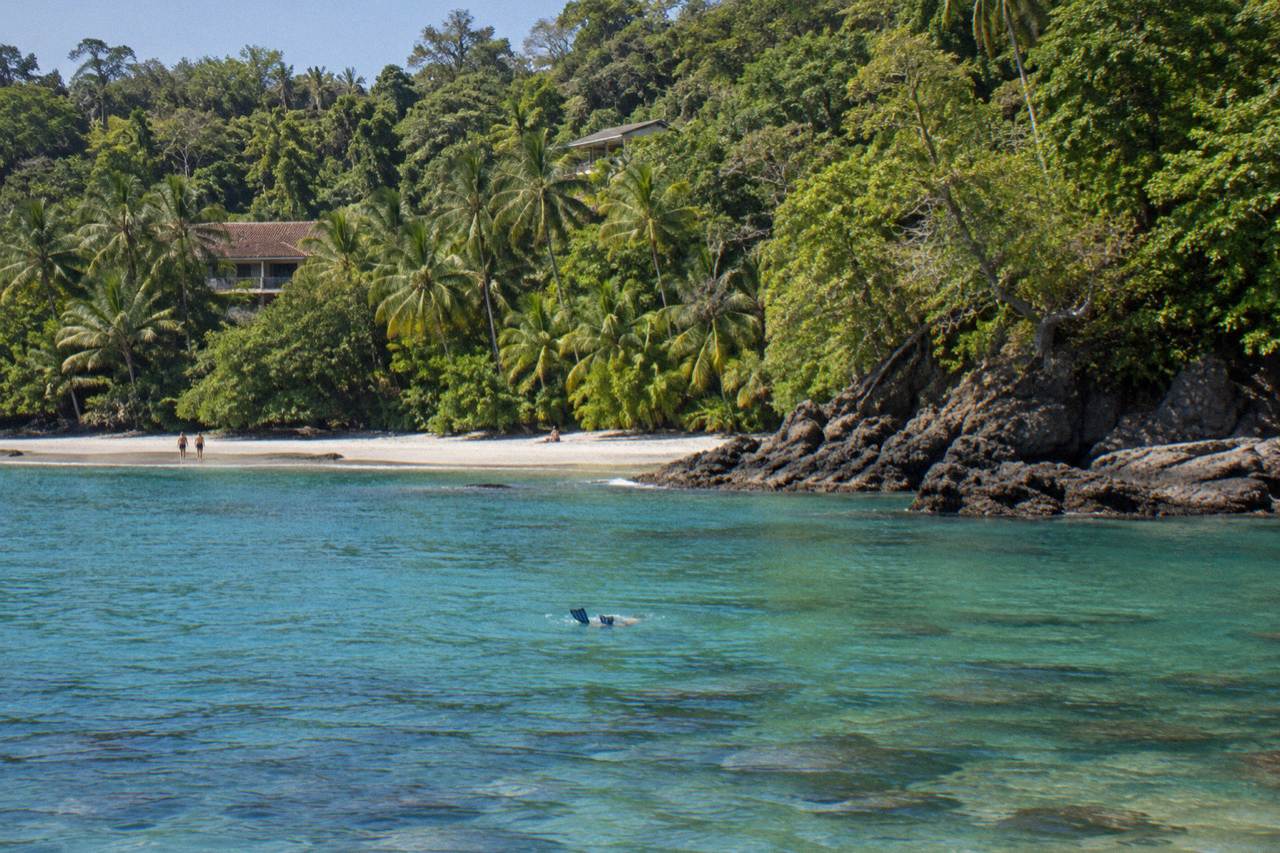
Biesanz Bay is the second key spot. This sheltered cove between Quepos and the park is where the ocean kayak and snorkel tour paddles, and it is the most common snorkel stop named in the boat listings. Because it sits behind a headland, it holds calmer water when the outer coast is churned up, which matters enormously for visibility. The third set of locations is the string of rocky points and reef patches the catamarans and sailboats visit offshore, chosen by the crew on the day based on conditions, which is worth remembering when a listing says snorkeling is included but does not name a fixed stop: the captain picks.
| Snorkel spot | How you reach it | Water character | Honest note |
|---|---|---|---|
| Playa Manuel Antonio (park beach) | On foot, with a pre-bought park ticket | Snorkeling at the sides, marine life and some coral per the official park page | Park closed Tuesdays; no food or drink allowed inside |
| Biesanz Bay | Kayak tour or boat stop | Sheltered cove, usually the calmest option near shore | It is a bay, not a lagoon; swell still affects it |
| Offshore reef and rock stops | Catamaran and sailboat tours from Quepos | Deeper water, more fish, chosen on the day | Stops depend on conditions and skipper judgment |
For help choosing among the boat options generally, the Manuel Antonio catamaran tours guide breaks down every hull in the catalogue, and the Manuel Antonio beaches guide covers the sand itself if swimming matters more than fish.
Which Snorkeling Tours Leave From Quepos And Marina Pez Vela?
Seven boat listings in this catalogue include snorkeling, departing mainly from Marina Pez Vela in Quepos, and they range from $65 per person for a kayak-and-snorkel trip to Biesanz Beach to $148 per person for a four-hour wooden sail yacht cruise with food and watersports. All of them list free cancellation, and most include hotel pickup in the Quepos and Manuel Antonio area.
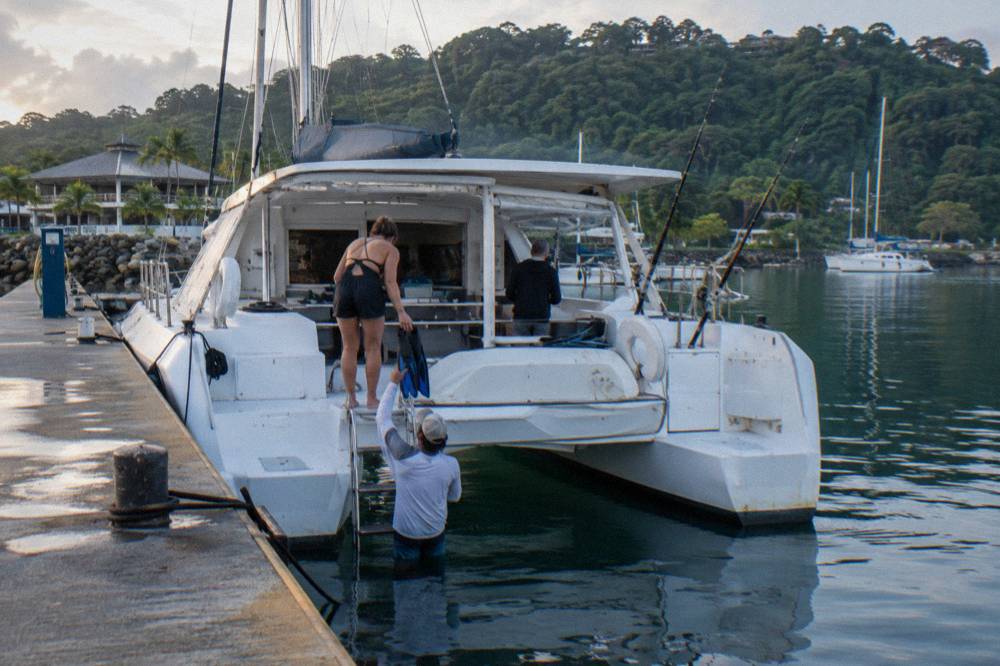
Marina Pez Vela is the working base for most of this. The marina's own site lists catamaran and sailing trips among its things to do, alongside the sport fishing the port is best known for. Three of the big boats depart from the marina itself: the sailing trip with lunch and open bar, from $95 per person, rated 4.7 from 653 reviews; the Sea Quest catamaran, from $95 per person, rated 5.0 from 231 reviews; and the Ocean King catamaran, from $86 per person, rated 4.4 from 316 reviews. A fourth, the All Inclusive Catamaran Eco Adventure, also departs from Marina Pez Vela at $86 per person with an onboard naturalist guide. The wooden sail yacht cruise also leaves from Marina Pez Vela.
The kayak option is the odd one out and the cheapest way onto fish-holding water. The ocean kayak and snorkel trip to Biesanz Beach paddles from shore rather than motoring from the marina: from $65 per person, 3.5 hours, rated 4.7 from 86 reviews, with a fruit snack and drinks, kayak and snorkel gear and a bilingual guide included; transport and lunch excluded. That is a lot of inclusions for the price tier, and the small-group paddle format suits travelers who find a 66-person catamaran less appealing.
| Tour (card name) | From, per person | Duration | Rating and reviews | Food and drink listed |
|---|---|---|---|---|
| Ocean Kayak to Biesanz Beach | $65 | 3.5 hours | 4.7 from 86 reviews | Fruit snack and drinks; lunch excluded |
| All Inclusive Catamaran | $86 | 3 to 4 hours | 4.6 from 636 reviews | Lunch, juices, rum and vodka, no beer or soda included |
| Ocean King Catamaran, Snorkel and Drinks | $86 | 3.5 hours | 4.4 from 316 reviews | Lunch, dinner, fruit, four alcoholic drinks, non-alcoholic drinks |
| Sailing with Lunch and Open Bar | $95 | 3.5 hours | 4.7 from 653 reviews | Lunch, snacks, unlimited drinks; beer sold separately |
| Sea Quest Catamaran | $95 | 3 to 4 hours | 5.0 from 231 reviews | Meal on board, alcohol, soda, snacks |
| 4-Hour Catamaran with Meal | $95 | 4 hours | 4.6 from 187 reviews | Lunch or dinner, water, juices, fruit |
| Wooden Sail Yacht, Watersports | $148 | 4 hours | 4.9 from 104 reviews | Welcome cocktails, early lunch or dinner, fresh fruit |
Every one of these seven listings shows free cancellation on its line except where noted, so booking ahead for high season costs little flexibility.
What Can You Actually See Underwater At Manuel Antonio?
The honest underwater picture here is reef fish, reef fish and small reef creatures at the rocky points, with the national park's own beach described by SINAC as having some coral and marine life at its sides. This is not a wall-diving destination, and nobody should book expecting one, but the fish life at the rock interfaces is genuinely busy, and dolphins and humpbacks are possible from the boat, never guaranteed.
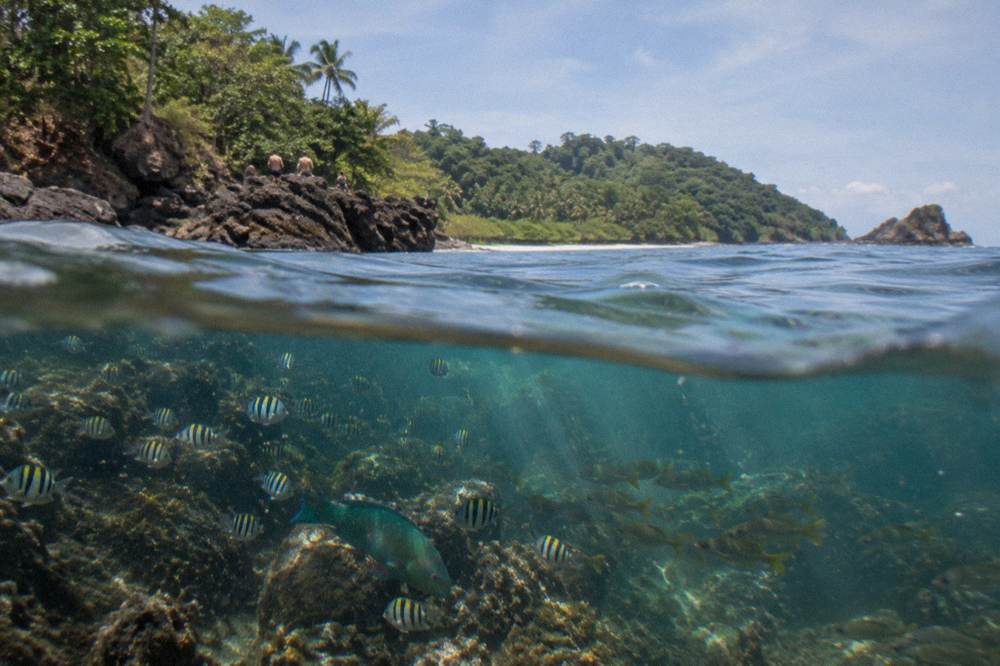
The park itself records a serious amount of life above and below the waterline: roughly 352 bird species, 109 mammals and 346 plants inside its boundaries, plus about 18 hectares of mangrove and a 14-hectare lagoon. The underwater structure that attracts fish is rock, not extensive coral. Volcanic headlands like the ones at Biesanz and the park's point give fish cover, and where there is structure and current in warm Pacific water, there are schools.
Out on the boats, the marine mammal question comes up constantly. Operators describe southern humpback whales as passing these waters roughly July to early November, peaking August to September, and a northern group roughly December to March or April, with dolphins, spinner, bottlenose and spotted, described as possible year round. Constraint of honesty: sightings are never promised by any listing here, and the marine environment does not take bookings. What the listings do promise is the boat, the gear and the snorkel stop. The Sea Quest catamaran's 5.0 rating from 231 reviews suggests the overall day, food, crew and coastline, satisfies travelers even when the ocean keeps its larger residents to itself.
One more expectation to set: the water is warm everywhere and always. Sea temperatures at Quepos average about 27.7 to 29.4 degrees Celsius month to month, meaning no wetsuit is needed for comfort on any listing in this catalogue. That fact alone makes Manuel Antonio an easy snorkeling destination for people who found cooler-water snorkeling somewhere else genuinely unpleasant.
When Is Visibility Best: Tide, Season And Time Of Day?
The clearest water around Manuel Antonio generally comes in the dry season, roughly December to April, when rainfall drops from its green-season peak and runoff stops staining the nearshore water, and on any given day the best visibility is close to high tide at a sheltered stop like Biesanz Bay in the morning before afternoon wind picks it up. Rainfall here is dramatic in its swing: the Quepos climate table shows about 25.8 mm in February against about 544.3 mm in September, and that difference lands directly on your mask.

The mechanism matters more than the averages. Rain itself falling on the sea barely clouds it; what clouds it is sediment washed down rivers and streams after heavy rain, plus swell stirring the shallow rock zones. Green season, May to November, means more of both. The counterweight, and it is a real one, is that green season is when the southern humpbacks are passing, roughly July to early November, and when afternoon storms often leave mornings bright and flat. Plenty of good snorkeling happens in September; it just carries more variance.
Tide and time of day are the levers you control. Around high tide, clearer ocean water pushes in over the reefs; on a falling tide, especially after rain, turbidity rises. Morning trips also benefit from the calm before the afternoon sea breeze. The sunset cruises, lovely as they are, are not primarily snorkeling trips; see the Manuel Antonio sunset cruise guide for that side of the catalogue.
| Factor | Better visibility | Worse visibility |
|---|---|---|
| Season | Dry season, roughly December to April | Peak green season, especially September and October |
| Tide | Near high tide | Falling tide after rain |
| Time of day | Morning, before the afternoon wind | Mid-afternoon onward |
| Location | Sheltered coves such as Biesanz Bay | River mouths and stirred shallows |
For a fuller month-by-month read including the IMN outlook, the Manuel Antonio weather by month guide carries the full table, and the national weather institute's own subseasonal forecast is published at imn.ac.cr if you want the meteorological source behind the season boundaries quoted here.
Do You Need Your Own Snorkel Gear?
No, you do not need your own gear: all but the 4-hour catamaran with meal list snorkel gear as included, so the mask, fins and snorkel come with the trip. What is worth bringing yourself is a towel, reef-safe sun protection and, if you wear glasses, a contact-lens solution, since optical masks are not promised on any listing. Check the listing for anything beyond the basics.
The listings are consistent on this: the sailing trip with lunch and open bar includes use of snorkeling equipment, the Sea Quest catamaran includes it, the All Inclusive Catamaran Eco Adventure includes it, the Ocean King catamaran includes it, and the ocean kayak trip to Biesanz includes both snorkel equipment and kayak equipment. The one place gear gets a caveat is towels: the All Inclusive listing explicitly excludes towels, and none of the other lines promise them, so pack your own. Beer is another small print item; on two of the catamarans it is sold separately rather than included, and the All Inclusive boat charges $4 per can according to its excludes line.
Quality varies with format rather than price. On a 66-person catamaran you get standard-issue fleet gear handed out at the swim stop; on a kayak trip to Biesanz with a small group, the guide typically has time to fit your mask properly, which is half of comfortable snorkeling. A mask that leaks ruins a trip faster than mediocre visibility ever will, and a two-minute fitting on the beach fixes it. If you snorkel more than a couple of times a year, a personally fitted mask travels well and costs less than one boat trip, but it is genuinely optional here.
For what else earns space in your bag, the what to bring on a Manuel Antonio tour guide has the full packing rundown, including the dry-bag and footwear questions that the boat trips raise.
Can You Snorkel From The Beach Without A Boat?
Yes, with limits: the two workable walk-in options are the beach inside the national park, where SINAC describes snorkeling at the sides of Playa Manuel Antonio, and Biesanz Bay, reachable by a short walk or drive and used as the landing point of the kayak tours. Both are free of boat fees once you are there, and both go cloudy in swell or runoff exactly like the boat stops do. The difference is that the park beach requires an online park ticket and Biesanz requires nothing but a towel.
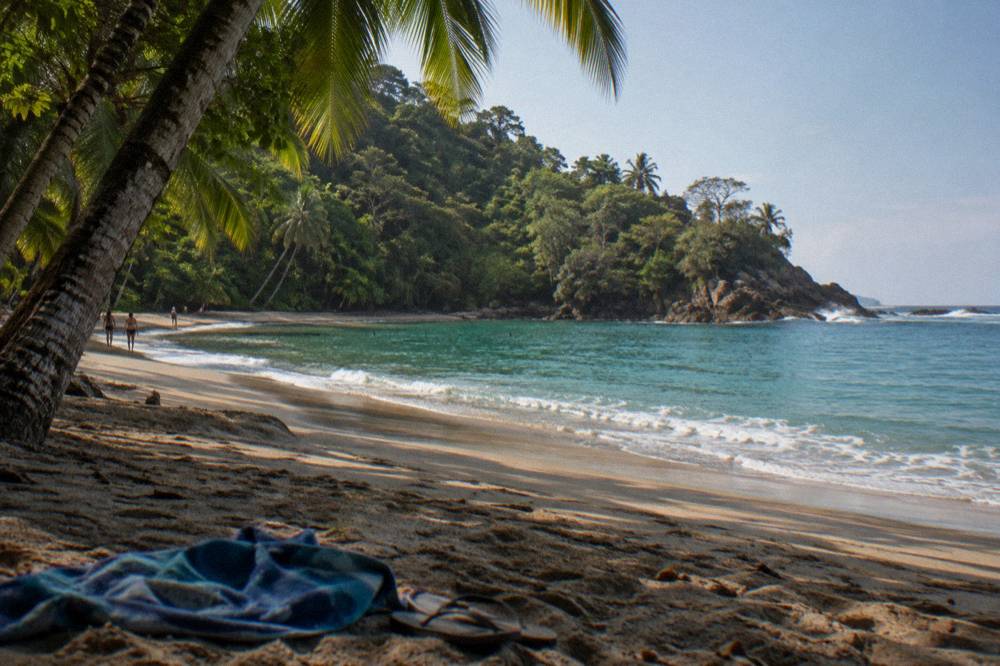
At the park, the foreign-visitor ticket is $18.08 including tax for adults and $5.65 including tax for children aged 2 to 12, bought only in advance through the official SINAC online portal and shown with your identity document at the gate. Swimmers and snorkelers should note two park realities: the water is best early, before midday traffic and afternoon breeze, and the beaches inside close with the park at 3:00 pm, closed entirely on Tuesdays. Snorkel the rocky ends of the beach rather than the middle, which is sand underfoot and mostly empty of fish.
Biesanz is the locals' answer to the same question. The cove sits behind a headland a few minutes from the Manuel Antonio road, and the kayak tours use it precisely because it holds calm water. Bring your own mask and fins if you go independently, since no rental operation is promised on any listing, and go in the morning. One caution repeated from every honest source on this coast: never snorkel alone, and if you are not a confident swimmer, the boat trips, with crew and flotation at the stop, are the better format. The free things to do in Manuel Antonio guide covers the no-cost end of the beach spectrum honestly.
What Does A Snorkeling Tour Cost And What Is Included?
Snorkeling-relevant tours in this catalogue run from $65 per person for the kayak trip to Biesanz up to $148 per person for the wooden sail yacht cruise, with the catamarans clustered between $86 and $95, and the price generally buys more inclusions as it rises: the mid-tier boats include lunch, drinks and hotel pickup, while the kayak trip includes a fruit snack, gear and a guide at the lowest price point, with transport and lunch excluded. Park tickets, where relevant, are always separate.
| Price tier | Listing | From, per person | What the listing includes |
|---|---|---|---|
| Budget | Ocean Kayak to Biesanz Beach | $65 | Fruit snack and drinks, kayak and snorkel gear, bilingual guide |
| Mid | All Inclusive Catamaran | $86 | Lunch, juices and spirits, snorkel gear, pickup, naturalist onboard |
| Mid | Ocean King Catamaran | $86 | Lunch, dinner, fruit, four alcoholic drinks, snorkel gear, pickup |
| Mid | Sailing with Lunch and Open Bar | $95 | Lunch, snacks, open bar, snorkel gear, pickup from Quepos and Manuel Antonio hotels |
| Mid | Sea Quest Catamaran | $95 | Meal, alcohol, soda, snacks, snorkel gear, round-trip transport |
| Premium | Wooden Sail Yacht | $148 | Early lunch or dinner, welcome cocktails, watersports equipment, kayak use |
Read that table as a bundle decision rather than a quality ranking. What you should verify on any listing before booking is the departure point and pickup terms, since these differ listing to listing even at the same price: some state hotel pickup from the Quepos and Manuel Antonio main hotel area explicitly, others say selected hotels only, and one or two leave transport unstated. Check the listing, as the listings themselves advises.
Cancellation is friendly across this category: every one of the seven boat listings shows free cancellation on its listing. That makes the sensible booking pattern simple: reserve the boat early for high season, watch the forecast in green season, and adjust if the ocean misbehaves, subject to each listing's own cancellation window. If your budget spans several activity days, the Manuel Antonio tour prices guide places snorkeling in the context of the whole catalogue, from the $23 park walk to the $158.20 zipline and canyoning combo.
Is Snorkeling Here Good For Beginners And Kids?
Yes, snorkeling around Manuel Antonio is beginner-friendly by design: nearly every trip stops in a sheltered bay rather than open ocean, the water is warm and buoyant all year, though age minimums, if any, are set per listing, so check the listing for the specific child policy on the trip you want. Kids who can swim a little and like fish do well here.
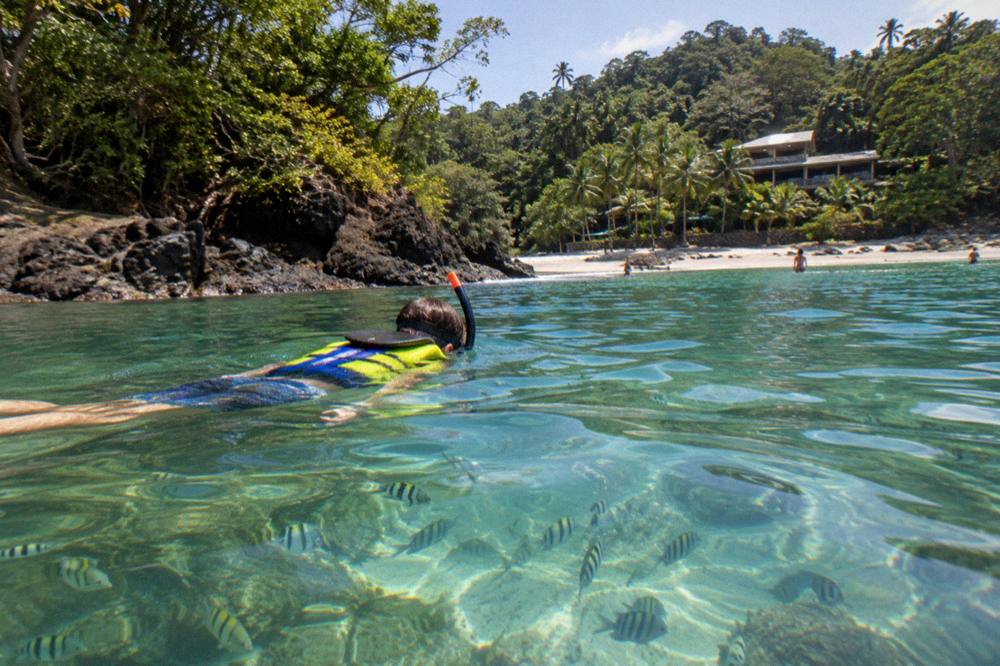
The format choice matters more than the boat choice for nervous snorkelers. A catamaran swim stop is a social scene: dozens of people in the water, crew watching, and the option to sit on the trampoline with a drink instead. The kayak trip is the opposite: a small group, a beach landing at Biesanz, and a guide in the water with you, which suits a hesitant swimmer far better. Family groups split across both styles all the time, and there is no wrong answer, only fit.
Two honest limits for parents. First, this is an ocean, not a pool, and conditions on the day set what happens; a listing offering free cancellation is your friend if the sea turns. Second, the park beach option carries the strictest rules of any snorkeling venue here, no food, no drink, no feeding animals, tickets online only, and the manzanillo trees on the sand are toxic, so do not let small children handle the green fruit beneath them. The official park rules are on the SINAC park page, and they are worth two minutes of any parent's planning time.
Beyond the boats, the wider catalogue pairs well with a snorkeling day: the mangrove boat tours at Damas Island run in flat water where swimming is not the point but wildlife is, and the Damas Island mangrove tour guide explains that option.
Should You Book A Snorkeling Tour Or Just Bring A Mask?
Book a tour if you want fish, gear, food and crew in one package from $65 per person, and bring your own mask only if your priority is flexibility, swimming at the park beach or at Biesanz at your own hours, and you accept that shore snorkeling here is more variable than the boat stops. The strongest pattern across the listings is that the boats put you over the better structure with the support that makes a first snorkel pleasant.
For most travelers reading this site, that decision lands on the side of the boat, and the reason is structural: the reliable fish life sits at the rocky points, several of which are simply not swimmable from shore, and the tide-and-weather judgment that picks a good stop is the crew's job, not yours. A traveler who arrives in February with a rented car and a mask will very likely have a lovely swim at Biesanz; a traveler who arrives in late September in the same way will very likely be looking at green water. The tours do not remove that variance, but they move you to the best available option on the day and hand you lunch afterwards, which is why the Manuel Antonio Costa Rica Tours catalogue leans so heavily on boat trips in this category.
Common Questions About Snorkeling In Manuel Antonio
Is the snorkeling good in Manuel Antonio?
It is good with the right expectations: warm water year round, busy reef fish at the rocky points, and sheltered stops like Biesanz Bay, but not Caribbean-style coral or wall visibility. Clear days are most common in the dry season, roughly December to April, and on mornings near high tide.
Do I need to bring my own snorkel gear?
No. All but the 4-hour catamaran with meal list snorkeling equipment as included. Bring a towel, sun protection and any personal fit items like contact lenses; check the listing for anything beyond the basics.
How much does a snorkeling tour cost in Manuel Antonio?
From $65 per person for the ocean kayak and snorkel trip to Biesanz Beach, $86 to $95 per person for the catamarans and sailing trips with meals and drinks included, and $148 per person for the wooden sail yacht cruise with watersports and food.
Can you snorkel at Manuel Antonio National Park?
Yes, at the beach inside the park, where the official park page describes snorkeling at the sides with marine life and some coral. You must buy your ticket online in advance through the SINAC portal, the park is closed Tuesdays and open 7:00 am to 3:00 pm, and no food or drink is allowed inside.
When is the water clearest for snorkeling?
Roughly December to April, the dry season, when rainfall is at its lowest and runoff stops clouding the coast. On any day, visibility is usually best in the morning near high tide at a sheltered stop, and worst in the afternoon after wind or on a falling tide following rain.
Will I see whales or dolphins on a snorkeling tour?
Possibly, never guaranteed. Operators describe southern humpbacks passing roughly July to early November, peaking August to September, a northern group roughly December to March or April, and dolphins as possible year round. No listing on this site promises a sighting.