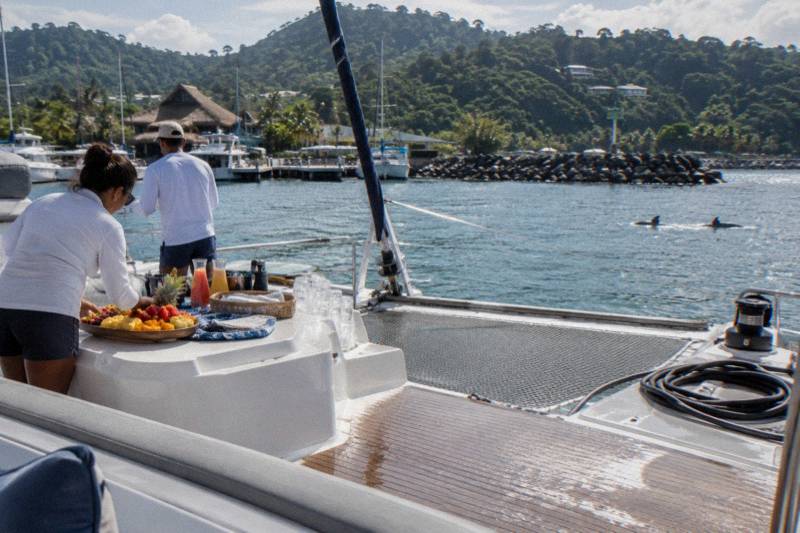
Quepos Sport Fishing Charters: Boats, Species And Seasons
Quepos is one of the Central Pacific's best known sport fishing ports, but the charter fleet is sold separately from this site's tour catalogue. Here is how the fishing side works, what the science says about the seasons, and which bookable boat trips get you on the same water.
Short answer
Quepos sport fishing charters depart from Marina Pez Vela and target offshore and inshore species on private or shared boats. This catalogue carries no fishing listing, so charter prices and seasons are quoted by operators directly. The bookable alternatives here run from $65 to $148 per person, including catamaran, sailing and kayak trips.
Quepos earned its reputation as a sport fishing town long before the tour boats arrived. The fleet works out of Marina Pez Vela, the same marina where several of the trips in this site's catalogue depart, and anglers travel here specifically for the offshore runs and the inshore structure along the coast. There is one honest catch to state up front: this site's catalogue of 35 bookable tours contains no fishing charter listing, so every price, boat and season detail on the fishing side has to come from the operators themselves. If you're still working out when to plan your trip, the month-by-month Costa Rica fishing calendar explains how weather, sea conditions and whale season shape the bite around Quepos.
That does not leave you stranded. The water is the same water, and the marina is the same marina. The Sea Quest catamaran cruise, rated 5.0 from 231 reviews, from $95 per person, departs from Paseo del Mar in Quepos with a meal and snorkeling included, and the sailing trip with lunch and open drinks covers the same coastline from $95 per person. This guide explains how the charter market works, what the sources say about seasons and conditions, and how to choose between the boat trips you can book here while you arrange a fishing day directly with an operator. Manuel Antonio Costa Rica Tours publishes it as part of a series covering every bookable day out from Quepos and Manuel Antonio.
What Is A Quepos Sport Fishing Charter?
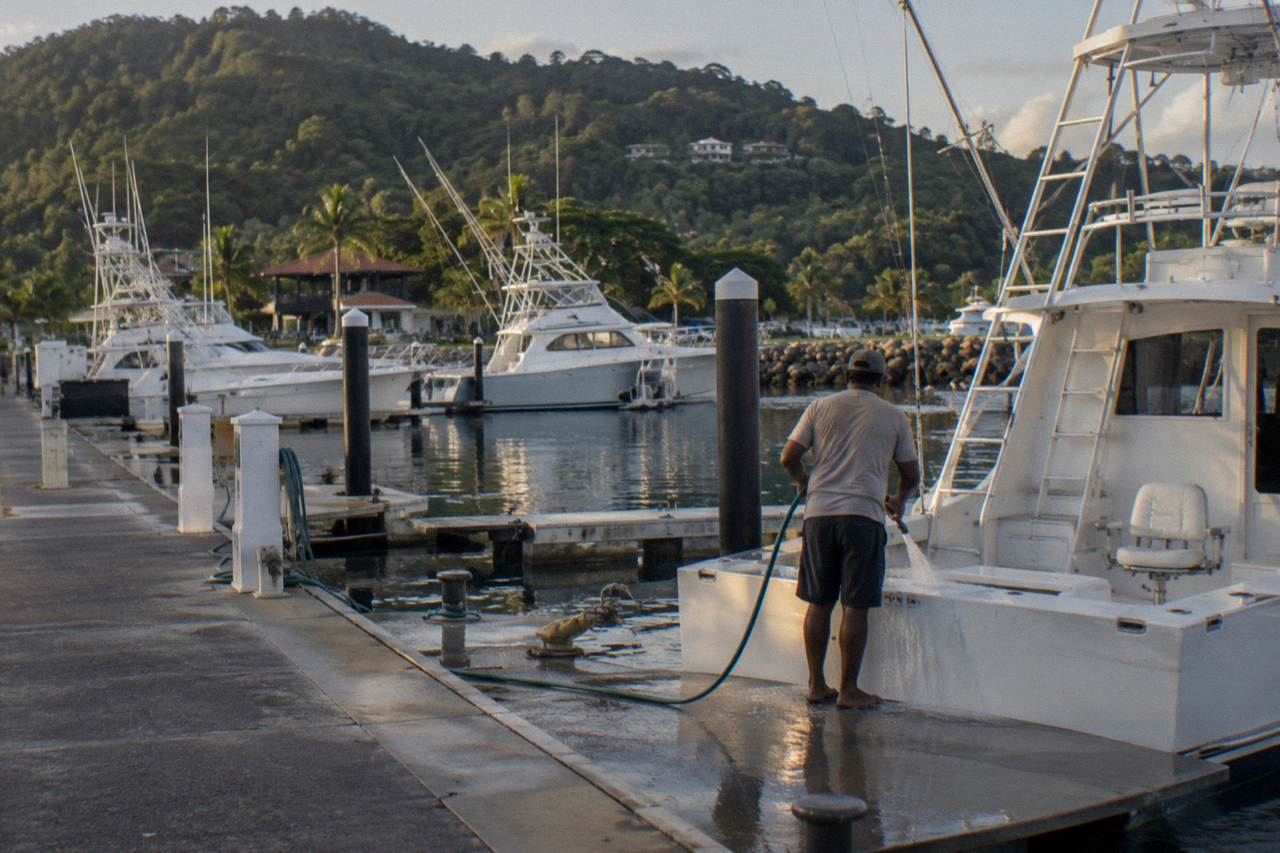
A Quepos sport fishing charter is a hired boat, usually with captain, crew, tackle and bait, that fishes the Central Pacific from Marina Pez Vela, either inshore along the local reefs and beaches or offshore over the deep-water grounds the port is known for. Charters are private or shared, half day or full day, and they are booked directly with operators rather than through this site's tour catalogue.
The distinction matters because almost everything else on this site can be reserved through the listings you see here, and a fishing day cannot. A charter is also a different animal from a tour boat. The boat is smaller or more specialized, the itinerary bends around fish rather than a schedule, and the price scales with boat size, trip length and how many anglers share the cost. The crew's job is to put you on fish, and the operator will tell you what is running when you book.
What the area can promise is structure rather than sightings. No honest operator or publisher can guarantee a catch, a species or a sea state on any given day, and any charter that promises one should be treated with caution. Conditions vary, and the reputable fleet says so plainly.
If your interest is being on the water with wildlife rather than rods, the catalogue covers that directly. The wooden sail yacht cruise with watersports and food, rated 4.9 from 104 reviews, from $148 per person, is the closest thing here to a small-boat day out, with a freshly prepared meal and welcome drinks on a sailing ship. The full rundown of similar options sits in the Manuel Antonio day tours overview.
When Is The Best Time To Fish From Quepos?
The dry season, roughly December to April, is the period with the calmest, driest weather on the Quepos coast, while the green season from May to November brings the heaviest rain in September and October. For fishing specifically, run times and sea conditions matter as much as the calendar, so charter operators, not published season charts, are the source for what species is running in a given month.
This site's climate table, drawn from published Quepos weather data, shows the pattern clearly. January through March sit at about 45.9, 25.8 and 40.0 mm of rain respectively, while May jumps to about 389.0 mm and September peaks at about 544.3 mm. The national weather service's late-October outlook put the expected start of the Central Pacific dry season between 13 and 30 November 2026, which fits the long-run pattern. Sea temperature barely moves: it ranges from about 27.7 C in November to about 29.4 C in March, warm enough for offshore runs all year.
| Month | Rain (about, mm) | Sea temp (about, C) | Sunset (about) |
|---|---|---|---|
| January | 45.9 | 28.0 | 5:35 pm |
| March | 40.0 | 29.4 | 5:50 pm |
| May | 389.0 | 29.2 | 5:50 pm |
| July | 444.9 | 28.8 | 6:00 pm |
| September | wettest month | 28.8 | 5:40 pm |
| October | 533.5 | 28.0 | 5:20 pm |
| November | 349.0 | 27.7 | 5:10 pm |
Two seasonal notes come from the marine records rather than fishing charts. Southern humpback whales are reported off Quepos roughly July to early November, peaking August to September, and the northern group from December to March or April, never guaranteed. Dolphins are reported year-round. If your fishing month overlaps with those windows, a boat day can turn into more than a fishing day, and vice versa.
For a deeper look at how the fishing calendar is usually discussed, including the months anglers ask about most, see the companion post what is the best month for fishing in costa rica. It applies the same honesty rule: species seasons are quoted by charter operators, and this site prints no catch rates or guarantees.
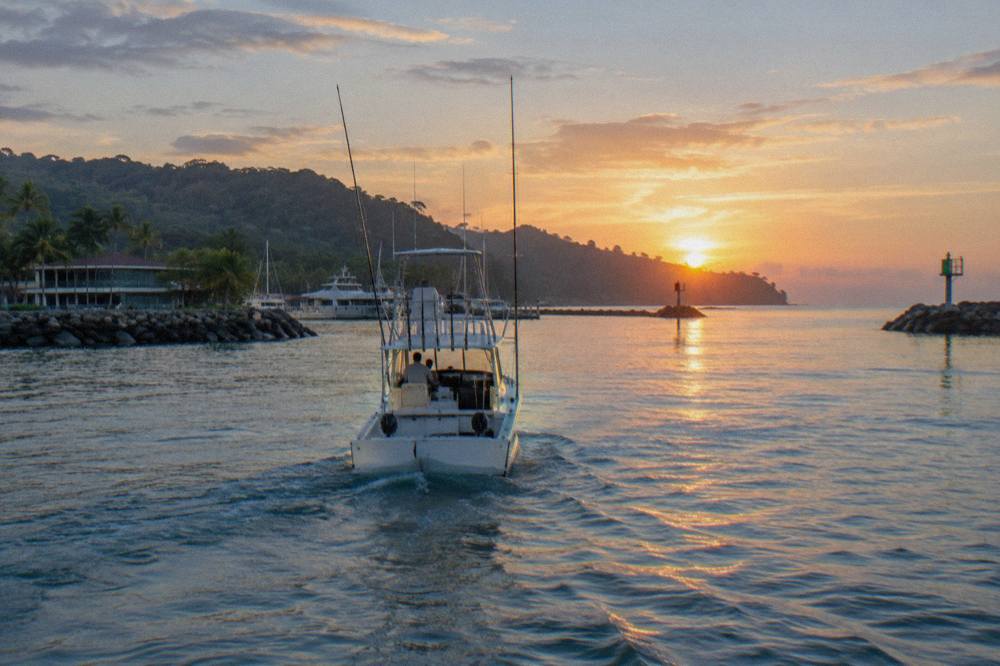
A practical reading of the table: the shoulder months of November into December and late April into May often split the difference between green-season pricing and dry-season conditions. Ask an operator what the run time is like in your month. A longer run to the grounds in choppy water shortens fishing time, and crews will say so when asked directly.
The three boat trips above are the catalogue's closest substitutes for a day on the Quepos water while your charter is being arranged. All three run with free cancellation listed, and all three include a meal, which a fishing charter typically does not.
Inshore Or Offshore: Which Charter Should You Choose?
Inshore charters fish the protected water, reefs and river mouths close to the Quepos coastline in shorter, cheaper, calmer trips, while offshore charters run out over deep water for the large pelagic species Quepos is famous for, in longer trips that cost more and depend more on sea conditions.
Inshore fishing stays within sight of land for much of the day. The runs are short, the water is usually more forgiving, and half-day trips are common, which suits families and anyone prone to seasickness. The trade-off is the species list: inshore grounds hold smaller and mid-size fish, and the names on the target list, roosterfish among them, come from operator descriptions rather than any published count.
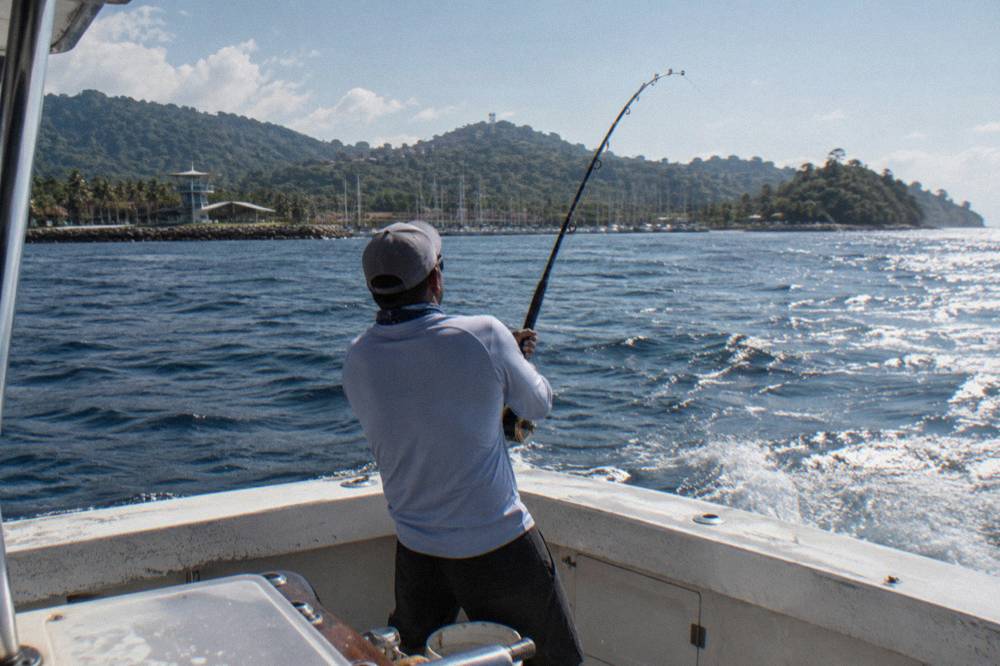
Offshore is the reason many anglers fly into San Jose and drive the 157 km south. The runs are longer, frequently an hour or more each way, the boats are bigger, and the target list is the large pelagic class, sailfish and marlin at the top of it, again as described by operators rather than guaranteed by anyone. Cost scales accordingly, and rough days matter more: a green-season swell can scrub an offshore plan that an inshore trip would have shrugged off.
| Factor | Inshore charter | Offshore charter |
|---|---|---|
| Distance from port | Close to the coast | Deep water, longer runs |
| Typical trip length | Half day common | Full day common |
| Sea conditions | More protected | More exposed, weather sensitive |
| Target fish class | Mid-size coastal species | Large pelagics per operators |
| Who it suits | Families, first timers, short visits | Traveling anglers, longer stays |
| Price basis | Quoted by operator | Quoted by operator, higher |
Since neither charter type is bookable here, price both with operators directly and compare what is included: tackle, bait, licenses, food and drink, and crew gratuity practice vary boat to boat. A written quote that lists inclusions is a good sign. A vague per-person number with nothing behind it is not.
The same inshore-versus-offshore logic applies to the tours you can book here. The Ocean King catamaran, rated 4.4 from 316 reviews, from $86 per person, includes lunch on the 9 am departure or dinner on the 2 pm departure, four alcoholic drinks and snorkel gear, a layout that suits the same reader who would pick an inshore charter. The all-inclusive catamaran eco-adventure covers 3 to 4 hours from Marina Pez Vela with an onboard naturalist, from $86 per person.
Shared Or Private Boat: How Do Charter Prices Work?
Shared charters sell individual seats on a boat with other anglers, lowering the per-person cost and suiting solo travelers and small groups, while private charters reserve the whole boat and crew for your party at a flat rate that scales better for groups of four or more. Charter pricing in Quepos is quoted by each operator, so compare written quotes rather than published ranges.
This site cannot print charter prices because it carries no fishing listing, and inventing a market figure would be exactly the kind of unverifiable number the site refuses to publish. What the catalogue can show, honestly, is what structured boat experiences cost when every figure is firm: marine tours here run from $65 per person for the mangrove and kayak options up to $148 per person for the wooden sail yacht. A charter day, being a dedicated boat with crew working for you alone or your seat, sits in a different commercial category, and operators will quote it.
The shared-versus-private decision is mostly arithmetic and temperament. Shared seats suit solo travelers, couples testing whether they like the sport, and anyone on a budget. Private boats suit groups, families with mixed interests, and anglers with specific targets, because the crew works your plan rather than a compromise plan. Ask a shared-boat operator how many anglers the boat carries and whether the trip runs if seats go unfilled, since both affect what your day looks like.
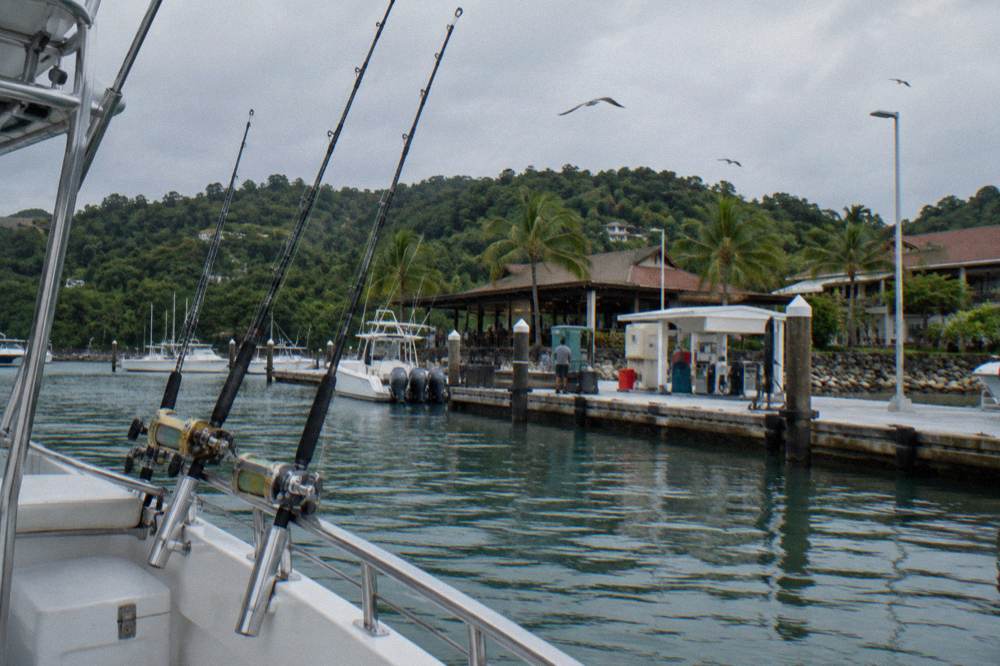
A group that finds a private charter quote steep can hedge with a private-feeling tour instead. The Biesanz Beach ocean kayak and snorkel tour, rated 4.7 from 86 reviews, from $65 per person, runs 3.5 hours with a bilingual guide, kayak and snorkel gear and a fruit snack; transport and lunch excluded, and the mangrove wildlife-spotting boat tour takes up to 30 guests from $65 per person with fruit included. These are not fishing trips, but they are real boat days with firm prices and free cancellation listed.
The box above is the site's featured boat day: the Sea Quest catamaran, 3 to 4 hours, from $95 per person, with round-trip transport from the Quepos and Manuel Antonio hotel zone, a hot meal, alcoholic drinks and snorkel gear. Free cancellation is listed, and the operator's live listing carries the current departure details.
What Should You Ask A Charter Operator Before Booking?
Ask a Quepos charter operator five things in writing: what the price includes, what species they are targeting in your dates, what happens if weather cancels the trip, whether the boat takes a shared or private booking, and what the captain's license and insurance status are. A reputable operator answers all five without hesitation, and hesitation on any of them is your answer.
The first three protect your money. Price inclusions vary widely: some quotes bundle licenses, tackle, food and drinks, others charge each separately, and the gratuity practice is almost always separate. The species question is not about guarantees, which no honest operator gives, but about what the crew plans to fish for and how far they will run to do it. The weather policy matters most in the green season, when a forecast can kill an offshore day; the fair standard is a full refund or a free reschedule when the captain calls it off, and it should be in writing.
The last two protect your safety. Costa Rica licenses captains and crews, and an operator should state that plainly. Ask how many crew work the trip, what safety equipment is aboard, and what the boat's maximum passenger count is. This site's standing advice on adventure operators applies: no publisher can rank one boat as the safest, and the right move is asking direct questions and weighing the answers. For a parallel set of questions aimed at zip line and rafting operators, the same logic appears in the Quepos and Manuel Antonio night tours guide and across the adventure pages.
| Question to ask | What a good answer looks like |
|---|---|
| What does the price include? | Itemized list: tackle, bait, license, food, drinks |
| What are we targeting in my dates? | A plain plan, no catch guarantee |
| Weather cancellation policy? | Refund or free reschedule, in writing |
| Shared or private, and how many anglers? | Clear count and booking type |
| Captain licensed and insured? | A direct yes with details |
Timing also belongs in the questioning. Departure times shift with sunrise, which on this coast sits opposite the sunset table above, and offshore trips leave early. Ask where to be and when, and whether the marina has parking, since the drive from Manuel Antonio to Marina Pez Vela is short but the morning traffic on the single road is not.
What Other Boat Trips Depart From Marina Pez Vela?
Marina Pez Vela and the neighboring Paseo del Mar dock send out the catamaran, sailing and eco trips in this catalogue alongside the fishing fleet, with bookable prices from $86 to $148 per person, all of them including a meal and most including hotel pickup from the Quepos and Manuel Antonio area. It is the same docks, the same water and the same coastline the charters fish.
The marina's own site lists its activity mix, including catamaran and sunset sailing operations, alongside the fishing tournament calendar that keeps the port on the international map. For a visitor, that means a fishing-adjacent day is easy to arrange even without a rod.
| Trip | Rating | From | Duration | Meal |
|---|---|---|---|---|
| Sailing, snorkeling with lunch and open bar | 4.7 from 653 reviews | $95 per person | 3 hours 30 minutes | Yes |
| Sea Quest catamaran cruise | 5.0 from 231 reviews | $95 per person | 3 to 4 hours | Yes |
| All-inclusive catamaran eco adventure | 4.6 from 636 reviews | $86 per person | 3 to 4 hours | Yes |
| Ocean King catamaran | 4.4 from 316 reviews | $86 per person | 3 hours 30 minutes | Yes |
| Wooden sail yacht cruise | 4.9 from 104 reviews | $148 per person | 4 hours | Yes |
The sailing trip with lunch and open bar deserves a specific note for fishing-curious readers: it is the catalogue's most boat-forward experience, unlimited drinks and lunch with snorkel stops, departing Marina Pez Vela itself with pickup listed from the main hotel area. Reviews frequently mention the crew spotting dolphins and, in season, whales from the deck, which matches what operators report about these waters year-round.
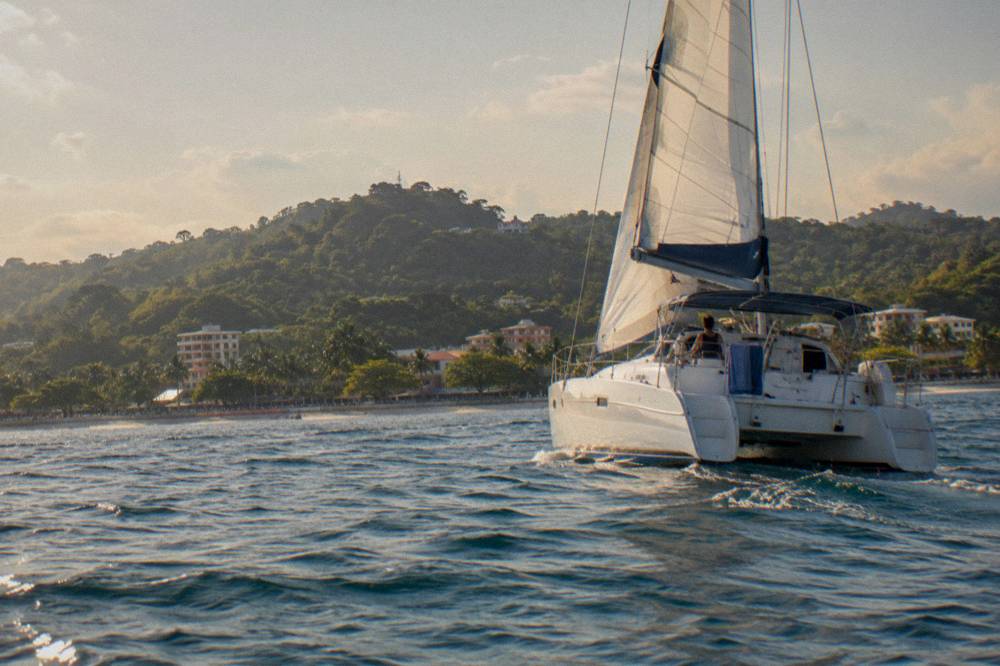
If the sunset side of the marina appeals more than the morning side, the Manuel Antonio sunset cruise guide breaks down the evening departures, with sunset on this coast falling between about 5:10 pm in November and 6:00 pm in July, rounded from the computed table. The Manuel Antonio catamaran tours guide compares the hulls, and the Manuel Antonio snorkeling tours guide covers what is under the surface.

How Do You Book A Fishing Day And A Boat Tour Together?
Book the boat tour through this site's listings first, since dates and free cancellation are confirmed instantly, then arrange the fishing charter directly with an operator for a different day, leaving one flexible morning between the two in case weather moves the charter. Booking both on the same day is the classic mistake, because an offshore charter and an afternoon sail leave no margin for a delayed return.
The sequencing is practical. A fishing day starts early and ends tired, and an afternoon catamaran departs on a fixed schedule regardless of how the morning went. Split them across days, and put the tour on the day you arrive, when energy is high and plans are loose, and the charter later in the stay, when you have a feel for the weather. The tours listed all carry free cancellation, so the flexible one is easy to move if the forecast turns.
For the charter booking itself, work from the operator's own page or office, get the quote and cancellation terms in writing, and confirm the departure dock and time the day before. Marina Pez Vela is a short drive from central Quepos and from most Manuel Antonio hotels, but the single coastal road slows in high season, so build in the margin. Check your government's current travel advisory before any international trip.
One last honest note on species and seasons. Sailfish, marlin and roosterfish are the names that sell Quepos charters, and operators will tell you plainly what is typically targeted when. This site prints no catch rates, no per-trip counts and no season guarantees, because no source supports them, and a charter sold on a guarantee is a charter oversold. The fish are wild, the ocean sets the schedule, and the operators who respect that are the ones worth booking.
Common Questions About Quepos Fishing Charters
Can I book a Quepos fishing charter through this site?
No. This site's catalogue of 35 tours contains no fishing charter listing, so charter prices, boats and seasons are quoted directly by operators. The bookable boat trips here run from $65 to $148 per person and cover catamaran, sailing, kayak and mangrove options.
What is the best month for fishing in Quepos?
The driest, calmest weather runs roughly December to April, with rain peaking in September and October, but fish seasons are set by the operators and vary by species. Ask a charter operator what is typically targeted in your dates rather than relying on a published chart.
Should I choose an inshore or an offshore charter?
Inshore trips are shorter, closer to shore and more forgiving in green-season weather, suiting families and first timers. Offshore trips run longer to deep water for large pelagic species and suit anglers traveling specifically to fish Quepos.
Do the boat tours in this catalogue include fishing?
No. The catamaran, sailing and kayak tours include meals, drinks and snorkeling, and several include hotel pickup, but none carries rods or fishing. They do depart from the same marina area the charters use.
What happens if the weather cancels my charter?
That depends on the operator's policy, so get it in writing before paying. The fair standard is a full refund or a free reschedule when the captain cancels for weather, and reputable Quepos operators work this way. The tours on this site list free cancellation separately.
Can I see whales or dolphins from a boat trip instead?
Operators report dolphins year-round in Quepos waters and southern humpback whales roughly July to early November, peaking August to September, with a northern group December to March or April. Sightings are never guaranteed, and no honest listing promises them.