What Is The Best Month For Fishing In Costa Rica?
An honest month-by-month look at fishing timing around Quepos and Manuel Antonio, based on weather, sea and whale-season data, with bookable boat trips for time on the water.
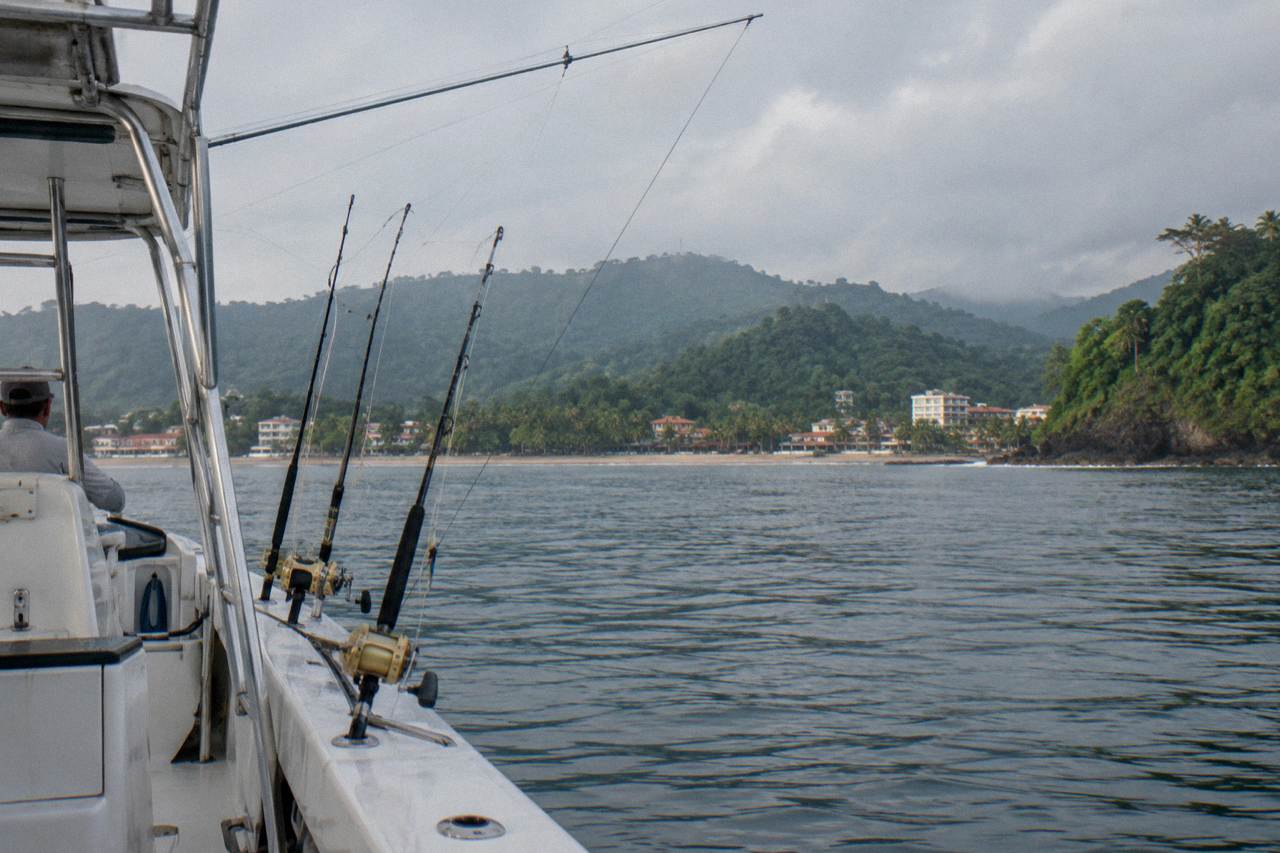
No single month is the best month for fishing in Costa Rica, and any page that promises one is selling certainty the ocean does not offer. The honest answer: the dry season, roughly December to April, brings calmer seas and lower rainfall around Quepos, while the green season, May to November, brings afternoon rain but fewer crowds. Charter operators run year round, and catches are never guaranteed in any month. Between charters you will spend real time ashore, and the guide to walking around Quepos safely covers which parts of town are easy on foot and what to watch for after dark.
This site's tour catalogue contains no fishing charter. Fishing charters in Quepos are sold separately, and if you want one, the way to choose a month is with the climate and marine data, then book directly with a licensed charter operator once you know your window. If you want a closer look at how these charters actually operate, the guide to Quepos charter boats, species and seasons covers the questions worth asking an operator before you commit.
This article lays out the month-by-month facts that actually decide a fishing trip's comfort and odds off the Central Pacific coast: rainfall around Quepos, sea temperature, daylight, sunset times, and the whale and dolphin seasons that mark the ocean's calendar. Those numbers are real, drawn from official and monitored sources, and they map cleanly onto the seasons every local operator works around. The dry season, roughly December to April, is the period the Costa Rican meteorological agency, the IMN, tracks toward a start between mid and late November in the Central Pacific, according to its seasonal outlook reported in October 2026.
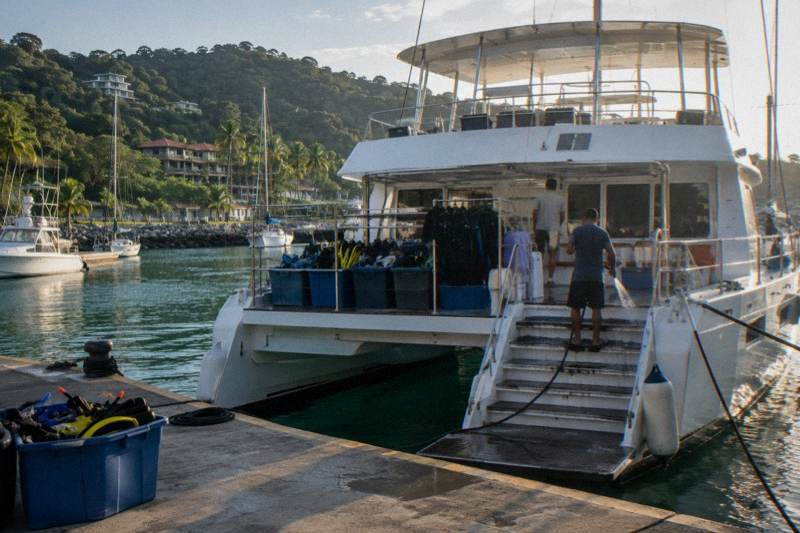
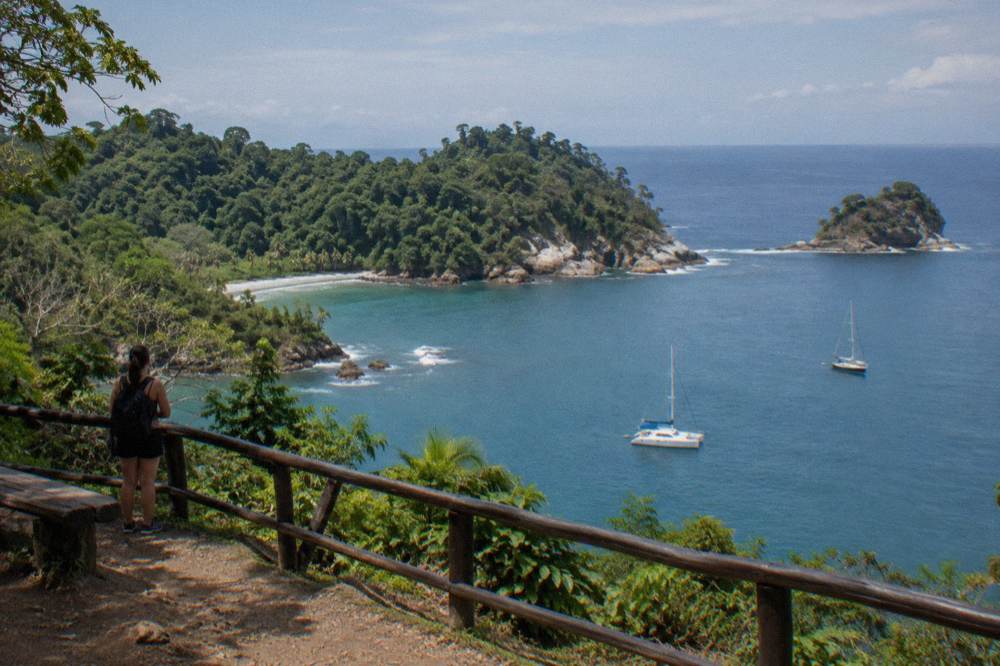
Time on the water is the other half of the equation, and the catalogue does have that covered. The boat trips leaving from Marina Pez Vela and Paseo del Mar in Quepos, including the Sea Quest catamaran cruise, the Ocean King catamaran and the sailing trip with lunch and open drinks, put you on the same water the fishing fleet works, with the same swells, the same breeze and the same horizon. Many travelers book one of those trips as their day on the Pacific and arrange a dedicated charter separately.
Why There Is No Universal Best Fishing Month
Fishing success depends on species, sea state and operator skill, and those three move independently of the calendar. The data for Quepos shows sea temperature varying only modestly, from about 27.7 to about 29.4 degrees Celsius across the year, while rainfall swings enormously, from about 25.8 mm in February to about 544.3 mm in September. Comfort therefore changes far more than temperature does.
Different anglers are chasing different fish, and a month that suits one target suits another poorly. Offshore and inshore fisheries around Quepos follow their own rhythms, and those rhythms shift a little every year with currents and water temperature. No official Costa Rican source publishes a month-by-month catch calendar for this coast. What the official and monitored data does publish is rainfall, sea temperature and season boundaries, and those are the fixed points any month choice should hang on.
Rain is the big variable. The Quepos climate table shows the driest stretch from January through March, with about 45.9 mm, 25.8 mm and 40.0 mm respectively, then a steep climb through April into a wet peak in September at about 544.3 mm, easing to about 159.7 mm by December. Annual rainfall is about 3,571 mm, spread across a large number of rain days through the year. That is a real pattern: bone dry weeks in late winter, saturated soils and afternoon storms in early autumn. For anyone deciding when to book a charter, that curve matters more than any fishing forum thread.
Sea temperature barely moves by comparison. The Quepos series runs from a low of about 27.7 degrees Celsius in November to a high of about 29.4 in March, which is a narrow band for a tropical Pacific coast. Marine life responds to currents and structure more than to that two-degree spread, so the sea itself is fishable in every month. The practical difference between months is how wet the run out is, how choppy the afternoon gets, and how early you want to start.
The Dry Season, Roughly December To April
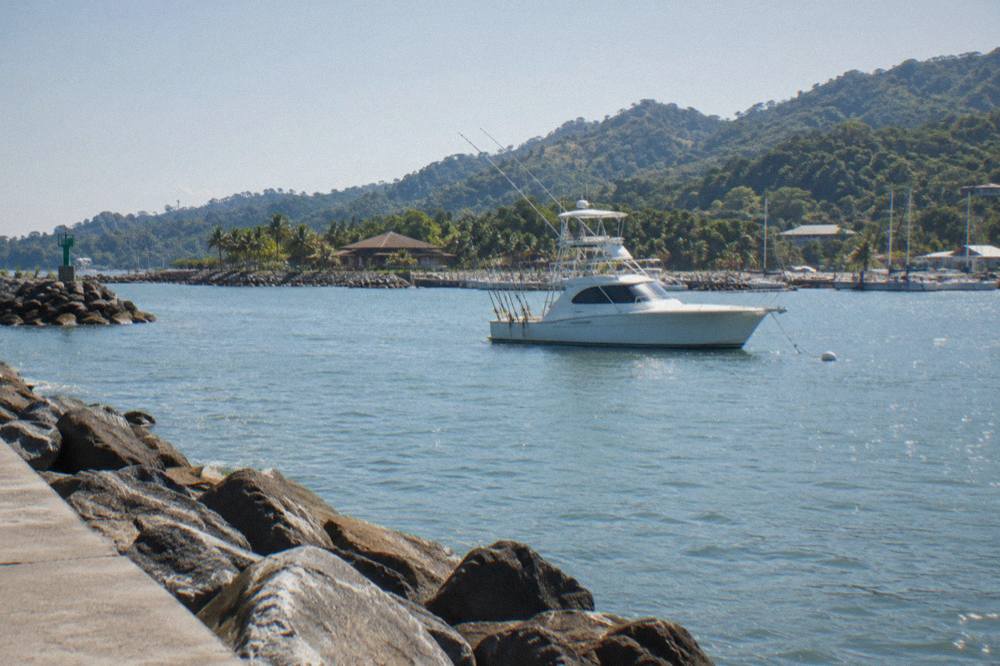
The dry season, roughly December to April, is the period most travelers associate with the best conditions off Quepos, and the rainfall data backs that up. January through March average about 25.8 to 45.9 mm of rain per month, sea temperature sits near its annual high of about 29.4 degrees Celsius in March, and sunset runs from about 5:35 pm in January to about 5:50 pm in March.
This is the high season for a reason. The IMN's seasonal outlook released in October 2026 puts the expected start of the Central Pacific dry season between November 13 and November 30, 2026, which lines up with the long-run pattern of dry conditions establishing from December. Its subseasonal forecast for late October into November also flagged predominantly dry conditions nationwide in the first week of November, favoring the dry season's arrival on the Pacific side. You can read the outlook on the IMN subseasonal forecast page, which is updated regularly.
For a fishing-minded trip, the dry months mean early starts under clear skies, calm mornings, and long usable days. Day length around Quepos runs about 11.6 to 12.7 hours across the year, and in the dry season the afternoons stay dry enough that a full day on the water does not end in a downpour. The trade-off is crowds: December through March is also when the northern humpback whale group is reported in these waters, roughly December to March or April, and when every boat in Quepos is busy. Book early in this window.
One more dry-season note worth planning around: sunset. Computed sunset times for this latitude run about 5:35 pm in January, 5:45 in February, 5:50 in March and 5:45 in April. A sunset cruise or a late-afternoon return trip lines up with those times. If you want to fish by day and sail by dusk, the dry season makes that double day easy to schedule.
The Green Season, May To November
The green season, May to November, is wetter but not unfishable, and it has real advantages. Rainfall climbs from about 389 mm in May to about 468.7 mm in August and about 544.3 mm in September, mostly as afternoon showers, while September and October bring fewer visitors and emptier boats. Mornings are often workable even in the wettest months.
The green season gets a worse reputation than it deserves. The rainfall table shows the wet months clearly, about 413.3 mm in June, 444.9 in July, 468.7 in August, 544.3 in September and 533.5 in October, but Central Pacific rain in these months concentrates in afternoons. The IMN's weather advisories through October 2026 described exactly this rhythm: scattered afternoon showers and possible thunderstorms in the Central Pacific, with soils saturated.
September and October are the wettest months but also the quietest: the official national park pages themselves note that September and October see fewer visitors and recommend arriving early.
The green season is also when the whale calendar peaks. The southern humpback group, which travels from Antarctic waters, is reported off Quepos from roughly July to early November, with August and September the peak months, and mothers and calves commonly described by operators in that stretch. Dolphins, including spinner, bottlenose and spotted, are described as possible year round on boat tours in these waters. None of that is a catch guarantee, but it is a real factor in how much a day on the water delivers beyond the fishing.
Rainfall, Sea Temperature And Sunset By Month
The table below gathers the monthly numbers for Quepos in one place: rainfall, sea temperature and sunset time. Use it to match your tolerance for rain against your preferred month, remembering that rainfall is a monthly total, not a daily forecast, and that sea temperature stays within a narrow band all year.
| Month | About rainfall (mm) | About sea temp (C) | About sunset |
|---|---|---|---|
| January | 45.9 | 28.0 | 5:35 pm |
| February | 25.8 | 28.6 | 5:45 pm |
| March | 40.0 | 29.4 | 5:50 pm |
| April | 156.9 | 29.3 | 5:45 pm |
| May | 389.0 | 29.2 | 5:50 pm |
| June | 413.3 | 28.8 | 5:55 pm |
| July | 444.9 | 28.8 | 6:00 pm |
| August | 468.7 | 28.9 | 5:55 pm |
| September | 544.3 | 28.8 | 5:40 pm |
| October | 533.5 | 28.0 | 5:20 pm |
| November | 349.0 | 27.7 | 5:10 pm |
| December | 159.7 | 28.1 | 5:20 pm |
Read the table as three separate signals. Rainfall tells you how likely an afternoon soaking is, and the cliff between March at about 40 mm and April at about 156.9 mm is where the transition happens. Sea temperature tells you almost nothing dramatic, since the whole year fits between about 27.7 and 29.4 degrees Celsius. Sunset tells you how late a boat can stay out and still cruise home in golden light, and it moves more than people expect, from about 6:00 pm in July to about 5:10 pm in November.
A note on the rain figures: they come from a climate table for Quepos and should be read as "about" in every case. A second weather source shows a lower, differently based series for the same town, which is normal for tropical coastal rainfall measurement. The shape of the curve, dry start to the year, saturated September, is what matters for planning; the third decimal place does not.
If your month is fixed by school holidays or flight prices rather than by fishing ambition, the table still helps. February and March are the safest bets for dry days. July splits the difference. September and October trade comfort for space. Every one of those months has boats running from Quepos, and every one of them is someone's favorite.
Fishing Charters Versus The Boat Trips You Can Book Here
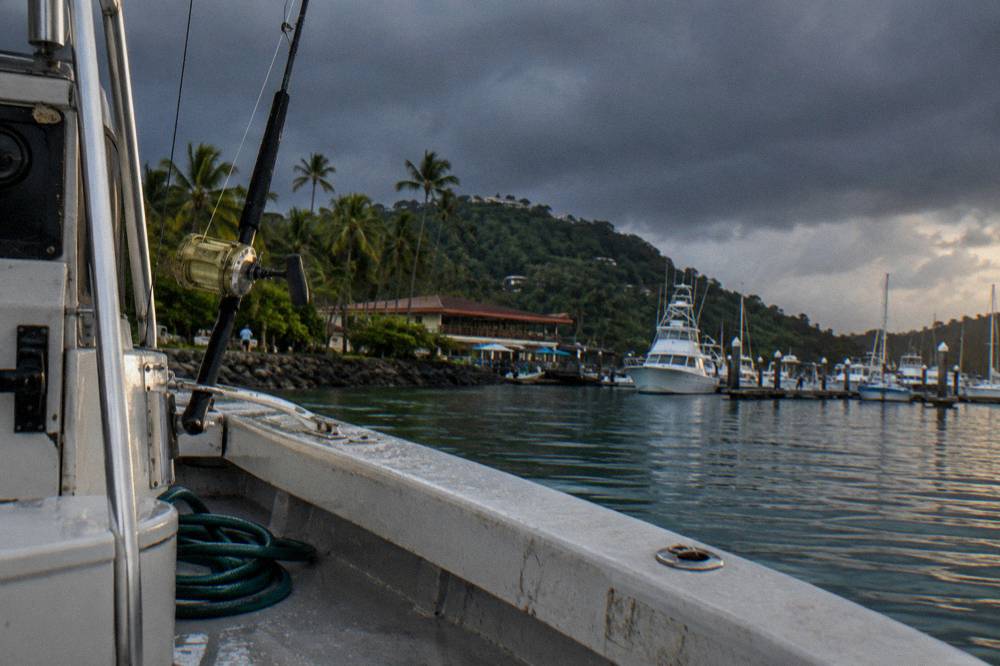
Fishing charters from Quepos are sold separately from this site's catalogue, which contains no fishing listing. The catalogue's boat trips, catamarans and a sailing yacht from $86 to $148 per person, are the bookable way to get on the same Pacific water the fishing fleet works.
The honest path is: pick your month with the climate data above, then contact a licensed Quepos charter operator directly for species timing, current pricing and availability, checking their credentials before you pay. Marina Pez Vela in Quepos is the working heart of the local fleet, and its official things to do page lists the boat activities based there alongside its tournament calendar.
What the listings do offer is a genuinely good day on the ocean. The Sea Quest catamaran cruise runs 3 to 4 hours from Paseo del Mar in Quepos, rated 5.0 from 231 reviews, from $95 per person, with a meal on board, alcoholic drinks and soda, snacks, snorkel gear and round trip transport from the Quepos and Manuel Antonio area. The Ocean King catamaran, rated 4.4 from 316 reviews and from $86 per person, includes lunch, snacks, four alcoholic drinks or cocktails per person and snorkel equipment. And the sailing, snorkeling tour with lunch and open bar, rated 4.7 from 653 reviews and from $95 per person, throws in an unlimited drinks package and hotel pickup in the main hotel zone. If you're still deciding whether the town itself deserves a spot on your itinerary, the honest verdict on Manuel Antonio as a home base weighs what the area offers against what it costs.
These are not fishing trips. But they cover the other things a fishing month decides: sea state, breeze, whether the water is blue and clear, whether dolphins come to the bow. Booking one is also a low-commitment way to test how your family handles the Pacific swell before you spend charter money. Free cancellation is listed on all three of those trips, which makes them easy to move if the weather turns.
For a deeper run through the boat options, the Quepos sport fishing charter guide on this site covers the charter side of the question, and the Manuel Antonio sunset cruise guide covers the evening sail side.
Matching Your Month To What Else Is On The Water
Your fishing month also buys you a whale and dolphin season, whether you planned for one or not. Southern humpbacks are reported roughly July to early November with an August to September peak, the northern group roughly December to March or April, and dolphins are described as possible year round, none of it ever guaranteed.
This is where the calendar gets generous. Travelers who come in August or September for the quiet green season overlap with the southern humpback peak, when mothers and calves are commonly described by operators in Quepos waters. Travelers who come in January or February for the dry weather overlap with the northern group's stay. In both cases, a day on the water can deliver whales, dolphins and seabirds alongside whatever the rods are doing, and a catamaran crew will usually slow down or divert for a sighting when conditions allow.
The boat listings here reflect that reality. The all inclusive catamaran eco adventure, from $86 per person and rated 4.6 from 636 reviews, carries an onboard naturalist guide who talks through the region's wildlife and history during the sail. The wooden sail yacht cruise, from $148 per person and rated 4.9 from 104 reviews, includes watersports plus an early lunch or early dinner depending on the departure. Neither promises a whale, and no honest operator would, but both put you in the water where whales are reported in season.
There is also a practical crowd argument. The national park's own pages note September and October are lower visitor months, and that rhythm carries over to the marina and the bay. A September trip means sharing the horizon with fewer boats, cheaper shoulder-season accommodation, and afternoons you plan around rather than through. A February trip means dry certainty and company. Neither is wrong; they are different purchases.
How To Decide Your Month, Step By Step
Decide your month in this order: pick your rain tolerance from the monthly table, check the whale calendar against it, confirm your travel dates against flight and hotel prices, then contact a charter operator for current species timing. Only after that should you book boats, and the catalogue's trips carry free cancellation for flexibility.
Start with rain, because it is the one variable you can plan around. If a soaked afternoon ruins a day for you, aim for January through March, when Quepos averages about 25.8 to 45.9 mm per month. If you can plan around afternoon storms for emptier seas and lower crowds, May through November rewards you, with September and October the quietest and wettest of all. April and December, the shoulder months at about 156.9 mm and 159.7 mm, are the compromise picks, and December has the added draw of the dry season arriving, which the IMN expects between November 13 and 30, 2026 in the Central Pacific, as reported by La Nacion's report on the IMN outlook.
Second, layer the whale calendar over your rain choice. August and September pair the southern humpback peak with green-season quiet, an underrated combination. December through March pairs the northern group's stay with dry-season certainty. July gets you the earliest southern arrivals with only mid-range rainfall at about 444.9 mm. May and June are the transition, wetter, with whale activity low, which makes them the months for anglers who genuinely only care about the fishing.
Third, be honest about who is traveling. A charter morning is a long, sunlit, sometimes slow experience for children. The catalogue's shorter trips handle that better: the Ocean King catamaran at 3 hours 30 minutes, or the kayak and snorkel trip to Biesanz Beach at 3.5 hours from $65 per person, rated 4.7 from 86 reviews. Many families split the week: one charter day for the anglers, one catamaran day for everyone, one park morning with a certified guide. The things to do in Manuel Antonio guide sketches that full week.
Finally, hold your plans loosely. Sea conditions shift, storms roll through in the green season, and operators cancel or reschedule when the Pacific says no. Every boat listing quoted on this page shows free cancellation on its listing, so book the fixed points early and leave flex in the middle of the week. That is the whole method: rain table, whale calendar, honest operator contact, flexible bookings.
A closing thought on the money. The catalogue's water trips run from $65 per person for the Biesanz kayak and snorkel trip up to $148 per person for the wooden sail yacht, with the catamarans clustered between $86 and $95. That is the range of prices on this site, and it is a useful sanity check when a charter quote arrives, and knowing the excursion baseline helps you judge it. When you are ready to compare, this site, Manuel Antonio Costa Rica Tours, lists every boat trip with its rating, review count and from-price in the open.
Common Questions About The Best Fishing Month In Costa Rica
What Is The Best Month For Fishing In Costa Rica?
There is no single best month. The dry season, roughly December to April, brings the calmest, driest conditions off Quepos with about 25.8 to 45.9 mm of monthly rain from January to March. The green season, May to November, brings afternoon rain but far fewer boats. Your target species and your rain tolerance decide it, and a local charter operator is the right source for current species timing.
Can I book a fishing charter through this site?
No. This site's catalogue contains no fishing charter listing. Charters in Quepos are sold separately. The boat trips on this site, catamarans, a sailing trip and a kayak snorkel trip, are the bookable way to get on the same water.
Is the green season too wet for a fishing trip?
Usually not for the mornings. Quepos averages about 389 to 544.3 mm of rain per month in the wettest stretch, but it falls mostly as afternoon showers. September and October bring the fewest visitors of the year, in the national park.
Which months have whales and dolphins off Quepos?
Southern humpbacks are reported roughly July to early November, peaking August to September, and the northern group roughly December to March or April. Dolphins, including spinner, bottlenose and spotted, are described by operators as possible year round. No sighting is ever guaranteed in any month.
How warm is the sea off Quepos across the year?
About 27.7 to 29.4 degrees Celsius, with the low in November and the high in March. That narrow band means sea temperature is rarely the deciding factor in choosing a month; rainfall and crowds matter far more.