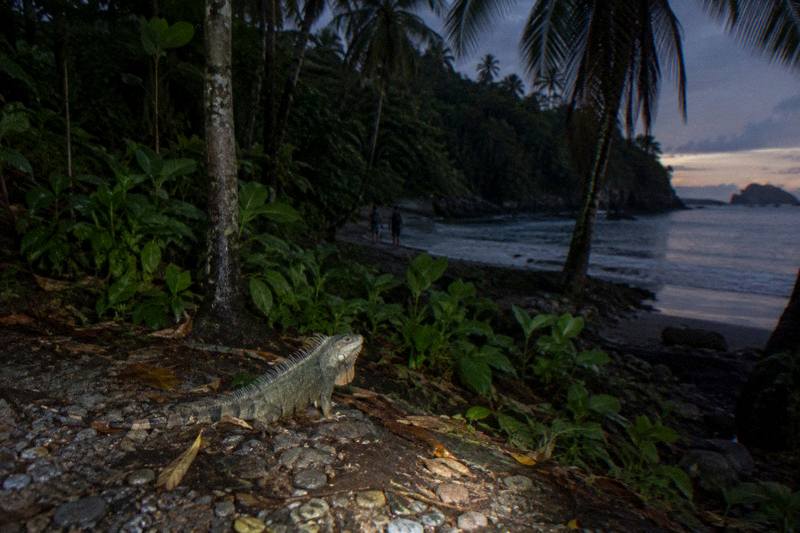
Manuel Antonio Night Tours: What The Dark Jungle Shows
Manuel Antonio National Park shuts its gate at 3:00 pm, but the jungle outside it keeps working. Most night tours in the Quepos area run on private reserves and waterways, and they show a cast of animals the daytime crowds never meet.
Short answer
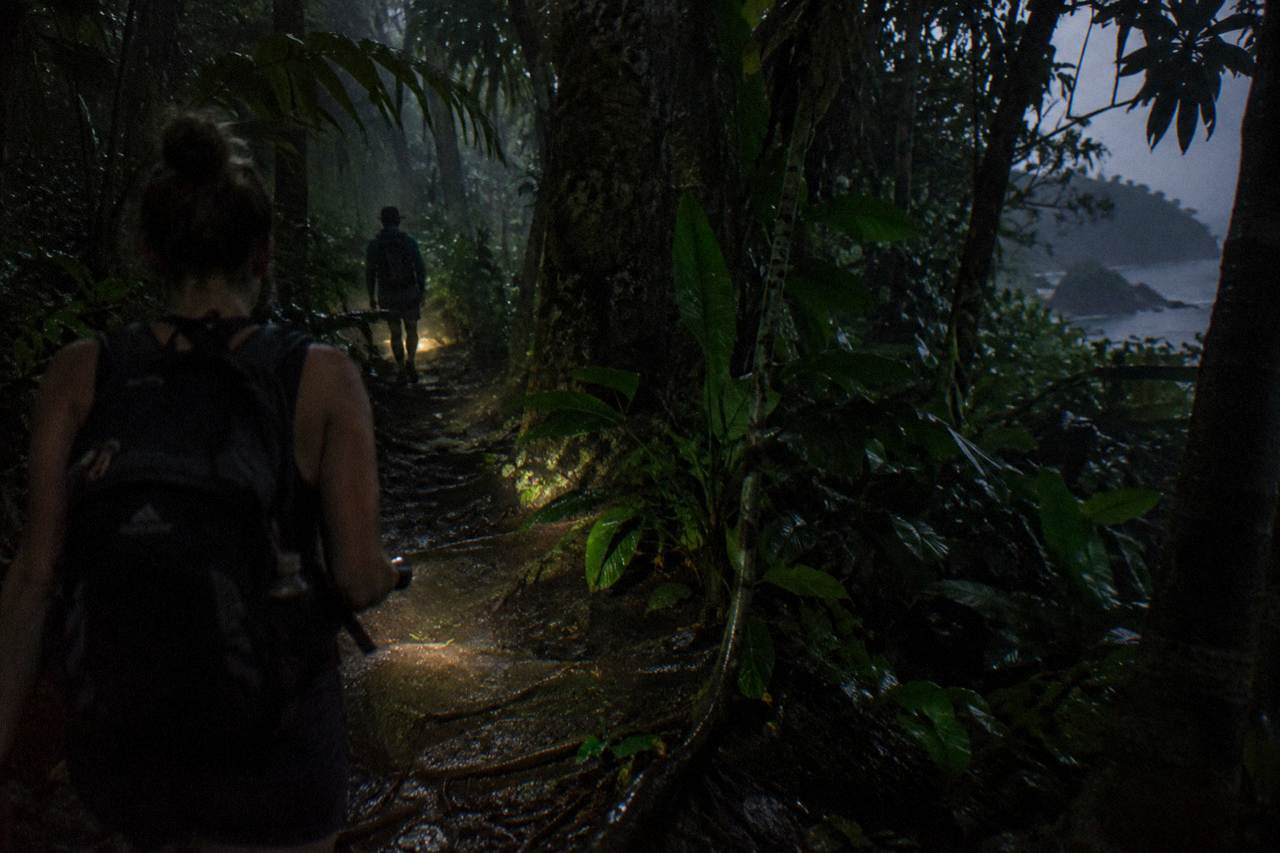
Night tours around Manuel Antonio run on private reserves and mangrove channels. Options run from $55 to $65 per person and last about two hours. Listings range from the 2-hour night tour from $57, to a naturalist-led night walk from $55, to a jungle night tour with entrance fee included from $58.
Manuel Antonio National Park closes at 3:00 pm and stays shut every Tuesday, so the official trails go quiet long before the animals do. That gap is exactly what night tours in the Quepos area are built for. Most night tours run on private reserves; the park's guide office adds 5:30 pm night tours Wednesday to Friday, November to April. They happen in the hours when frogs call, snakes hunt and sloths move between trees. This guide lays out which after-dark tours actually operate near Manuel Antonio, what they honestly cost, what you might find, and what to pack.
This site carries four night products: a two-hour night tour from Manuel Antonio, a naturalist-led night walk, a jungle night tour with the reserve entrance fee included, and a mangrove boat trip by night. The differences that matter are transport, what the price covers, and whether you walk or float. The Manuel Antonio Night Tour, rated 4.8 from 85 reviews and from $57 per person, is the featured pick here because it bundles an air-conditioned vehicle, flashlights, water and the reserve entrance in one price.
What Happens In The Manuel Antonio Jungle After Dark?
The jungle around Manuel Antonio changes shift at dusk: the diurnal animals bed down and a separate community of frogs, snakes, insects, owls and kinkajous takes over, which is why local operators run guided night walks on private reserves. Daytime visitors simply never meet this half of the ecosystem.
The national park's own rules frame the whole night-tour scene. Per the official SINAC page, Manuel Antonio is open Wednesday to Monday, 7:00 am to 3:00 pm, and closed Tuesdays. That is not a compromise: private reserves near Quepos hold primary and secondary forest, and guides with flashlights and spotting scopes can work them in small groups long after the park empties.
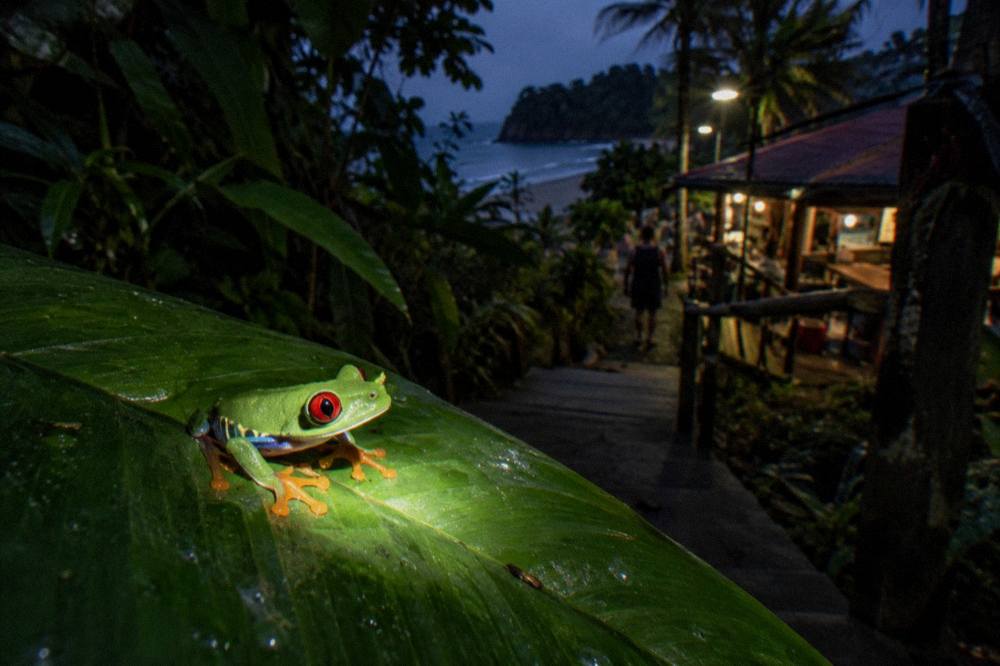
What the dark jungle shows depends on season and luck, and any honest article says so plainly. Operators describe commonly reported finds, not guarantees. After dark the realistic cast widens to red-eyed tree frogs, glass frogs, various snakes, scorpions, tarantulas, owls, bats, and kinkajous, with the guide's flashlight doing most of the work of finding them. The official park page records roughly 109 mammal species and 352 bird species in the area, a pool the night walks sample from.
There is also a timing detail most first-time visitors miss: sunset here falls between about 5:10 pm and 6:00 pm across the year, so "night tour" start times cluster early, often 5:30 pm or 6:00 pm, using the last light to walk in and full dark to spot. The guide association at the park gate itself lists special-season night tours at 5:30 pm, November to April only, which hints at how seasonal demand works. The commercial night walks below run year-round on private reserves.
Which Night Tours Run Near Manuel Antonio And Quepos?
Four bookable night products operate around Manuel Antonio and Quepos: a two-hour night tour from Manuel Antonio from $57 per person, a naturalist-led night walk from $55 per person, a jungle night tour with entrance fee included from $58 per person, and a mangrove boat night tour from $65 per person. Durations run two hours to two hours 40 minutes. Since several of these tours run after dark, the guide to walking around Quepos safely at night explains which areas are easy on foot once the sun sets and what to watch for.
The three walking tours look similar on a search results page and are in fact different products. The Manuel Antonio Night Tour, 4.8 from 85 reviews, includes air-conditioned transport, flashlights, bottled water and the reserve entrance, with free cancellation listed. The Night Walking Tour with a Naturalist Guide, 4.9 from 336 reviews, from $55, includes the private reserve entrance, flashlights, a naturalist guide and hotel pickup if that option is selected. The Jungle Night Tour, 5.0 from 43 reviews, from $58, runs 2 hours 40 minutes from Manuel Antonio Beach, includes the entrance fee and flashlights, and does not list free cancellation, so check the listing for its terms before booking.
The mangrove boat night tour, 4.7 from 61 reviews, from $65, takes up to 15 guests out on the water for two hours with a local guide and bottled water, and free cancellation is listed.
| Tour | Price | Rating | Duration | Pickup listed | Free cancellation listed |
|---|---|---|---|---|---|
| 2-Hour Night Walk, Reserve Entry Included | from $57 | 4.8 from 85 reviews | 2 hours | Not stated | Yes |
| Naturalist Night Walk | from $55 | 4.9 from 336 reviews | 2 to 2.5 hours | If option selected | Yes |
| Jungle Night, Entrance Fee Included | from $58 | 5.0 from 43 reviews | 2 hours 40 minutes | Not stated | Not listed |
| Mangrove Boat by Night | from $65 | 4.7 from 61 reviews | 2 hours | No, meets at the Damas Island dock | Yes |
A note on what similar-sounding listings are not: none of these enter Manuel Antonio National Park itself. If you want the park's trails, that is a daytime activity covered in the guide to walk-through times in the park, and tickets must be bought in advance on the official online system, a process covered in Manuel Antonio National Park Tickets.
What Wildlife Might You See On A Manuel Antonio Night Walk?
Operators describe frogs, snakes, owls, kinkajous, sloths and insects as commonly reported on night walks near Manuel Antonio, but no honest listing promises a sighting, and none should: what you find depends on season, weather, moonlight and the guide's spotting skill. What the dark reliably adds is sound, and the frog chorus alone is worth the walk.
The realistic star animals after dark are the small ones. Red-eyed tree frogs, glass frogs and other amphibians become active and call loudly, which is how guides locate them. Insects and arachnids, tarantulas included, sit exposed on leaves. Snakes, both harmless and venomous species, hunt at night, and guides keep every guest at a safe distance. Owls and bats work the airspace. Kinkajous that most daytime visitors have never heard of, move through the canopy. Sloths are seen on night walks too, though a sleeping sloth is a ball of fur, not the photo you get at midday.
Guidelines published on night-tour operator pages for the 2026 season set the ground rules: no touching animals, closed-toe shoes, insect repellent, flashlights provided, small groups, certified guides. Those rules exist because the animals are wild and the reserves are their habitat, not a zoo. A good guide will also digiscope or photograph finds and share the images, which several listings on this site mention as an included feature on their daytime equivalents.
Honest odds framing matters on this topic, so here it is plainly. Guest reviews for these night walks repeatedly praise the guide's spotting ability, and the review pools are solid for the category: 336 reviews at 4.9 for the naturalist walk, 85 at 4.8 for the Manuel Antonio Night Tour. But a review average describes the tour's operation, not nature's output. If a frog-heavy night matters to you, green-season walks after rain, May to November, are when amphibians are most active; the trade-offs are covered in Manuel Antonio Weather By Month.
| What you might find | When it is realistic | Notes |
|---|---|---|
| Red-eyed and glass frogs | Most of the year, strongest after rain | Located by call; guides use flashlights |
| Snakes | Any night | Venomous; never approached closely |
| Tarantulas and scorpions | Any night | Found on leaves and trunks under flashlight |
| Owls and bats | Any night | Heard more often than seen |
| Kinkajous | Any night | Nocturnal canopy mammals |
| Sloths and monkeys | Possible, commonly reported in the region | Often asleep after dark |
Do You Need A Guide For Night Tours Around Quepos?
Yes, and not mainly for the permit reasons that apply inside the national park: private reserves admit night visitors only with their operators, and independent night walking on public land around Quepos is both unproductive and unsafe, since finding a snake or frog in rainforest darkness without training and a good light is close to impossible. The guide is the product.
On the park side the answer is categorical. SINAC's rules allow entry only during open hours with an online ticket, so there is no self-guided park night visit to weigh. On the private reserves, access comes with the tour. The value question is therefore not guide versus no guide, but which guide style suits you: the Night Walking Tour with a Naturalist Guide, from $55, markets itself on the naturalist's depth, while the Manuel Antonio Night Tour from $57 markets on logistics.
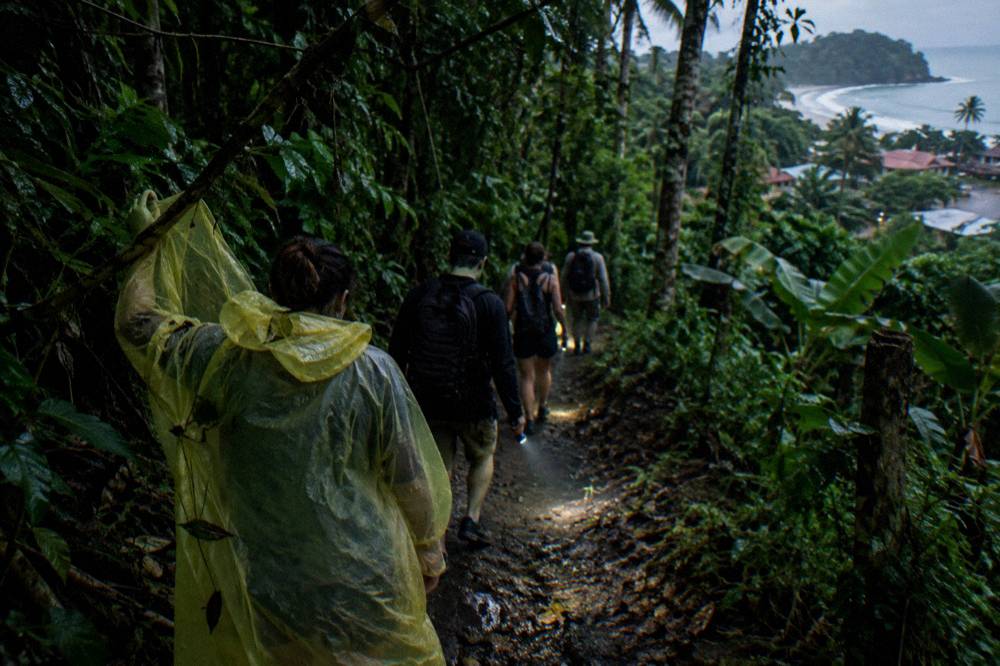
The same logic drives daytime decisions in this area, a comparison unpacked at length in Do I Need A Guide For Manuel Antonio National Park. At night the argument is stronger. A trained eye with a focused light can find a frog the size of a coin at ten paces. Untrained eyes walk past everything. Group sizes matter too: the mangrove boat night tour caps at 15, and the walking listings describe small groups, which keeps the experience quiet enough to hear the forest.
The naturalist walk earns its place as the mid-price anchor of the category, and it fits readers who want interpretation, not just spotting.
For readers who prefer their after-dark wildlife from a boat rather than on foot, the next section covers the water option.
How Long Do Night Tours Last And What Do They Cost?
Night tours around Manuel Antonio run two hours to two hours 40 minutes and cost from $55 to $65 per person, with the naturalist walk cheapest at $55, the night tour at $57, the jungle night tour at $58 and the mangrove boat at $65. Several listings bundle entrance fees and transport, which shifts the real price gap between them.
Comparing headline prices alone misleads here. The $57 night tour includes flashlights, water and the reserve entrance, so its out-the-door cost is its sticker. The $55 naturalist walk includes the entrance fee and flashlights, but pickup only if you select that option, so check the listing for what each option adds. The $58 jungle night tour is the longest at 2 hours 40 minutes and includes its entrance fee. The $65 boat tour lists only a local guide and bottled water, so there is no pickup: the tour meets at the Damas Island dock.

Timing against sunset is the practical constraint. Sunset runs from about 5:10 pm in November to about 6:00 pm in July, so departure and end times shift through the year. Two-hour walks that start at 5:30 pm in November finish in full dark well before 8 pm; the same start in July catches dusk on the way in. None of this affects the daytime tours, and if you are planning whole days rather than evenings, the Manuel Antonio Day Tours guide covers the full catalogue.
| Listing | From price | Duration | Entrance fee | Pickup |
|---|---|---|---|---|
| Naturalist Night Walk | $55 | 2 to 2.5 hours | Included | If option selected |
| 2-Hour Night Walk, Reserve Entry Included | $57 | 2 hours | Included | Not stated |
| Jungle Night Tour | $58 | 2 hours 40 minutes | Included | Not stated |
| Mangrove Boat by Night | $65 | 2 hours | Not stated | No, meets at the Damas Island dock |
What Should You Wear And Bring On A Night Tour?
Wear closed-toe shoes, long pants and a light rain layer, bring insect repellent and water, and leave the big camera flash and white-light headlamp at home: operators provide managed flashlights, and guidelines for night walks ask visitors not to touch animals and to stay in small guided groups. A phone in a pocket beats a bag on your shoulder.
Operator guidelines for the 2026 season, published on night-walk listing pages, are consistent: closed-toe shoes, insect repellent, no touching animals, no alcohol or drugs, flashlights provided, certified guides, small groups. The footwear line is not boilerplate. Jungle trails after dark are mud, roots and the occasional stream crossing, and the park's own daytime guidance says sandals are not recommended even at noon.
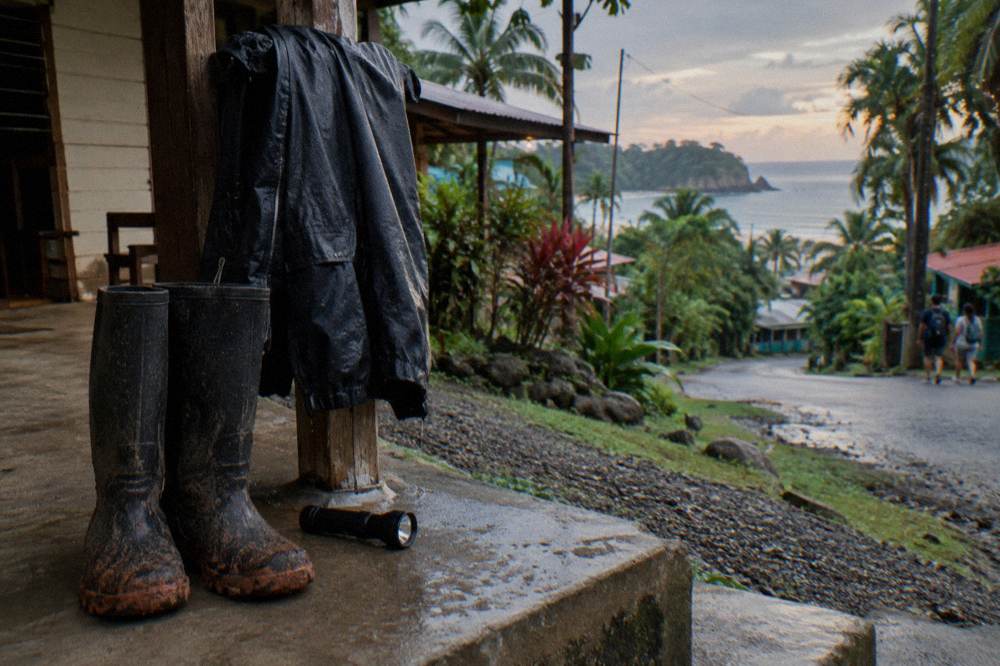
Rain matters more than temperature. Quepos records about 3,571 mm of rain annually, with rain falling on well over half the days of a typical year, and September and October standing out as the wettest months. A night walk in green season will feel humid and may get wet; the dry season, roughly December to April, is drier and a little cooler after sunset. The packing guide for daytime tours, What To Bring On A Manuel Antonio Tour, covers the base kit, and everything there applies at night plus the shoe rule.
| Item | Why | Operator guidance |
|---|---|---|
| Closed-toe shoes | Mud, roots, stream crossings | Stated on night-walk guidelines |
| Long pants | Insects and brush | Recommended |
| Insect repellent | Mosquitoes at dusk | Stated on night-walk guidelines |
| Light rain layer | Evening showers, green season | Rain falls most days of the year in Quepos |
| Water | Humidity | Provided on two of the listings |
| Flashlight | Spotting | Provided; do not bring a blinding white torch |
The jungle night tour is the longest walk in the set at 2 hours 40 minutes, which makes the footwear point double for that listing.
When Is The Best Season For Night Tours Near Manuel Antonio?
Any month works, because night tours run year-round on private reserves, but the trade-offs differ: green season, May to November, brings peak frog activity after rain and lower crowds, while dry season, roughly December to April, brings drier trails, and the national weather service expected the 2026 to 2027 dry season to start in the Central Pacific between 13 and 30 November 2026.
Seasonality here is about comfort and amphibians, not availability. The Instituto Meteorológico Nacional's outlook for late 2026 pointed to a dry November establishing the Central Pacific dry season between 13 and 30 November, with its subseasonal forecast describing very dry conditions in the region from late October into early November. That follows an October of intertropical-convergence-zone activity, with official meteorological advisories in mid-October estimating 25 to 50 mm of afternoon rain in the Central Pacific and saturated soils, conditions that send frogs into full voice.
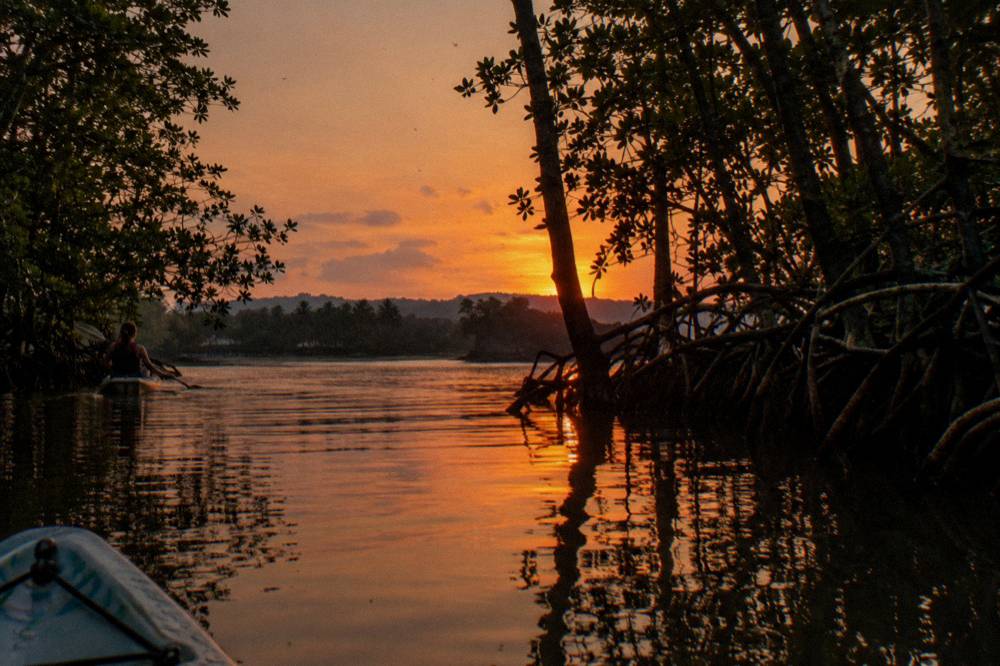
September and October are also the quietest months for the national park itself, per the official park page's visitor note, and that quiet extends to the reserves. If your trip falls in those months, a night walk after an afternoon shower is arguably the single best timing in the year for amphibians, with the honest caveat that rain can also reschedule a tour. All four listings here either list free cancellation or ask you to check terms, so weather flexibility is worth confirming at booking, not assuming.
For visitors building a whole evening, sunset on the sand is free and runs about 5:10 pm to 6:00 pm year-round, covered in the Free Things To Do In Manuel Antonio guide, and a night walk slots neatly after it.
Is A Mangrove Night Boat Tour Worth It Versus A Jungle Walk?
The mangrove boat night tour, 4.7 from 61 reviews, from $65 per person, suits readers who want the after-dark forest without two hours of walking: it floats up to 15 guests through mangrove channels for two hours with a local guide, trading the walking tours' frog-level detail for caiman-spotting territory, water access and a seat.
The choice is physical as much as zoological. The walking tours cover two hours to two hours 40 minutes on jungle trails, which families with small children or anyone with knee trouble may find long. The boat removes that barrier entirely. What you give up is proximity: on foot, a guide can stop at a frog on a leaf at arm's length; on water, the finds are bigger, crocodilians and roosting birds among the commonly reported categories on mangrove tours in this region, and the viewing is from the boat.
The region's mangrove resource is real and sizable. The national park alone records about 18 hectares of mangrove, red, pinuela and gentleman species, inside its boundary, and the Damas Island system just north of Quepos is a far larger expanse that several daytime listings on this site explore. For the daytime version of the water comparison, see Damas Island Mangrove Tour.
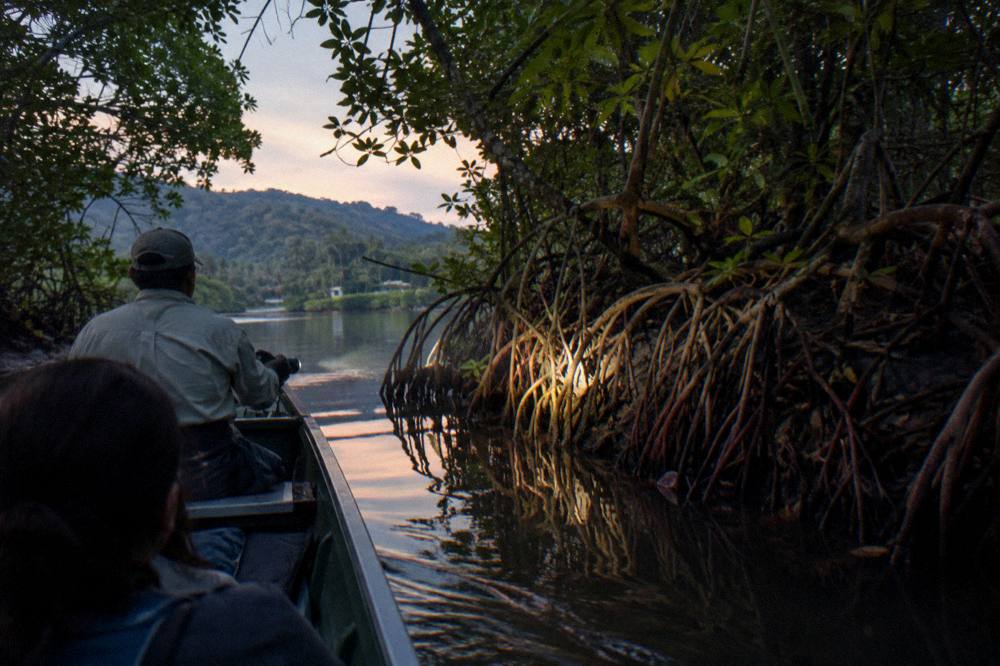
Honest verdict on "worth it": the boat tour has the smallest review pool in the category, 61 reviews at 4.7, and its listing is the sparsest on inclusions, listing a local guide and bottled water, so confirm transport and details on the live listing. If those check out and walking two hours is not appealing, it is a genuinely different experience rather than a lesser version of the walks.
One last planning note for evening logistics: the single road from Quepos to Manuel Antonio gets busy at peak times, and tour pickups are scheduled around it, so being ready at your hotel a few minutes early keeps the group's departure, and your guide's first hour of darkness, on schedule.
Whichever way you go, book the evening before the day you want, not the afternoon of: these tours run small groups, and sunset slots are the scarcest inventory in the area. Free cancellation is listed on the 2-hour night tour, the naturalist walk and the mangrove boat, which makes an early booking a low-risk move. For everything the daylight side of the destination offers, start from Manuel Antonio Costa Rica Tours and all 35 tours, from day tours, wildlife walks and boat trips.
Common Questions About Manuel Antonio Night Tours
Are there night tours inside Manuel Antonio National Park?
In season only: the park's official guide office runs night tours at 5:30 pm Wednesday to Friday, November to April. Other night tours run on private reserves or by boat.
How much do night tours near Manuel Antonio cost?
From $55 to $65 per person depending on the listing. The naturalist-led night walk starts at $55, the night tour at $57, the jungle night tour with entrance fee at $58 and the mangrove boat at $65.
What animals might you see on a night walk?
Operators describe frogs, snakes, tarantulas, scorpions, owls, bats, kinkajous and roosting birds as commonly reported, with sloths and monkeys possible. No listing guarantees a sighting, and honest expectations matter: the guide's flashlight and skill drive most finds.
What should you wear on a night tour?
Closed-toe shoes, long pants, insect repellent and a light rain layer. Operator guidelines ask for closed-toe shoes and no touching of animals, and the tours provide flashlights. Leave strong white torches at home.
Is a night walk better in dry or green season?
Both work. Green season, May to November, brings peak frog activity after rain; dry season, roughly December to April, brings drier trails. The tours run year-round on private reserves.
Do night tours include hotel pickup?
It varies by listing. The naturalist walk offers pickup as an option, and the mangrove boat listing asks you to check transport details on the listing.