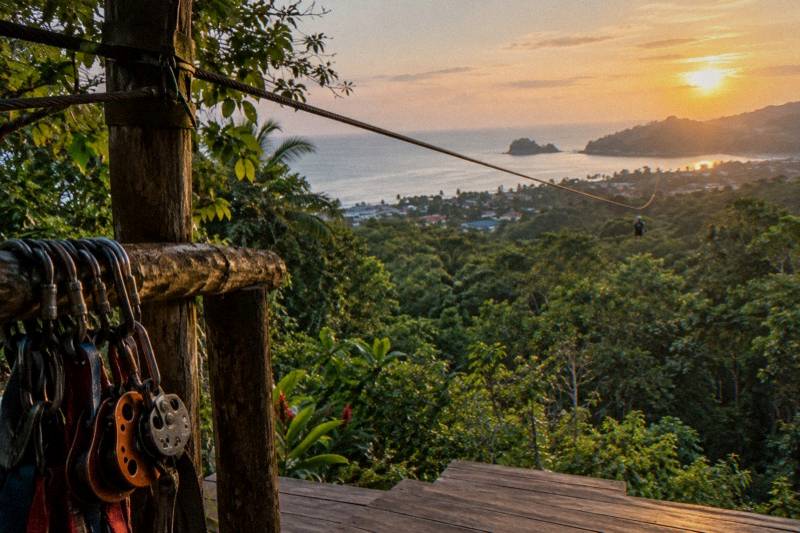
Is It Safe To Zip Line In Costa Rica?
A plain-English look at zipline safety in Costa Rica: the equipment, the braking systems, the questions to ask an operator, and what the Manuel Antonio canopy tours actually include.
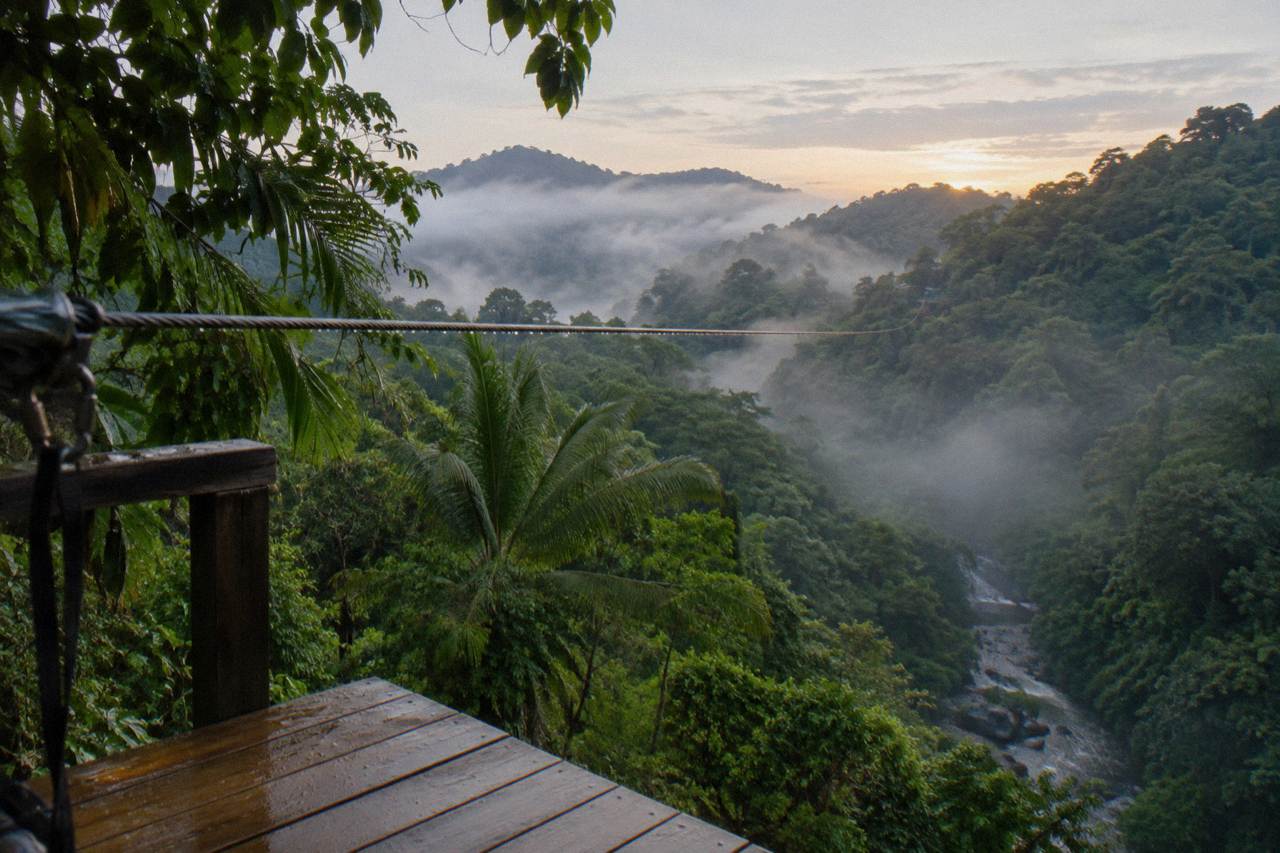
Canopy tours are one of the signature experiences of a Costa Rica trip, and they are also the one that makes the most people hesitate. The idea of clipping onto a cable a hundred feet above the forest floor is exciting precisely because it sounds a little reckless. In practice, commercial ziplining in Costa Rica is a mature industry that has been running for decades, with standardized equipment, trained guides, and inspection routines, and the hesitation is best answered with facts about how the systems work rather than reassurance.
This article walks through the equipment, the braking systems, the questions worth asking any operator, and the three canopy tours on this site, the twin zip line canopy tour from Quepos, the Titi canopy tour with rappel and Tarzan swing, and the waterfall ziplining and canyoning combo at the ADR Adventure Park. Where a fact comes from a listing, it says so. Where the honest answer is "ask the operator," it says that too.
Yes, in the sense that commercial canopy tours in Costa Rica are established, regulated-adjacent operations built around redundant equipment, two-point harness attachments, and trained guides, not improvised cables in a backyard.
The honest framing matters. Ziplining is an adventure activity with real height and real speed, and like rafting or canyoning it carries a nonzero risk that responsible operators manage rather than eliminate. What distinguishes a well-run canopy tour is redundancy: a harness that attaches to the cable at two points, a braking system that does not depend on your own hand strength, guides stationed at both ends of every line, and equipment that is inspected and retired on a schedule. Those practices are the norm across the established Costa Rican operators, and the listings for the Manuel Antonio area reflect them, with professional bilingual guides and top quality equipment named explicitly on the twin zip line listing.
Costa Rica helped popularize modern commercial ziplining. Canopy tours grew here as a way for researchers and then travelers to move through the treetops, and the industry that grew from that now spans the country, from Monteverde to Arenal to the Pacific coast. Maturity cuts both ways: the older, larger operators have had decades to formalize their safety routines, and the competitive market rewards operators whose reviews stay clean. That is the context behind the review pools on this site: the twin zip line canopy tour carries a 5.0 rating from 1,685 reviews, the Titi canopy tour a 4.9 from 710 reviews, and the waterfall ziplining and canyoning combo a 5.0 from 842 reviews. Ratings never prove safety, but a review pool that large, accumulated over years of daily operation, is at minimum evidence that the tours run consistently and that guests overwhelmingly report good experiences.
If you want the deeper companion piece on the local options, the Manuel Antonio zipline tours guide compares all three listings side by side.
What Safety Equipment Do Canopy Operators Use?
A commercial zipline kit has four load-bearing pieces: a full-body harness with leg loops and a waist belt, a helmet, a trolley that rides the cable on sealed wheels, and connectors, lanyards, and carabiners rated for climbing loads. Every rider wears the full set on every line, the harness clips to the trolley and to a backup point, and operators inspect and retire gear on a schedule rather than waiting for it to fail.
The harness is the piece that matters most, and the design detail worth knowing is the full-body cut. A proper canopy harness wraps the legs and the waist so that a rider hangs in a seated position if they stop mid-cable, with load spread across the body rather than concentrated at the waist. The helmet guards against branch contact and cable debris on arrival platforms. The trolley is the wheeled block that actually runs on the cable, and on well-maintained courses it is a sealed metal unit rather than a simple pulley.
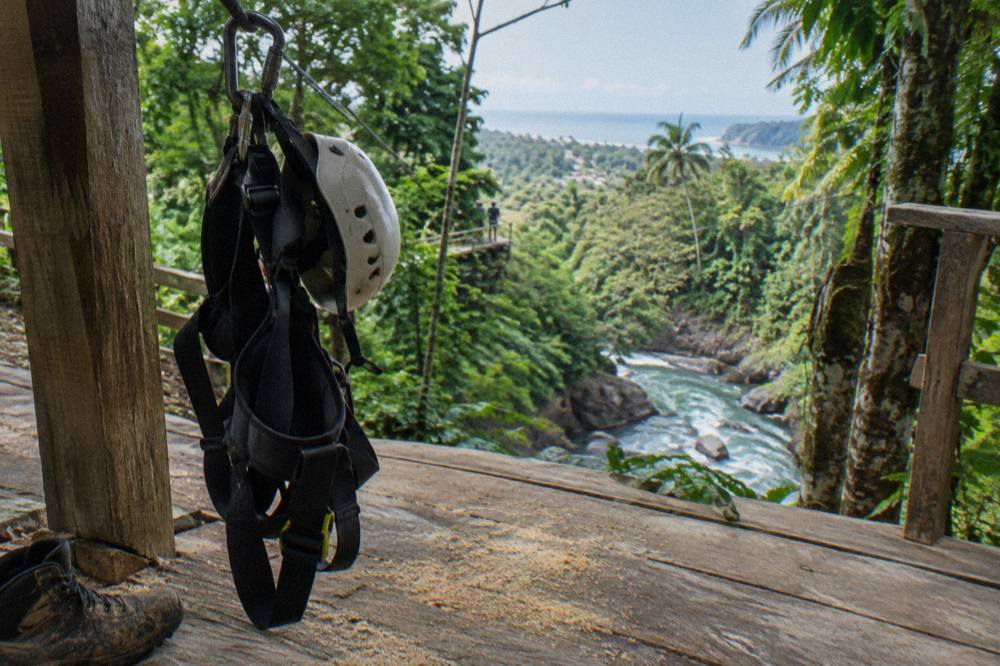
Connectors deserve their own sentence. On a modern course you are attached to something anchor-like from the moment you leave the ground until the moment you step off the final platform, and the attachment points are arranged so that you are never disconnected from both the cable and the platform at the same time. This is the "two points, always one closed" discipline that climbing and industrial rope access share, and it is the single clearest marker of a professionally built course. When you arrive at a platform, a guide clips you to the platform before your trolley comes off the arrival cable, or the geometry of the course keeps you attached throughout.
On this site, the twin zip line listing names top quality equipment and all equipment included, with GoPro-ready helmets available, and the Titi canopy listing names all activities and a local guide with hotel pickup and drop-off. Neither listing prints gear brand names or inspection intervals, and no listing anywhere in this catalogue publishes a certification document, so treat equipment specifics as a question for the operator rather than something to assume. The practical takeaway is simpler: every rider gets the full kit, the guides fit it, and you should speak up if a harness feels loose before you leave the first platform.
What Should You Ask A Zipline Operator Before Booking?
Ask five questions: who brakes each line, the rider or a guide; how many guides accompany a group; what weight and age limits the operator states; when the cables and course were last inspected and by whom; and what the weather policy is. An operator that answers these directly, with numbers, is showing you its safety culture; one that waves the questions away is telling you the same thing.
None of these questions are rude. Good operators field them daily, and several publish the answers on their own booking pages. The braking question is the most informative because the answer separates two generations of course design. On older or cheaper courses, riders sometimes grip the cable with a leather glove to slow themselves, which works but depends on technique and attention. On modern courses, the guide at the arrival end controls the braking, or the cable itself terminates in a gravity or spring brake, so the rider's only job is to sit in the harness and enjoy the ride. Ask which system a course uses. Passive braking, where a guide or the hardware does the stopping, removes the most common failure point, which is an inexperienced rider arriving at a platform too fast.
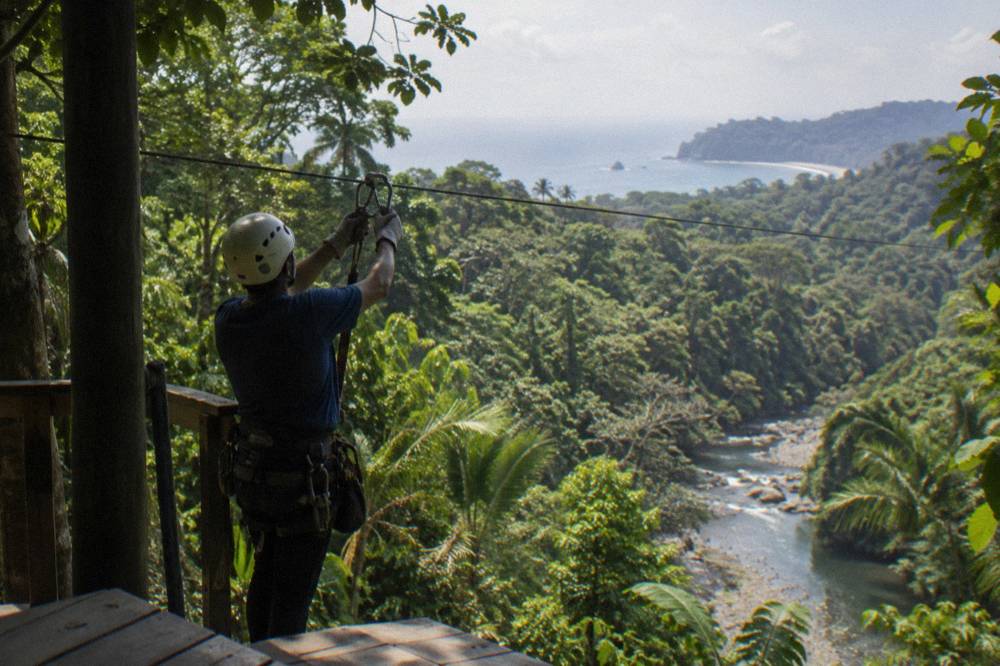
The guide-count question matters because the safe staffing pattern is one guide at the departure platform, one at the arrival platform, and a third moving with the group. A two-guide operation can be run safely on short lines, but the three-guide pattern is the one that keeps a trained person at both ends of every cable at all times. The inspection question, when cables and hardware were last checked and by whom, is answered by operators with maintenance logs, and an operator's own booking page often states the inspection routine; one operator in the region posts its zipline tour details and operational standards on its own site, which is the kind of transparency worth rewarding.
The weather policy question is the one travelers forget. Rain alone rarely stops a canopy tour in a rainforest, where courses are built to run wet, but strong wind is a different matter, and lightning pauses everything. Ask at what point the operator calls a pause and what happens to your payment if they do. On this site, the twin zip line, Titi canopy, and waterfall combo listings all show free cancellation listed, which answers part of the question, but the operator's specific storm policy is worth reading on the live listing before you book.
Are There Weight Or Age Limits On Costa Rica Ziplines?
Yes, nearly every commercial canopy course states a maximum rider weight, and most state minimum ages or heights for children, but the specific numbers are set operator by operator rather than by national law, and the twin zip line listing states a 275 lb maximum weight and the canyoning combo a minimum age of 6; the Titi listing says children must be accompanied by an adult and states no weight limit. Check the operator's live listing or ask directly before booking, because the limits are enforced on site.
Why the limits exist is worth understanding, because it makes them easier to respect. The weight limit is physics, not judgment. A zipline's arrival speed depends on the mass of the rider: a heavier rider arrives faster, and every braking system on a course is engineered around a maximum energy it can absorb safely. The age and height minimums are about harness fit, since a full-body harness only protects a body it is sized for, and about a child's ability to follow instructions on a platform in two languages. Operators are not being fussy when they weigh you at check-in; they are doing the arithmetic the course designer assumed.
What the listings here do state, firmly, is what is included. The twin zip line canopy tour runs 4 hours 30 minutes from Quepos, from $95 per person, with lunch, water and fruit during the tour, all fees and taxes, air-conditioned vehicle transport, professional bilingual guides. The Titi canopy tour runs 2 hours 30 minutes, from $90 per person, with all activities, a local guide, hotel pickup and drop-off, and meals as per itinerary. The waterfall ziplining and canyoning combo runs 6 hours, from $158.20 per person, with all activities, a professional guide, lunch and snacks, and hotel pickup and drop-off from selected hotels. If your group includes young children or anyone near a typical weight ceiling, the discipline is the same for all three: check the listing, and if the number you need is not there, message the operator before paying.
For families weighing the whole question of which adrenaline activities suit kids, the sibling piece on class 3 rapids and children covers the same check-the-listing logic on the water side.
How Do Braking Systems And Guides Actually Work Together?
On a well-designed course the rider does not brake at all: the arrival guide controls a braking device or the cable terminates in a passive brake, and a second guide handles the departure clip, which means two trained people are involved in every line you ride. The rider's jobs are small and trainable, sit in the harness, keep hands off the cable, and follow the guide's body-position call.
Walk through one line as it actually runs. At the departure platform, a guide checks your two connection points, confirms the trolley is seated on the cable, and gives the launch call only when the arrival platform has confirmed it is clear. You ride. At the far end, the arrival guide has a braking line connected to your trolley or to a brake block on the cable, and they take your speed off in a controlled way, then clip you to the platform before anything else happens. Your only contribution to the sequence is posture. The system is built so that the parts requiring timing, strength, and attention belong to people who do them forty times a day.
The Titi canopy listing is a useful illustration of how these systems scale to different courses. That tour, from $90 per person, adds a rappel descent and a Tarzan swing to the ziplines, all activities included with a local guide and hotel pickup and drop-off, rated 4.9 from 710 reviews. A rappel adds a descender device and a backup line, which means more hardware per guest and more guide attention, and it is exactly the kind of addition where the five questions from earlier in this article earn their keep. Ask who controls the descent rope, and the honest operators will say the guide on the backup line does.
Canyoning follows the same logic with more verticals. The waterfall ziplining and canyoning combo at the ADR Adventure Park, from $158.20 per person, 6 hours, rated 5.0 from 842 reviews, chains ziplines with canyon descents, and the listing includes all activities, a professional guide, lunch and snacks, and hotel pickup and drop-off from selected hotels, with free cancellation listed. More elements per tour means more transitions, and transitions, the moments when you move between cable, rope, and platform, are where guide procedure does its real work. That is why staffing patterns, not cable counts, are the better measure of an operation.
How Do You Judge An Operator's Standards Beyond The Listing?
Use three signals together: the review pool over time, which shows how an operation behaves across thousands of guests and weather conditions; the operator's own published information on equipment, inspection, and limits; and the answers you get when you ask directly. No single signal is proof, and no operator can promise a risk-free day.
The review-pool signal is the easiest to read honestly. A rating with a four-digit review count tells you the tour has run thousands of times, in green season downpours and dry season dust, and that the overwhelming majority of those thousands reported a good experience. The twin zip line canopy tour's 5.0 from 1,685 reviews is the largest pool among the three canopy listings, and the waterfall combo's 5.0 from 842 reviews and the Titi canopy's 4.9 from 710 reviews are in the same class. Print the count beside the rating, always: a 5.0 from three reviews means very little, while a 5.0 sustained across four figures means the operation absorbs its own bad days without them turning into a pattern of complaints.
The operator-published-information signal is about transparency, not certification. Operators that maintain their own tour pages with equipment descriptions, stated limits, and booking terms are showing you the paperwork side of their operation. The direct-answer signal is the one you control: send the five questions and grade the replies. Operators that answer with numbers and specifics have the answers on file. Operators that answer with "don't worry, it's totally safe" have told you something too.
A note on what this article deliberately does not do: it prints no accident statistics and declares no operator "the safest," because reliable, current, operator-level incident data for Costa Rican canopy tours simply is not published in a form that supports an honest comparison. Any page that ranks operators by safety claims without a data source is selling confidence, not information. The structure here is the accountable alternative: here is how the systems work, here is what the listings state, here is what to ask.
What About Weather, Seasons, And The Day Itself?
Canopy tours near Manuel Antonio run year-round, and ordinary rain does not stop them, since the courses are built for a rainforest climate, but operators pause for strong wind and lightning, and the green season, roughly May to November, means brief afternoon downpours are part of the deal rather than a reason to stay home. The dry season, roughly December to April, gives more predictable skies; either way the operator makes the call on the day.
The seasonal picture around Quepos is well documented. Rainfall climbs steeply from April into the green season, with the wettest months historically September and October in the local climate tables, and falls away again from November into the dry season. The national weather service's late-October outlook for the current transition put the expected start of the Central Pacific dry season in mid-to-late November, which is the kind of planning fact that matters for a trip built around fixed tour bookings. What it means for a canopy tour is clothing and timing: morning slots in the green season are the drier bet, and a light rain jacket does more for your comfort than any schedule gymnastics.
Lightning is the hard stop. No competent operator runs cables under an active electrical storm, and wind above an operator's stated threshold pauses the tour because wind is the variable that changes arrival speeds on every line. When a pause happens, well-run operations wait it out, resume, or reschedule, and the free-cancellation flags on all three local listings, twin zip line, Titi canopy, and the waterfall combo, mean your payment is not hostage to a storm. Read the operator's own weather policy on the live listing for the exact terms.
On the day itself, three habits keep everything smooth. Wear closed shoes, since platforms are wooden and sometimes wet, and the same footwear discipline the national park recommends applies double on a cable. Secure everything loose, glasses on a strap, phone on a lanyard or in a zipped pocket, because anything dropped from a platform is gone. And eat something before a morning slot, which is easy on the tours that feed you: the twin zip line listing includes lunch and water and fruit during the tour, and the waterfall combo includes lunch and snacks. If you are packing from scratch, the what to bring on a Manuel Antonio tour checklist covers the rest.
Which Zipline Tour Near Manuel Antonio Fits Which Traveler?
Choose the twin zip line canopy tour for the biggest course and the largest review pool at from $95 per person, the Titi canopy tour for a shorter 2 hours 30 minutes visit that adds a rappel and a Tarzan swing from $90 per person, or the waterfall ziplining and canyoning combo for a full 6-hour day at from $158.20 per person. All three list free cancellation and include meals or snacks.
The comparison is real because the three products are genuinely different. The twin zip line, departing Quepos, is the headline ride: the longest twin zip line in Central America per its title, 4 hours 30 minutes, professional bilingual guides, all fees and taxes, and the site's featured listing. The Titi canopy tour, departing from Ruta Nacional Primaria 34 near Quepos with hotel pickup and drop-off, is the compact option that suits a morning or an afternoon slot and adds two elements, the rappel and the swing, that make it more than just cables. The waterfall combo, departing from Km 2 on the Quepos road with pickup listed, is the commitment choice, pairing canopy lines with canyoning at a higher price point.
| Tour | Duration | Price (per person) | Rating and reviews | Includes (per listing) |
|---|---|---|---|---|
| Twin zip line canopy tour | 4 hours 30 minutes | from $95 | 5.0 from 1,685 reviews | Lunch, all fees and taxes, air-conditioned vehicle, professional bilingual guides, GoPro-ready helmets available |
| Titi canopy, zipline, rappel, Tarzan swing | 2 hours 30 minutes | from $90 | 4.9 from 710 reviews | All activities, local guide, hotel pickup and drop-off, meals as per itinerary |
| Waterfall ziplining and canyoning (ADR Adventure Park) | 6 hours | from $158.20 | 5.0 from 842 reviews | All activities, professional guide, lunch and snacks, hotel pickup and drop-off (selected hotels) |
Match the choice to your group rather than to the price tag. The Titi canopy's rappel and swing pack the most variety into a short window, which suits families with teenagers. And anyone planning a multi-activity week, rafting one day, canopy the next, should read the companion piece on Manuel Antonio rafting tours for the water half of that plan, or the Manuel Antonio adventure and day tours overview for the full picture.
The bottom line on the original question is the one this site stands behind: ziplining in Costa Rica, on established courses with the equipment and staffing described above, is a reasonable activity for an ordinary healthy traveler, and the remaining risk is managed by choosing an operator that answers your questions and by following the guides' instructions on the day. That, plus a check of the live listing for limits and weather terms, is all the safety research a booking actually requires.
Common Questions About Ziplining In Costa Rica
Is It Safe To Zip Line In Costa Rica?
Commercial canopy tours in Costa Rica are established operations built around full-body harnesses, two-point attachments, guided or passive braking, and equipment checks. No operator can promise zero risk, so the practical answer is to book an established tour, ask the braking and inspection questions, and follow the guides on the day.
What Should I Ask A Zipline Operator Before Booking?
Ask who brakes each line, how many guides accompany the group, what weight and age limits apply, when the course was last inspected, and what the weather pause policy is. Operators that answer with specifics are showing the internal culture that keeps courses safe.
Are There Weight Limits On Costa Rica Ziplines?
Yes, nearly every course states a maximum rider weight, and most state minimum ages or heights, but the numbers are set operator by operator. The twin zip line listing states a 275 lb maximum and the canyoning combo a minimum age of 6, so check the operator's live listing or ask before booking.
Do The Manuel Antonio Canopy Tours Run In The Rain?
Ordinary rain rarely stops a canopy tour in a rainforest climate, since the courses are built to run wet. Strong wind and lightning pause operations, and all three local canopy listings show free cancellation listed, so a storm is unlikely to cost you your payment.
Which Zipline Tour Near Manuel Antonio Is Best For Beginners?
The twin zip line canopy tour, from $95 per person for 4 hours 30 minutes with lunch, is a strong first canopy experience, rated 5.0 from 1,685 reviews. Its course is the main event with a steady pace, and its review pool is the largest on this site.
Do I Need To Bring Safety Equipment Myself?
No. All three canopy listings state that equipment is included, with the twin zip line naming top quality equipment and helmets, and guides fit each rider at the first platform. Wear closed shoes and secure loose items; the operator supplies everything load-bearing.