Are Class 3 Rapids Safe For Kids?
A parent-focused look at Class 3 rapids near Manuel Antonio and Quepos: what the Savegre and Naranjo rivers actually feel like, what age minimums the listings state, and how to read a rafting listing before booking for a family.
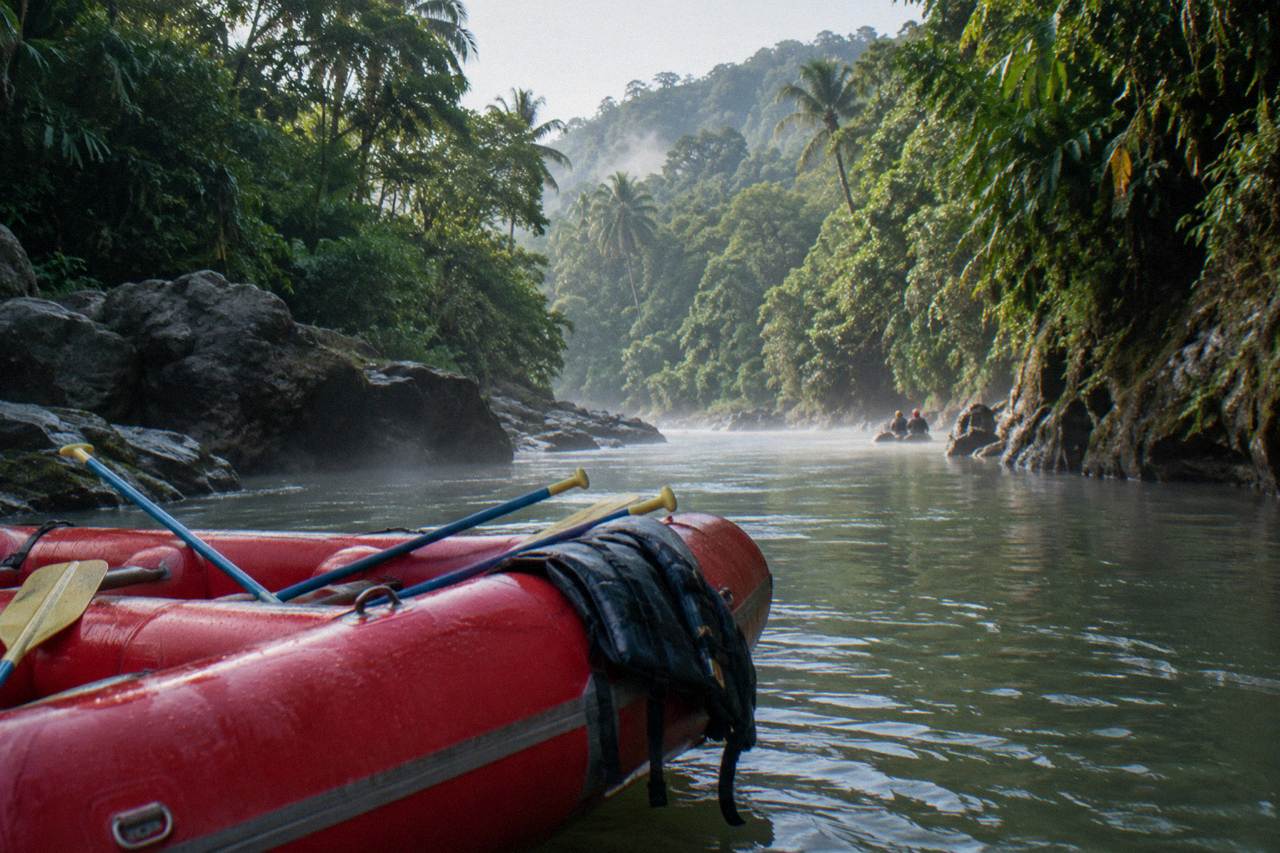
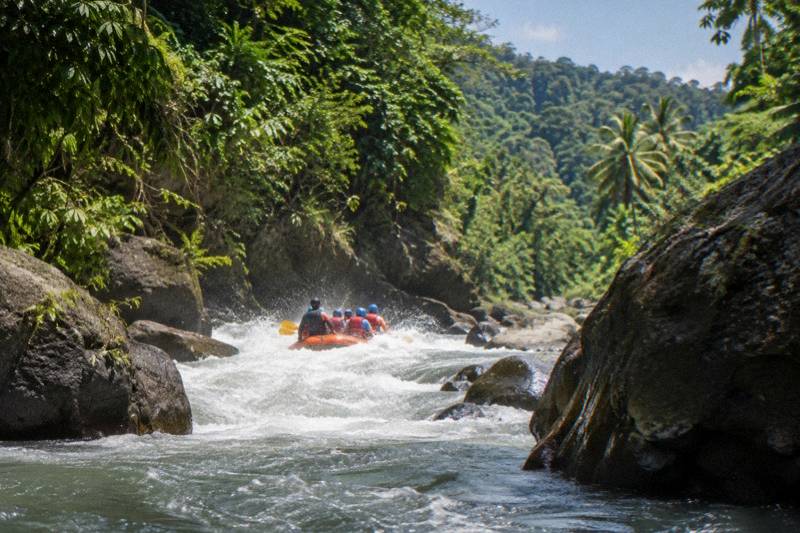
Class 3 rapids are, for most families, the right first run: moderate whitewater with waves, small drops and clear routes, which is why commercial family trips are usually built on them. The Savegre River trip from Manuel Antonio is described as Class II to III, and guides adjust or cancel in high water. The decision is not the class rating, it is the listing: age minimums, group size and guide ratio are set by each operator, so read those first.
The honest answer starts with a definition. In the international scale used by rafting operators, Class 1 is moving flat water, Class 2 is easy ripples and small waves with an obvious line, and Class 3 is the first level with genuine waves, small drops and eddies that require the guide to steer and the paddlers to respond to commands. It is still considered intermediate water that commercial outfitters regularly run with mixed crews of first-timers. Class 4 is where scouting, precise maneuvering and prior experience enter the picture, and Class 5 is expert territory. A family trip sold to the general public from Quepos or Manuel Antonio sits at the Class 2 to 3 end of that scale, not above it.
The two rivers that matter here behave differently, and the difference matters for parents. The Savegre River trip, sold as Whitewater Rafting Savegre Class II-III plus Waterfall, is rated 5 from 831 reviews and runs from $129.95 per person for a 6-hour day that includes lunch, snacks, helmet use and hotel pickup from selected hotels. The listing itself names the class rating, Class II-III, which is a useful signal: an operator willing to print the rating is an operator telling you what you are buying. The Naranjo River trip, White Water Rafting Manuel Antonio Quepos Naranjo River, is a shorter, punchier 4-hour run from $120 per person, rated 5.0 from 166 reviews, with snacks, professional guide, air-conditioned vehicle, life vests, helmets and paddles included. Its listing does not print a class rating, so check the listing for the section and level it runs on the day you book. If the thought of your child popping out of the raft is what gives you pause, the guide to what happens when a rafter falls off walks through the swim position, the safety kayakers, and how guides on these rivers pull swimmers back in.
The Savegre listing states a minimum age of 6 and the Naranjo listing a minimum age of 12, and neither is recommended for pregnant travellers. The single most productive thing a parent can do before booking is open the operator's live listing and search it for the words "age", "weight" and "minimum". If the answer is not there, message the operator through the listing with your child's age and weight before paying. That exchange takes two minutes and settles the question this article cannot settle for you.
The comparison above lines up the two rafting options plus a third adventure product that families often weigh as the alternative, the Waterfall Ziplining and Canyoning combo at ADR Adventure Park, rated 5 from 842 reviews and from $158.20 per person over 6 hours. If the rafting age minimum does not work for your youngest, that combo, or the twin zip line canopy tour discussed later, is often the family compromise.
What Does Class 3 Actually Feel Like For A Child?
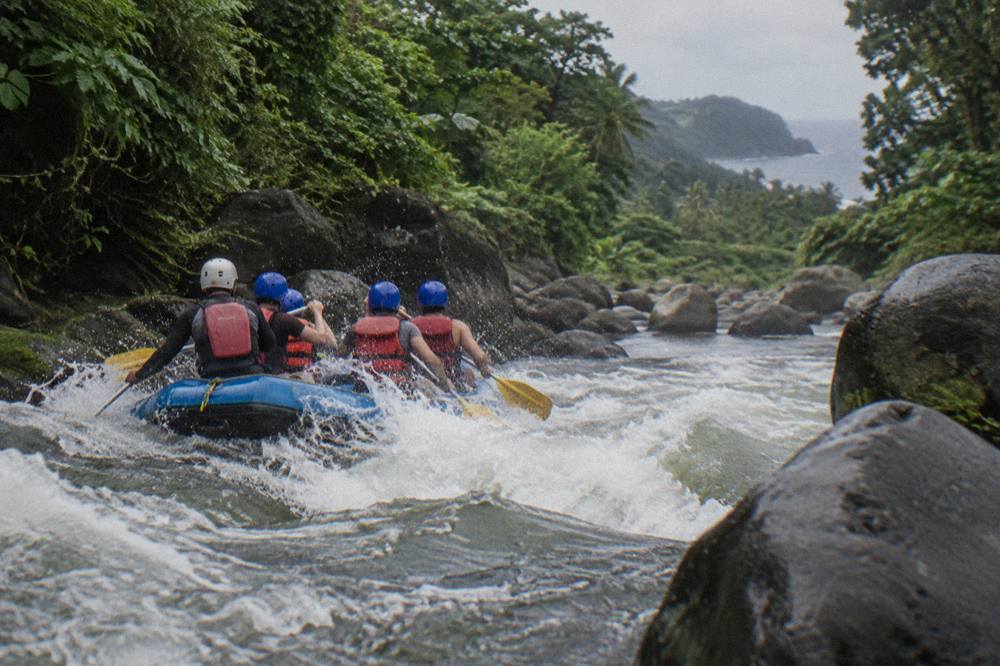
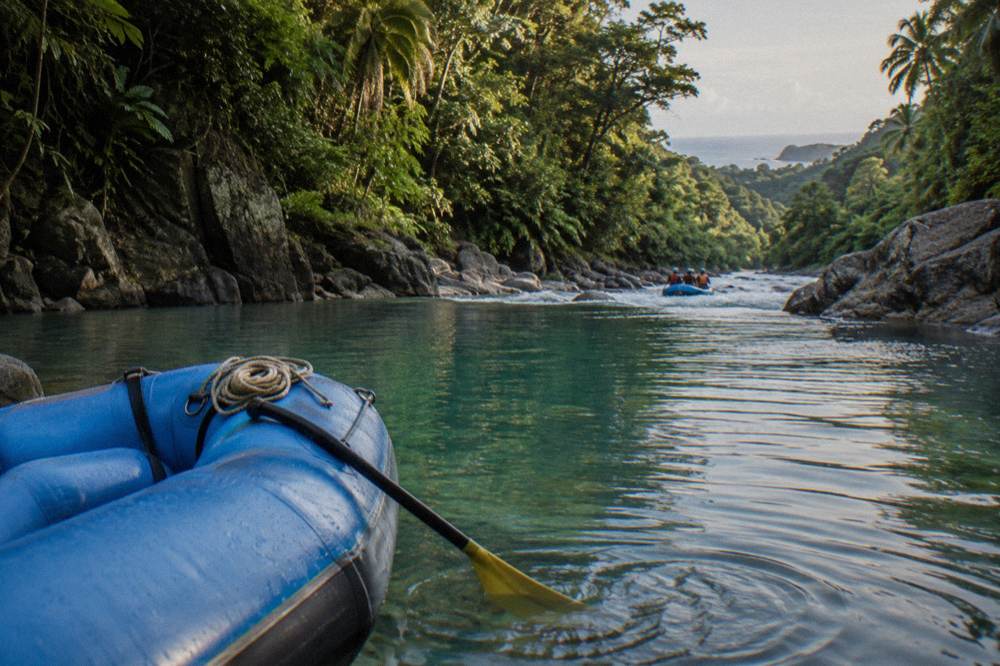
Physically, Class 3 feels like a series of wave hits: water splashes over the bow, the raft drops a foot or two, everyone gets wet, then the river calms and the guide talks. Kids almost universally love the waves and fear only two moments, the first big hit and swimming, which good operators defuse with a full safety drill before launch. Paddling is real but light work.
The rhythm of a Class 3 river is the part first-time parents misunderstand. A run is not wall-to-wall whitewater. On a river like the Savegre, the pattern is a few minutes of rapids followed by a longer stretch of quiet pools where the guide relaxes, points out wildlife and lets the boat drift. The Savegre trip listing even includes a waterfall stop in its title, which tells you the operator treats the scenery as half the product. A child who can swim, listens to instructions and is not terrified of water will typically spend the calm sections asking when the next rapid comes. That is the honest baseline expectation.
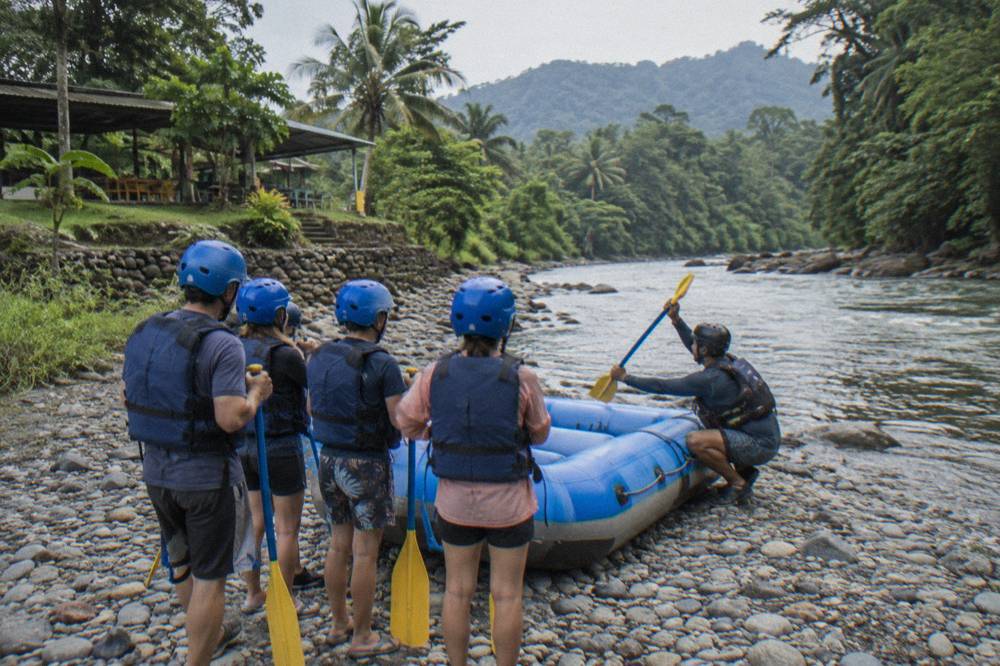
The safety drill is the moment that makes the whole day safe, and it happens before anyone touches a rapid. Operators walk the crew through paddle commands, how to sit and brace, how to hold on when the guide calls it, and what to do if someone ends up in the water: feet up, feet downstream, hold the paddle, look for the rope or the raft. Both Quepos-area listings include professional guides and helmets in their inclusions, and the Savegre listing adds all taxes, fees and handling charges plus lunch. The Naranjo listing includes the full kit as well, with life vests, helmets and paddles. Ask the operator directly, through the listing, how the swimmer-recovery drill is run; a good one answers in detail.
One more honest point: falling in is rare on Class 3 with a competent crew, but it is not impossible, and pretending otherwise does a parent no favors. The right preparation is not avoiding the river, it is choosing an operator who drills recovery properly, checking that the listing's age and weight rules fit your child, and making sure your kid can float calmly in a life vest. If a child cannot yet do that, the mangrove boat tours on Damas Island, flat water with wildlife, are the better first step, and the Damas mangrove boat with lunch included, rated 4.9 from 2,910 reviews from $75 per person, is the most reviewed water trip in the whole catalogue after the park nature tours.
Which Manuel Antonio Rafting Trip Is Better For Families?
The Savegre trip is the family default: its listing names a Class II-III rating, the 6-hour day includes lunch, snacks and hotel pickup from selected hotels, and it is rated 5 from 831 reviews. The Naranjo trip suits families with less time or older, confident kids, a 4-hour run from $120 per person, rated 5.0 from 166 reviews, with pickup not stated. Both carry free cancellation.
The comparison that matters for parents is really about water character and day structure. Savegre is the mellower, longer, fuller day: the rating printed on the listing starts at Class II, the waterfall stop breaks up the run, and the meal is included. Naranjo is the compact, sportier option, closer to Quepos and typically the river locals point adrenaline-seeking teenagers toward. Here is the head-to-head:
| Tour | Price | Duration | Rating | Pickup | Meal | Free cancellation |
|---|---|---|---|---|---|---|
| Naranjo River Whitewater | from $120 per person | 4 hours | 5.0 from 166 reviews | not stated, check the listing | no meal listed | listed |
| Savegre Rafting, Waterfall Stop | from $129.95 per person | 6 hours | 5 from 831 reviews | listed, selected hotels | meal listed | listed |
Notice what the table does not say. It does not say one river is safer than the other, because that is not how rivers work: the same Savegre that runs gentle lines in February can push bigger water in late September, and operators adjust or cancel accordingly. The dry season, roughly December to April, is when rivers run lower and family trips run their most predictable lines; the green season, May to November, brings higher flows that can energize rapids. Neither season bans kids, and green-season families raft every week, but the trade-off is real and worth asking the operator about on the specific week you travel.
For a full treatment of the longer river, the Savegre River rafting guide walks the whole day in detail, and the broader Quepos area rafting overview places both rivers against each other.
What Should Parents Ask An Operator Before Booking?
Ask five questions through the listing before paying: the minimum age and weight for this river on this date, how many guides per raft and whether a safety kayaker accompanies the run, what happens if the river is too high, the guide-to-guest ratio in your boat, and the cancellation terms. Every serious operator answers these in one message; an operator who dodges the age question has answered it.
The first question is the gate. Age minimums for Class 3 water vary by operator, by river and even by season, and the Savegre listing states 6 and the Naranjo listing 12, so confirm with the operator for your date. Give the operator your child's exact age and weight, and ask whether the answer changes in green season. Some operators run a higher minimum when the water is high, which is the correct, conservative behavior, and knowing it lets you plan the right week.
The second question separates professional outfits from casual ones: who else is on the water with you. On family-friendly commercial runs, good practice is a trained guide in every raft plus, on bigger water, a safety kayaker or a second raft within reach. You are not asking for a statistic, you are asking for a description of the trip's structure, and any operator can give it. The Naranjo listing includes a professional guide in every booking; the Savegre listing includes a driver/guide and full gear. Ask about the boat, not just the guide: how many passengers your raft carries, and whether your family can be seated together.
The third question is the one parents forget: what happens if conditions change. Both rafting listings here carry free cancellation, which is your financial safety net, but the operational question is different. Ask whether the operator moves trips to a calmer section, switches rivers or cancels outright when levels rise, and how they notify you. For the wider question of whether this sport rewards first-timers at all, the is white water rafting good in Costa Rica post works through the whole case.
| Question to ask | What a good answer sounds like | Red flag |
|---|---|---|
| Minimum age and weight on this river, this season | A specific number, possibly two, one for dry season and one for green | "Any age is fine" |
| Guides and support on the water | One trained guide per raft, plus a safety kayaker or second raft on higher water | No support boat on any water |
| If the river is high | Move to a calmer section, switch river, or cancel with refund | "We run it regardless" |
| Boat size and seating | A passenger count, with kids placed where the guide directs | No answer, or no weight distribution plan |
| Cancellation terms | Free cancellation stated, with a clear cutoff window | Vague or pressure-timed terms |
The fourth question, boat size and seating, is more than comfort. Kids are placed where the guide can see and hear them, usually in the middle of the raft, and a competent operator will explain that unprompted during the safety talk. The fifth, cancellation, you can partly check yourself: free cancellation is listed on both the Naranjo and Savegre listings, but the cutoff window lives on each listing's terms, and families booking weeks ahead should read it the way they read a flight's change rules.
Is The Savegre Or Naranjo River More Intimidating In High Water?
The Naranjo is the tighter, steeper, more intense of the two, described on operator pages as typically Class III-IV on sections like El Chorro, which is why its trips can be dry-season limited. The Savegre is the broader, more forgiving basin, typically Class II-III. In green season, May to November, both rivers carry more water and operators adjust sections or cancel, so ask about the week you are there.
The seasonal mechanics are worth understanding rather than fearing. Green season in this region runs roughly May to November, with the heaviest rain statistically in September and October, when the monthly rainfall recorded at Quepos is about twenty times what February, the driest month, sees. More rain means higher rivers, faster currents and bigger wave trains, and operators make a daily judgment. The national weather service's late-October 2026 outlook pointed to the Central Pacific dry season starting between mid and late November, so December onward is when families planning around small children usually find the water at its friendliest.
None of this means green-season rafting with kids is off the table. It means the operator conversation changes: in December you ask "what is the minimum age", in September you also ask "what did the river do this week and which section will we run". The Savegre trip's printed Class II-III rating and the Naranjo's shorter, steeper character are the two data points you carry into that conversation. For the classic worst-case curiosity, the what happens if you fall off while white water rafting post covers the recovery sequence in full.
There is also a planning arbitrage families quietly use: September and October are the low-visitor months in the region, noted even on the national park's own guidance as quieter rainy-season months, and that calm extends to the rivers' schedules and the tours' availability. If your kids are confident swimmers and you want small rafts and personal attention, the shoulder edge of green season can deliver it, paired with a free-cancellation booking and a fallback plan.
The fallback is worth naming concretely, because a rained-off rafting morning should not be a lost morning. The waterfall ziplining and canyoning combo at ADR Adventure Park runs 6 hours from $158.20 per person, rated 5 from 842 reviews, with pickup, lunch and all activities included, and it is the catalogue's most direct like-for-like adventure swap when a river is too high.
What Age Do Operators Usually Require, And What If Your Youngest Cannot Raft?
The Savegre listing sets a minimum age of 6 and the Naranjo listing a minimum age of 12. If the answer comes back above your youngest child's age, the Manuel Antonio alternatives divide cleanly by temperament: the twin zip line canopy tour for thrill-seekers, the Damas Island mangrove boat for animal-watchers, and the park nature tours for everyone. If your youngest would rather fish than raft, the guide to Quepos sport fishing charters walks through the boats, the species in season, and what to ask before you commit.
Start with the zipline, because it is the one kids usually campaign for. The Manuel Antonio Canopy Tour, sold as the Longest Twin Zip Line in Central America, is rated 5.0 from 1,685 reviews, from $95 per person over 4 hours 30 minutes, with lunch, fruit and water during the tour, all fees and taxes, an air-conditioned vehicle and GoPro-ready helmets included. Its listing carries free cancellation. The Titi Canopy Tour with zipline, rappel and Tarzan swing is a shorter 2 hours 30 minutes from $90 per person, rated 4.9 from 710 reviews, with hotel pickup and drop-off and meals as per itinerary. Age and weight limits are, again, per listing: ask the operator directly. If you want to know what the harnesses, cables, and braking systems actually do before you strap the kids in, the guide to zipline safety in Costa Rica walks through the equipment and the questions worth asking an operator.
| Type | Price | Duration | Rating | Notes from the listing |
|---|---|---|---|---|
| Canopy zipline | from $95 per person | 4 hours 30 minutes | 5.0 from 1,685 reviews | lunch, fees, vehicle listed |
| Zipline, rappel, swing | from $90 per person | 2 hours 30 minutes | 4.9 from 710 reviews | pickup and drop-off listed |
| Flat-water mangrove boat | from $68 per person | 4 hours | 4.5 from 440 reviews | pickup, meal, naturalist with binoculars |
| National park nature walk | from $49 per person | 4 hours | 4.8 from 4,590 reviews | snacks, scope, an air-conditioned vehicle listed; park ticket excluded |
The mangrove option deserves its line in that table because it answers a specific parent problem: a child who is too young to raft but old enough to be fascinated by animals. The Damas Island Mangrove Boat Tour with Lunch runs 4 hours from $68 per person, rated 4.5 from 440 reviews, with transportation, a naturalist guide carrying binoculars, a meal and drinks after the tour all listed as included. It is flat water, no paddling, no waves, and wildlife the guide spots for you. The related Damas Mangrove Boat tour variant is rated 4.9 from 2,910 reviews from $75 per person with lunch included; the two are separate products, differing in price, rating and inclusions, so compare the listings rather than assuming they are the same boat.
And the park walk is the universal fallback. The most reviewed product on this entire site is not a raft or a boat, it is the Manuel Antonio Park Nature Guided Tour with a Nature Specialist, rated 4.8 from 4,590 reviews, from $49 per person for 4 hours with snacks, a spotting scope and an air-conditioned vehicle listed, though the park ticket is excluded and must be bought in advance on the official online system, which also matters for timing: the park is closed on Tuesdays. Any age can walk it, and a guide with a scope turns a trail into a safari. For the broader picture of what a family week here can hold, the things to do in Manuel Antonio guide collects the full catalogue by category.
Common Questions About Class 3 Rapids And Kids
Are Class 3 Rapids Safe For Kids?
Class 3 is the moderate end of commercial whitewater and the level most family trips are built on, but safety depends on the operator's age minimum, the water level that day and the drill before launch. The Savegre listing prints a Class II-III rating. The Savegre listing states a minimum age of 6 and the Naranjo listing a minimum age of 12; confirm with the operator for your date.
What is the minimum age to raft near Manuel Antonio?
The Savegre listing states a minimum age of 6 and the Naranjo listing a minimum age of 12; confirm with the operator for your date. Check the listing or message the operator with your child's exact age and weight before paying; some operators raise the minimum when the river is high.
Which river is calmer, Savegre or Naranjo?
The Savegre is described on operator pages as typically Class II-III near Quepos and is the longer, fuller family day with lunch and a waterfall stop. The Naranjo is shorter and steeper, described as typically Class III-IV on sections like El Chorro, with some runs limited to dry season.
Do the rafting tours include pickup and lunch?
The Savegre trip lists hotel pickup from selected hotels plus lunch and snacks; the Naranjo trip lists snacks, gear and a professional guide, with pickup not stated, so check the listing for transport. Both listings carry free cancellation.
What if the river is too high on the day?
Operators adjust sections, switch rivers or cancel for safety when flows rise, and both rafting listings here carry free cancellation as the financial backstop. Ask the operator, before booking, exactly how they handle high water and how they notify you.
What can younger kids do instead of rafting?
Firm alternatives from the catalogue: the twin zip line canopy tour from $95 per person, the Damas Island mangrove boat with lunch from $68 per person, and the park nature guided tour from $49 per person, the site's most reviewed listing at 4.8 from 4,590 reviews.