Is It Safe To Walk Around Quepos?
A practical, honest look at walking around Quepos: which areas are easy on foot, what to watch for at night, common scams to sidestep, and pickup-based tours for cautious travelers.
No honest source can hand you a verdict, and this article will not pretend to. What the practical record supports is this: Quepos is a small, walkable service town where most visitor friction comes from opportunistic theft and taxi overcharging rather than anything dramatic, and where ordinary daylight habits, the same ones you would use in any busy tourist town, cover the large majority of situations. Check your own government's current travel advisory for Costa Rica before you travel, since those change and this page does not track them. The rest of this article walks through the town street by street, hour by hour, and ends with the tours that collect you at your hotel door, which is what many cautious travelers end up choosing.
Quepos and Manuel Antonio are really two halves of one destination. Quepos is the flat part: the bus terminal, the fish market history, the banks, the supermarkets, the marina road. Manuel Antonio is the hill: hotels, restaurants, and the national park entrance roughly 7 km east of downtown Quepos. Almost every visitor walks in Quepos at some point, if only between the bus stop and a hotel or a bank and a pharmacy. So the question is not really whether you will walk around Quepos, but how to do it without friction.
The single biggest comfort upgrade for a nervous traveler here is a tour with listed hotel pickup, because it removes the walk, the road and the negotiation at once. The sailing trip with lunch and open bar, rated 4.7 from 653 reviews and from $95 per person, lists hotel pickup and drop-off and free cancellation.
Before the street-level detail, one general point worth setting down plainly. Solo travelers and families walk Quepos daily, in the ordinary way, between restaurants and shops and the waterfront. The advice in this article is deliberately non-statistical: general habits, daylight logic, licensed taxis, and asking your hotel. No crime numbers appear here because no number on this topic would be honestly sourced or usefully current.
What Parts Of Quepos Are Easiest To Walk?
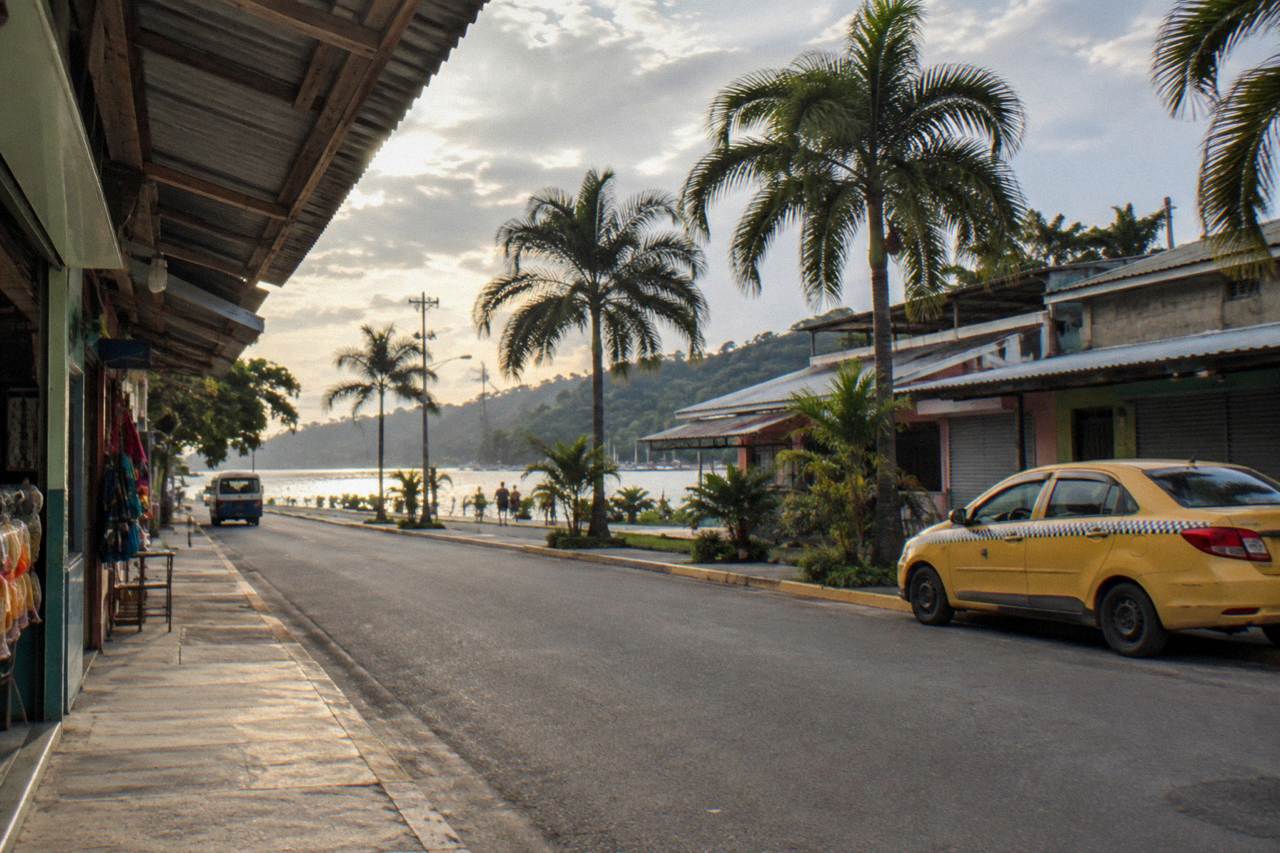
The flattest, most walked strip runs from the downtown core around the bus terminal and central market toward the marina road and the waterfront, and it is the part of town built for pedestrians: short blocks, sidewalks of varying quality, and plenty of people out in daylight. The steep road from Quepos up toward Manuel Antonio is a different experience: narrow in places, with traffic and limited shoulder, and most visitors treat it as a taxi or bus road rather than a walking route. Within downtown, distances are genuinely small; the town is compact enough that most errands are a ten minute walk apart.
Start with the shape of the place. Quepos sits on flat coastal land, and the central grid is small enough that you can cross the whole downtown core on foot in about twenty minutes. The bus terminal, the mercado, the banks, and the souvenir shops cluster within a few blocks of each other. Locals walk these streets constantly, which is itself useful: a street full of ordinary daily life at midday is a very different environment from an empty street at 10 pm, anywhere in the world.
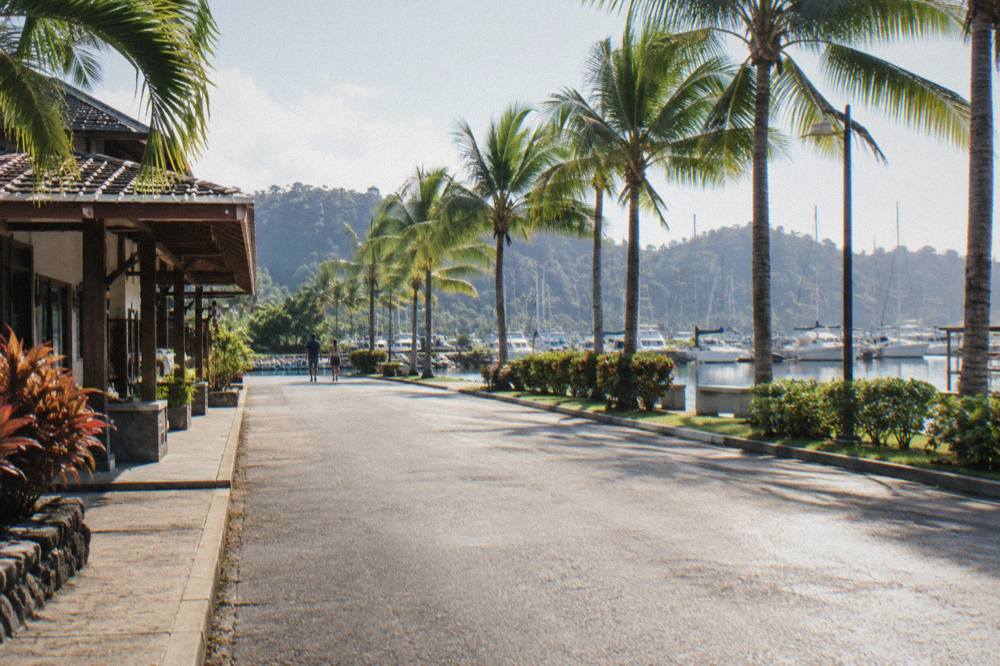
The marina road deserves its own mention. It runs from the edge of downtown out to Marina Pez Vela, the departure point for the area's catamaran and sailing trips, and it is one of the more pleasant walks in town, flat and waterfront-adjacent. The marina's own site lists the activities based there, including catamaran and sunset sailing trips, so if you are booked on a boat tour, checking whether your listing includes hotel pickup decides whether this walk is part of your day or not.
The road up to Manuel Antonio is where walking stops being the easy option. It is about 7 km from central Quepos to the park entrance, uphill and winding, and the single road gets very busy in high season according to the park's official information. Sidewalk coverage is inconsistent. The local bus runs this road frequently and cheaply, and taxis do it constantly; both are covered later in this article. If your hotel is halfway up the hill, walk downhill into town and ride back up.
For a feel of how these pieces fit the wider trip, the piece comparing the two bases, Quepos or Manuel Antonio for your stay, breaks down the tradeoff between flat walkable town and hillside hotel, and the Manuel Antonio beaches guide covers which stretches of sand you can reach on foot from either end.
Is Quepos Safe At Night?
The standard advice for Quepos after dark is the same advice that applies across Costa Rica's tourist towns: keep night walking short, purposeful and lit, prefer well-trafficked restaurant and waterfront areas over empty side streets, and take a taxi for anything that is not a five minute stroll, especially after a late dinner. This is habit-level guidance, not a statistical claim. Night changes the character of any small town: fewer people on the street, fewer open shops, and a drink or two in the mix for many travelers. Nothing about Quepos makes it exceptional in either direction.
Restaurants and bars in the main strips stay busy into the evening, and walking between your hotel and a nearby dinner spot in these areas is routine for visitors. The two frictions worth planning around are simple ones. First, lighting outside the core is patchy; a flashlight function on your phone helps on darker blocks. Second, the hill road to Manuel Antonio is not a night walk; the curve, the traffic, and the shoulder make a taxi the obvious choice after dark, and the fare is small relative to the discomfort of the alternative.
One structural point helps night planning: the national park itself closes at 3:00 pm and is shut entirely on Tuesdays, per the official SINAC park page. That means the town's evening economy is food and drink, not attractions. If you like a fully structured evening, most bookable night walks run on private reserves, while the park's own guide office runs night tours only Wednesday to Friday in the November to April season. The naturalist-led night walking tour, rated 4.9 from 336 reviews and priced from $55 per person, lists hotel pickup and drop-off as an option on its listing and includes the reserve entrance fee and flashlights; the listing states pickup "if option selected," so confirm the option when booking.
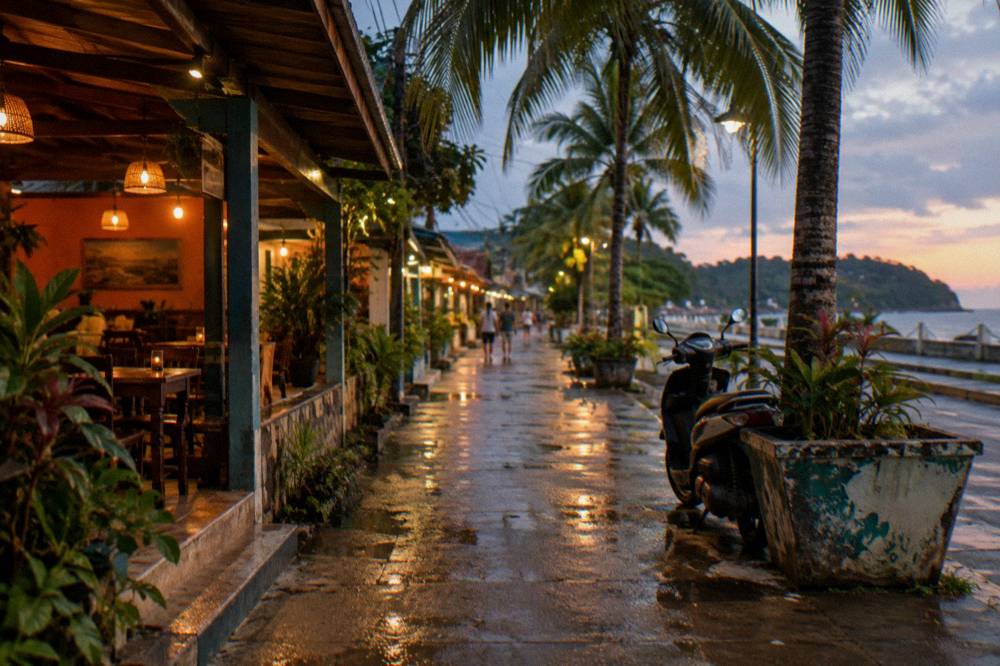
Weather deserves a spot in the night calculation too. September and October sit at the top of the Quepos rain table, the wettest stretch of the year, and the national weather service's advisories through October repeatedly flagged saturated soils and afternoon downpours in the Central Pacific. A soaked, dark street is simply harder to walk than a dry one, and a downpour is a good moment to be inside a restaurant rather than mid-route. Sunset lands around 5:20 pm in October and slides toward 5:10 pm in November, so "after dark" starts early; plan dinner timing with that in mind.
Common Scams And How To Avoid Them
The two frictions visitors most often report in Quepos are opportunistic theft of unattended belongings and informal taxi overcharging, and both respond to the same handful of habits: keep valuables out of sight and off the beach, agree the taxi fare or confirm the meter before the door closes, and store passports and spare cash in your hotel safe rather than your daypack. These are not Quepos-specific problems; they are the standard tourist-town pattern, and they are easier to prevent than to resolve.
Unattended bags are the classic case anywhere on this coast. A backpack left on a beach towel while you swim, a phone on a café table while you order, a rental car with luggage visible through the window: each of these is an invitation in any destination with foot traffic. The fix costs nothing. Use the hotel safe for documents, carry only what you need for the outing, and ask your hotel's front desk about their specific advice for the area; they give it dozens of times a week and they know the current local picture better than any article can.
Taxis are the second recurring theme, and the advice is mechanical. Use licensed taxis, ask your hotel to call one when in doubt, and settle the fare before you get in if there is no meter. The Quepos to Manuel Antonio stretch is a fixed, known route; your hotel can tell you the going fare so you have a reference number before you negotiate anything. Ride prices and transport specifics change, so treat the front desk figure as the current one rather than anything printed online, including here.
A third category is subtler: friendly-stranger angles that end in an unexpected charge. These are rare and low-drama, but the defense is the same everywhere: it is fine to decline, and a restaurant or tour you chose yourself beats one that chose you. If someone tells you a booked tour or business "is closed today" and offers an alternative, verify independently before changing plans; that pattern exists in tourist towns worldwide.
Getting Between Quepos And Manuel Antonio
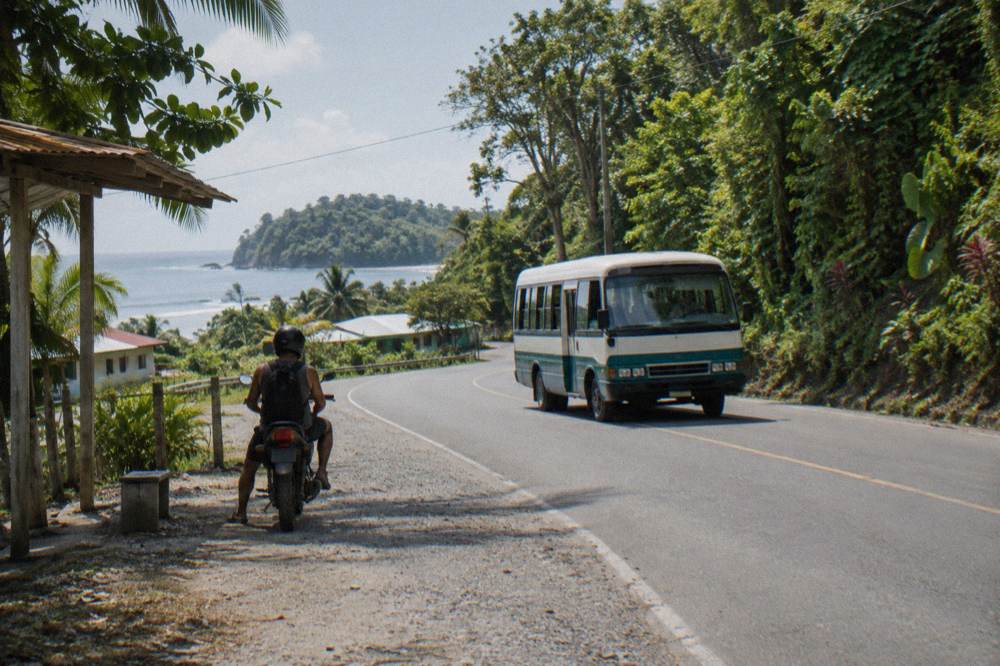
The practical links between the two are the local bus, which runs the roughly 7 km hill road frequently and cheaply, licensed taxis, and the hotel pickup listed on many tours, and most visitors end up using all three depending on the hour and the weather.
The bus is the workhorse. It runs the main road between downtown Quepos and Manuel Antonio throughout the day, stops anywhere safe along the route, and costs a fraction of a taxi. During high season the single road gets congested, per the official park information, so allow slack in timing if you have a fixed departure, a boat check-in at the marina, for instance. Buses fill up around park opening time; that is a crowding fact, not a safety one, but it decides whether you stand or sit. If that marina check-in is for a charter, the best months for fishing around Quepos and Manuel Antonio will tell you when a day on the water actually pays off.
For arrivals from San José, the scheduled options have been stable: the Tracopa bus site lists multiple daily departures from San José toward Quepos and Manuel Antonio, with early morning slots among them, and SANSA's official page confirms daily direct flights between San José and Quepos La Managua airport, a flight of roughly 30 minutes. Details live in the San Jose to Manuel Antonio transport guide. Always re-check the operator pages for the current timetable, as schedules adjust with the season and without fanfare.
The table below summarizes the local options as a planning sketch, not a price promise:
| Option | Route | Good for | Watch for |
|---|---|---|---|
| Local bus | Quepos downtown to Manuel Antonio main road | Cheap, frequent daytime hops | Congestion in high season; standing room at peak |
| Licensed taxi | Door to door, anywhere | Night travel, the hill road, luggage | Agree fare or use meter before departure |
| Hotel pickup on a tour | Hotel to trail, dock or reserve | Removing the walk entirely | Only where the listing states pickup |
| Walking | Downtown Quepos core | Errands, market, marina road | Patchy lighting and sidewalks off the core |
Tours With Hotel Pickup For Safety-Conscious Travelers
Across this site, a meaningful share of listings state hotel pickup on the listing itself, and for a traveler whose main worry is walking or negotiating transport, choosing one of those converts every logistics decision into a single door-time appointment. Pickup claims appear here only where the listing says so; where a listing does not state pickup, check the listing for transport rather than assuming. The three below are among the most straightforward examples from different corners of the catalogue.
The sailing trip with lunch and open bar, rated 4.7 from 653 reviews and priced from $95 per person for 3 hours 30 minutes, lists hotel pickup and drop-off, lunch, unlimited drinks and snorkel gear. It is a simple proposition: you are collected, taken out on the water, and returned.
The second is a different genre entirely. The Damas Island boat tour with a naturalist and binoculars, rated 4.5 from 440 reviews and priced from $68 per person for 4 hours, lists transportation, a meal and drinks after the tour, and it replaces walking with a boat: you drift the mangrove channels with a captain and guide. For travelers who want the forest without a trail, this is the catalogue's clearest answer.
The third is after dark. The naturalist-led night walk, rated 4.9 from 336 reviews and priced from $55 per person for 2 to 2.5 hours, lists the private reserve entrance fee, flashlights and a naturalist guide, with hotel pickup and drop-off if that option is selected.
A comparison of the three pickup-listed options:
| Tour | Rating and reviews | From (per person) | Duration | Stated inclusions |
|---|---|---|---|---|
| Sailing trip with lunch and open bar | 4.7 from 653 | $95 | 3 hours 30 minutes | Hotel pickup and drop-off, lunch, unlimited drinks, snorkel gear |
| Damas Island boat with naturalist | 4.5 from 440 | $68 | 4 hours | Transportation, meal, captain, drinks after the tour |
| Naturalist night walk | 4.9 from 336 | $55 | 2 to 2.5 hours | Entrance fee, flashlights, hotel pickup if option selected |
Note what the table cannot tell you: group feel, guide personality, and whether a given date suits your energy level. Reviews on each live listing fill that gap better than any summary. All three list free cancellation, which lowers the stakes of booking ahead while you are still deciding how much of Quepos you want to walk at all.
What To Do If Something Goes Wrong
If something is lost or stolen, the sequence is: cancel cards immediately through your bank's app, file a report with the local police so your insurer has a paper trail, and tell your hotel front desk, which handles this routine dozens of times a year and knows exactly where the station is and how the process works. For medical issues, Quepos has local clinics and pharmacies in the flat downtown core, and your travel insurance's assistance line should be your first call for anything beyond a minor complaint; keep that number in your phone and on paper.
A few preparations make any incident smaller. Photograph your passport and keep a copy separate from the original. Carry a day's worth of cash rather than a trip's worth, and use the hotel safe. Save your embassy's contact details before you travel, and check your government's current travel advisory for Costa Rica as part of your planning, since advisories are updated on a schedule this page is not. None of this is Quepos-specific; it is the standard kit for any coastal destination.
On the road side, the pattern is similar. Route 34 and the Quepos access road had no posted closures or alerts in the latest month on record, with the ministry's announced works described as ongoing long-term projects elsewhere on the coastal highway. If you are driving in from San José, the practical notes in the transport guide cover current schedules; if a road event does occur, local sources and your hotel will know long before any English-language site does.
Finally, the honest closing thought. Quepos rewards the same ordinary attention that any town does: daylight for the long walks, taxis after dark, nothing valuable left unattended, and a front desk you actually ask. And for the days when you would rather not walk at all, there is a tour with your pickup on it.
Common Questions About Walking Around Quepos
Is It Safe To Walk Around Quepos, Costa Rica?
No article can honestly issue a verdict, and this one will not. The practical picture: Quepos is a compact, busy service town where the reported frictions are opportunistic theft and taxi overcharging, and standard daylight habits cover most situations. Walk the central core and marina road by day, keep night walks short and lit, take licensed taxis for the hill and late evenings, and check your government's current travel advisory before travel.
Is the walk from Quepos to Manuel Antonio doable on foot?
It is about 7 km, uphill and winding, on a busy road with inconsistent sidewalks, and the park's own information notes the single road gets very congested in high season. Most visitors treat it as a bus or taxi road. Walking downhill into town is reasonable; walking up after dark is not the plan anyone recommends.
Are taxis in Quepos safe to use?
Use licensed taxis, ask your hotel to call one when in doubt, and agree the fare or confirm the meter before the door closes. The Quepos to Manuel Antonio run is a known fixed route, so your hotel can give you the current going fare as a reference before you ride.
Can I avoid walking entirely by choosing the right tour?
Largely, yes. Many listings on this site state hotel pickup, including the sailing trip with lunch and open bar from $95 per person, the Damas Island boat with a naturalist from $68 per person and the naturalist night walk from $55 per person. Where a listing does not state pickup, check the listing for transport options rather than assuming.
Is Quepos safe for solo travelers?
Solo travelers walk Quepos daily between hotels, restaurants and shops. The same habits apply as for anyone: daylight for longer routes, valuables out of sight, structured evenings, and a hotel front desk you actually consult. No statistical claim appears here; general habit advice is what honest sources support.