What Happens If You Fall Off While White Water Rafting?
Swim position, safety kayakers and how guides recover swimmers on the Savegre and Naranjo rivers near Manuel Antonio, with what the listings actually include.
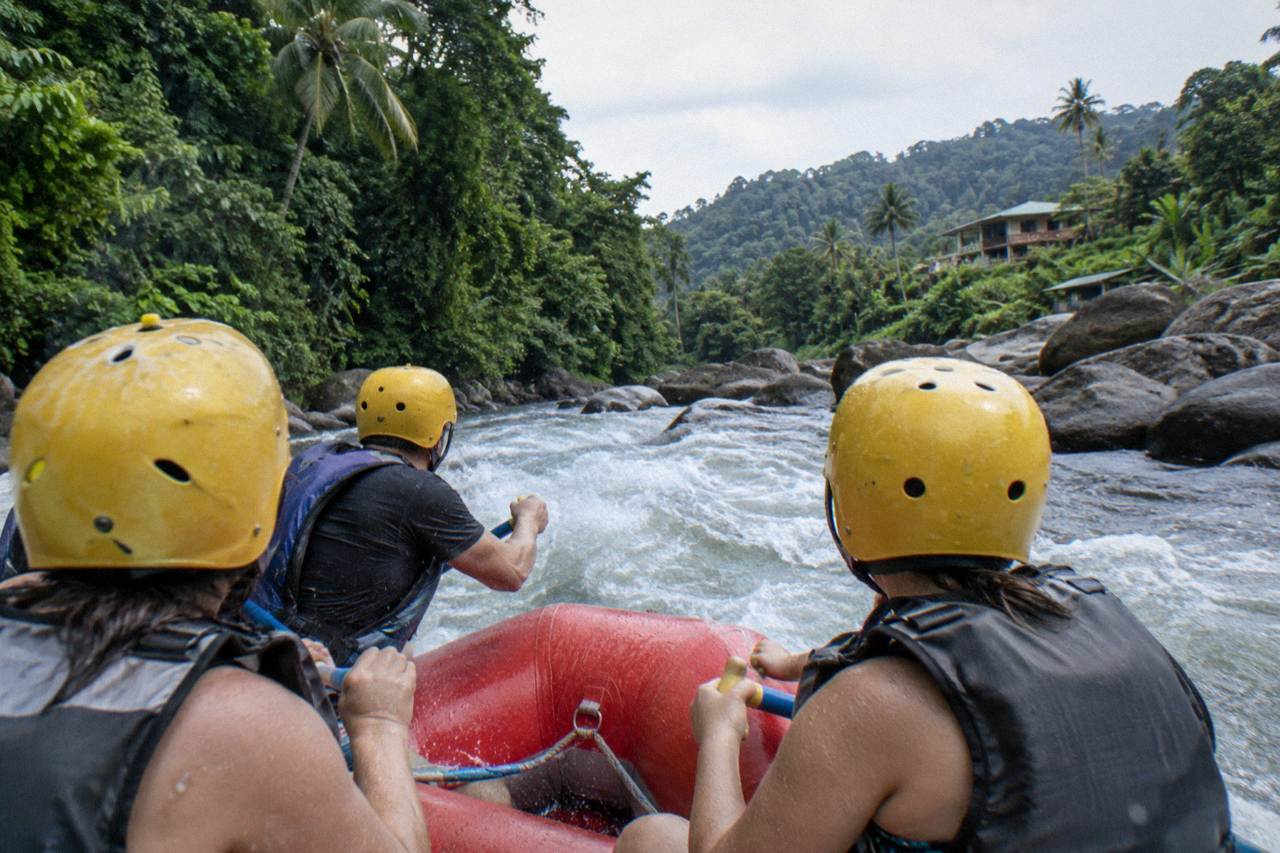
Almost every rafter who has spent a season on the rivers near Manuel Antonio has been in the water at least once. On the Savegre River trip from Quepos, rated 5 from 831 reviews and priced from $129.95 per person, going overboard is treated as a normal event with a rehearsed response before the boat ever leaves shore, not an emergency. The short version of what happens: you float on your back, feet pointed downstream, and the crew brings you back to the raft in seconds. If you're planning this trip with children, the parent's guide to Class 3 rapids and family age limits explains what the rapids actually feel like and how to read a rafting listing before you book.
That single fear, falling in, is the most common reason travelers hesitate to book a rafting trip at all. It helps to separate the movie version of whitewater, where swimmers vanish into foam, from the operational reality: commercial trips on rivers like the Savegre run the same stretches daily with professional guides, safety equipment and a scripted rescue sequence. The listing for the Savegre trip includes a professional guide, helmet use, snacks, lunch and hotel pickup from selected hotels, which is the standard support package for a commercial run.
The two whitewater products on this site give a useful picture of the local range. The Savegre trip, Class II to III water per its own listing title, runs about 6 hours with lunch and a waterfall stop. The Naranjo River trip from Quepos, rated 5.0 from 166 reviews and from $120 per person, packs its whitewater into a 4-hour window with snacks but no lunch. Neither listing promises a swim, and neither needs to: the recovery routine is part of the service either way.
How Guides Get A Swimmer Back In The Raft
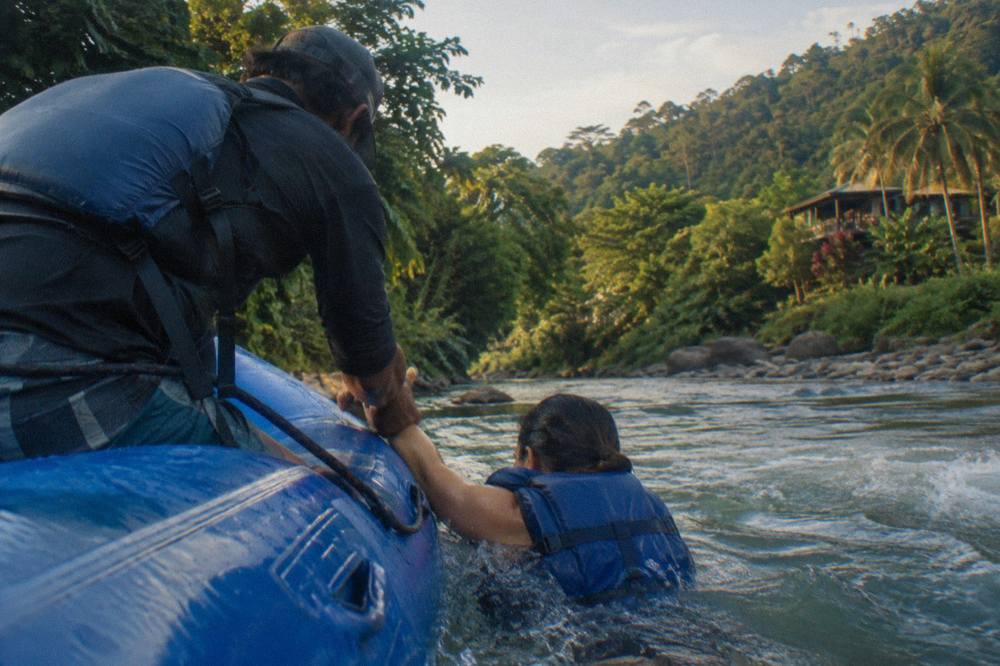
The standard recovery has three moves: the swimmer assumes the whitewater float position, the guide or a safety kayaker positions the raft or kayak within reach, and the crew hauls the swimmer over the tube by the shoulder straps of the life jacket. Guide trainings repeat this sequence until it takes less than a minute on moving water.
When someone goes over the side, the first voice they hear is their guide's, calling a direction: swim right, swim left, or hold position. The guide is steering the raft toward the swimmer while the remaining paddlers keep the boat from spinning broadside. On commercial runs the raft itself is the primary rescue craft, and the guide's job is to close the gap quickly so the swimmer is never floating alone for long.
The physical haul back in matters more than people expect. A swimmer in the water cannot climb a slick, rounded raft tube unaided, so the crew grips the life jacket at the shoulders and lifts while the swimmer kicks. Fighting the pull, or trying to grab paddles instead of the jacket handles, is what makes recoveries messy.
Some runs add a safety kayaker or a second boat on the more energetic sections. The listing for the Savegre trip names a driver and guide with helmet use and equipment included, and operators in the region commonly describe safety paddlers on the water during high-flow months. Ask the operator directly when booking whether a safety kayaker accompanies your departure; the listings flag equipment and staffing, and specific on-water staffing can vary by river level and date.
What The Whitewater Float Position Actually Is
The float position is feet up, feet first, aimed downstream, arms out for balance, back of the head toward the sky. It protects your head and face from rocks because your legs, not your skull, meet obstacles first, and it lets the current carry you while the raft closes in.
Guides teach it on land before launch, and the teaching is blunt: if you are in the water, you are not swimming to shore, you are floating in position until the crew reaches you. Swimming aggressively toward a bank in a rapid is how rafters end up in strainers, the fallen trees and debris at the river's edge that water passes through but people do not. The middle of the channel, where the raft already is, is the safe place to be.
Two mistakes cause most of the trouble, and both involve abandoning the position. The first is standing up in moving water, which can pin a foot between rocks and turn the current into a lever against your leg. The second is panicking and fighting the water instead of breathing on the back-float rhythm. Briefings repeat feet up, feet first like a drumbeat precisely because these two instincts are strong.
The Naranjo River trip listing includes life vests, helmets and paddles in its equipment, plus a professional guide and an air-conditioned vehicle. That is the standard kit that makes the float position workable: the vest holds your head above water, the helmet covers the rest. If a listing does not state equipment clearly, check the listing before booking rather than assuming.
Which Rivers Near Manuel Antonio Do Commercial Trips Use?
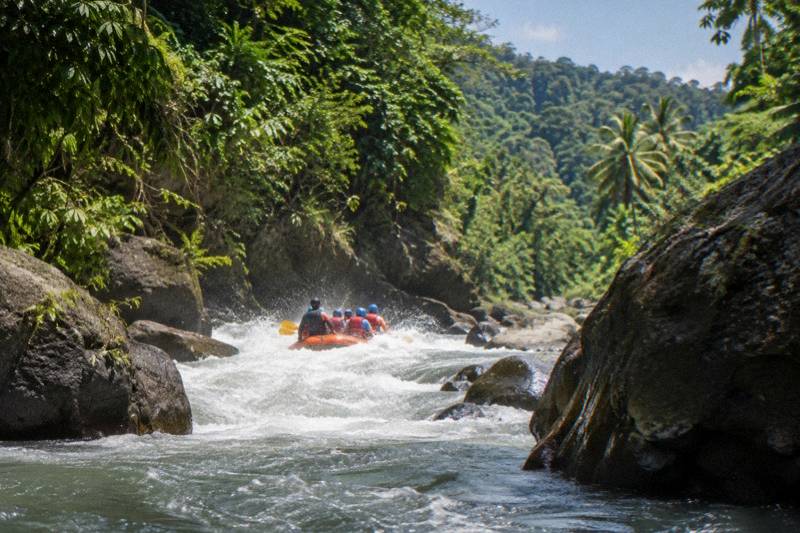
Two rivers carry the commercial whitewater traffic from Quepos and Manuel Antonio: the Savegre, a Class II to III run per the listing title with a roughly 6-hour trip format, and the Naranjo, a tighter 4-hour run from Quepos rated 5.0 from 166 reviews. Both are pool-and-drop style rivers where recovery distances are short.
The Savegre drains forested hills south of the Ruta 34 corridor, and its listing is the fuller day out: from $129.95 per person, hotel pickup from selected hotels, lunch, snacks, all taxes and fees handled, plus a waterfall stop that breaks up the paddling. At 831 reviews and a 5 rating it is the most reviewed rafting product on this site, which matters for a nervous first-timer scanning for a trip with a long track record.
The Naranjo is the quicker hit. Its listing shows from $120 per person, 4 hours, snacks and a professional guide, departing from Quepos, with lunch and photos sold separately. The listings do not print a class rating for the Naranjo trip, and the region's guide pages describe its El Chorro section as typically Class III-IV, with some runs limited to the dry season; check the listing for the section and season your departure actually runs before assuming difficulty.
| Trip | Rating and reviews | Price from | Duration | Meals listed | Pickup listed |
|---|---|---|---|---|---|
| Savegre Rafting, Waterfall Stop | 5 from 831 reviews | $129.95 per person | 6 hours | Lunch and snacks | Yes, selected hotels |
| Naranjo River Whitewater | 5.0 from 166 reviews | $120 per person | 4 hours | Snacks | Not stated, check the listing |
| Zipline and Canyoning Combo | 5 from 842 reviews | $158.20 per person | 6 hours | Lunch and snacks | Yes, selected hotels |
The third row is deliberate. Plenty of groups booking rafting near Manuel Antonio mix water days with canopy days, and the Waterfall Ziplining and Canyoning combo at ADR Adventure Park, from $158.20 per person with a 5 from 842 reviews, is the site's non-rafting alternative when someone in the party decides moving water is not for them. Siblings on the site cover the same decision in more depth, including the Savegre River rafting guide and the broader Manuel Antonio rafting tours comparison.
What The Safety Briefing Covers Before Launch
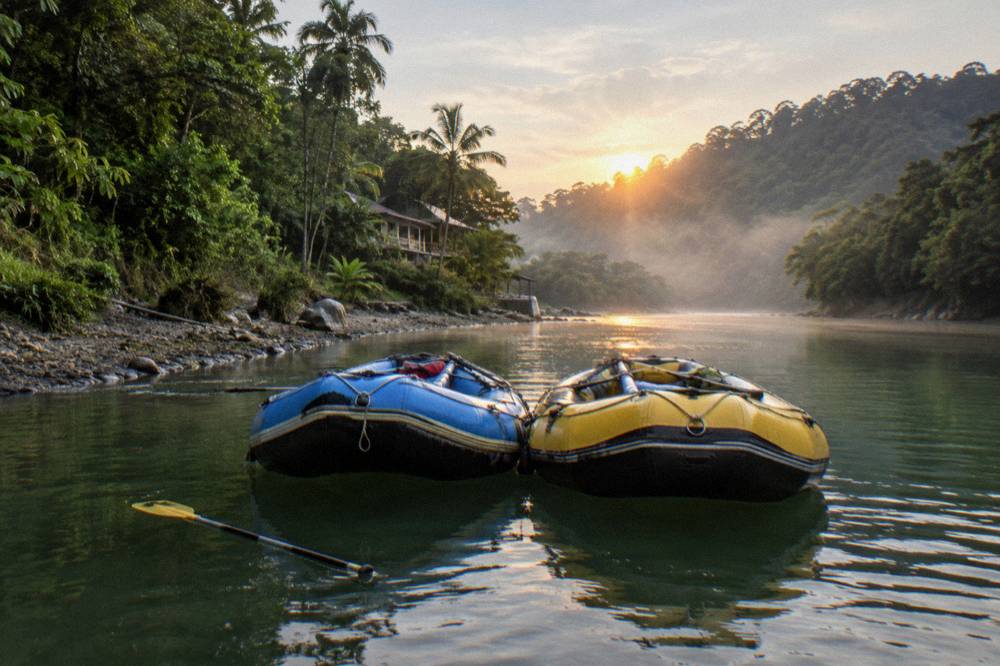
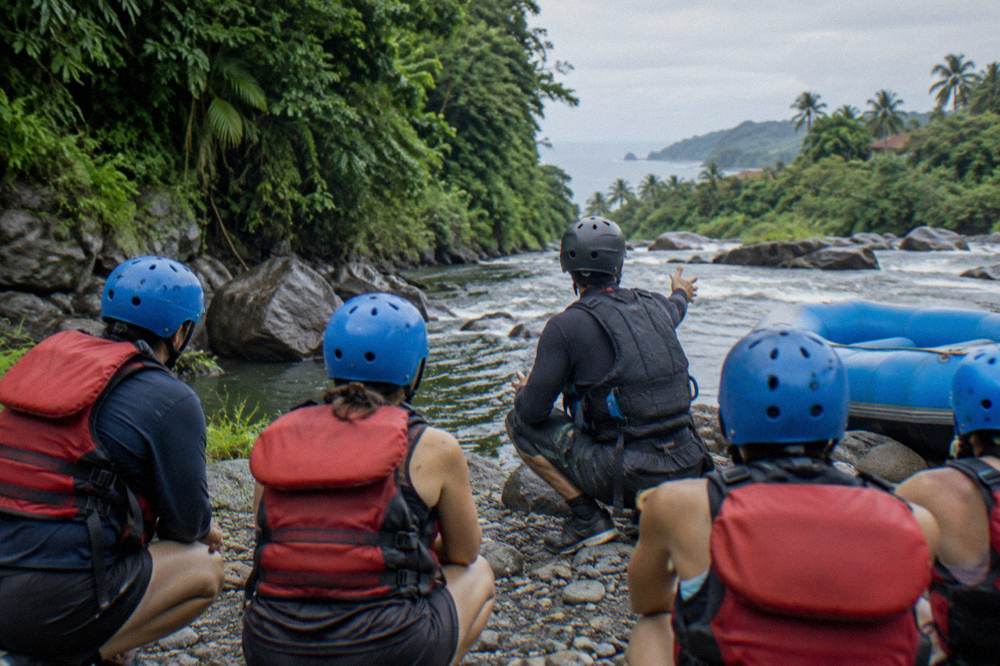
Every commercial trip in this region runs a land briefing before the first rapid, and it covers four things: how to sit and brace in the raft, what the paddle commands mean, the swimmer float position, and the hand signals for raft to raft. The briefing is also your chance to test the life jacket fit while the crew can still adjust it.
Paddle commands are the part guests underestimate. Forward, back-paddle, stop and down are called loudly and repeated by the crew, and the reason a guide drills them is that a raft holding six synchronized paddlers rarely flips, while a raft of six people doing six things often does. The briefing is less about rescue and more about not needing one.
The jacket and helmet fitting is worth taking seriously rather than rushing through. A vest riding high on the chest will ride up over your face in the water; a loose chin strap on a helmet makes the helmet decorative. Ask the crew to check your fit, and if a piece of gear feels wrong, that moment on the bank is the moment to say so, not mid-rapid.
It is fair to ask an operator a short list of questions before booking, and good operators answer them plainly: how many guides are on the water per raft, whether a safety kayaker accompanies the trip, what the operator's stated age, weight and fitness limits are, and what the cancellation and refund policy is when the river is too high or too low to run.
When Do Operators Cancel Or Move A Rafting Trip?
Operators cancel or reroute rafting trips when river levels leave the safe window, and regional guide pages describe Savegre operators modifying or canceling sections in heavy September and October flows. The Savegre listing carries free cancellation, and the standard pattern is a full refund or a reschedule decided the evening before or the morning of the trip.
River levels are the one input no operator controls. The Savegre typically runs Class II to III near Quepos, with green-season rains from May to November raising flows, and operator pages describe heavy September-October rain occasionally pushing sections toward III-IV and prompting section changes for safety. Dry-season months from December to April bring lower, clearer water. No public hydrological bulletin publishes daily river levels for these runs, which is why the operator's own call, made the morning of the trip, is the authoritative one.
The national weather service publishes what it can. An IMN meteorological advisory of 21 October 2026 flagged intertropical convergence moisture with estimated 25 to 50 mm afternoon rain totals in the Central Pacific and saturated soils, the exact conditions that push rivers up (IMN aviso IMN-211026). The same institute's seasonal outlook expects the Central Pacific dry season to start between 13 and 30 November 2026, reported by La Nación (La Nación, 20 October 2026). Translated for a rafter: the green season's biggest water is behind you by late November, and the dry season's steadier levels follow.
The drive matters less than people fear. Both rafting listings depart from the Quepos area, and the national roads authority's news page shows no closure or alert affecting Ruta 34 or the 618 spur to Manuel Antonio in the late-September-to-late-October 2026 window; the works of record are slope and bridge projects along the same coast road (MOPT, 30 September 2026). Transportation on the Savegre trip is listed as hotel pickup and drop-off from selected hotels, which removes the driving question entirely for most guests.
What To Wear And What To Ask Before You Book
Wear a swimsuit or quick-dry shorts, a secure sandal or water shoe with a heel strap, and a rash guard or light shirt for sun; bring a change of dry clothes for the ride home. Leave cotton, loose flip-flops and valuables at the hotel, and ask the operator where keys and phones go, because rafts do not have lockers.
The clothing list is short because the equipment list covers the rest. Helmet and vest come with the trip on both rafting listings. What ruins days is the small stuff: sunglasses without a strap, phones in unzipped pockets, cotton hoodies that stay waterlogged and cold. A dry bag in the support vehicle is the standard solution, and the Naranjo listing includes an air-conditioned vehicle and the Savegre listing a driver/guide with pickup, so a dry change of clothes waiting at the takeout is a real comfort rather than a plan.
Questions worth asking before booking cluster around two themes. On staffing: how many guides per raft and is there a safety kayaker. On weather: what happens to your payment if the trip cancels for river level, and the Savegre listing carries free cancellation, so read its terms on the booking page before you commit a date.
Nervous first-timers often benefit from the framing question rather than the equipment question. The site's own deeper dive, is white water rafting good in Costa Rica, works through the value case, and families weighing the water with younger kids can read the site's take on rapid ratings and children. The short answer to most nerves: the Savegre's Class II to III character, per its listing title, is the entry tier of whitewater, and the 831-review track record at a 5 rating tells you how those trips have gone for guests before you.
Does Falling In Ruin The Trip?
For most guests the opposite happens: an honest swim, handled by the crew in under a minute, becomes the story of the day and the reason they trust the second half of the run.
The psychology is worth naming. Fear of falling in is really fear of the unknown seconds between leaving the raft and rejoining it, and everything in this article, the float position, the guide's voice, the jacket haul, shrinks that gap to something the mind can hold. Guests who expected terror and got a supervised dunking usually re-rate the whole river upward, and guides know it, which is why many crews run a deliberate practice swim in a calm pool when conditions allow.
There is a real boundary, and honest coverage states it. Whitewater is a moving-water environment, and no operator or article can promise a risk-free run, a sighting, a river level or a sea state. What the listings support saying is concrete: professional guides, helmets, vests and rehearsed recoveries are standard on both local trips, the Savegre carries free cancellation, and the region's operators cancel rather than run unsafe water. The rest of the margin comes from listening on the briefing bank and floating, not fighting, if the river claims you.
Common Questions About Falling Off While White Water Rafting
What Happens If You Fall Off While White Water Rafting?
You float on your back, feet up and pointed downstream, and the guide brings the raft to you while the crew hauls you in by the life jacket shoulders. On commercial runs near Manuel Antonio the recovery is rehearsed and usually takes under a minute.
Will I fall out of the raft?
Plenty of guests never leave the boat, and some do, especially on the livelier sections. Operators treat a swim as a normal event with a scripted response, which is why the pre-launch briefing covers the float position every single trip.
Is white water rafting safe for non-swimmers?
Check the listing for each trip's stated requirements and be honest on the medical and swimming questions the operator asks.
What is the whitewater swim position?
Feet up, feet first, aimed downstream, arms out for balance, back of your head to the sky. Never stand in moving water, because a pinned foot is the danger the position exists to prevent.
Which river trip is better for a first-timer near Manuel Antonio?
The Savegre trip, Class II to III per its listing title, 6 hours with lunch and a waterfall stop, from $129.95 per person and rated 5 from 831 reviews, is the fuller and most-reviewed introduction. The Naranjo trip, from $120 per person and 5.0 from 166 reviews, is the shorter format.
Do rafting trips get cancelled for high water?
Yes. Operators modify or cancel sections when river levels leave their safe window, most often in the wettest September and October weeks, and the Savegre listing carries free cancellation. The operator's same-morning call is the only reliable level report, since no public bulletin publishes daily river levels.