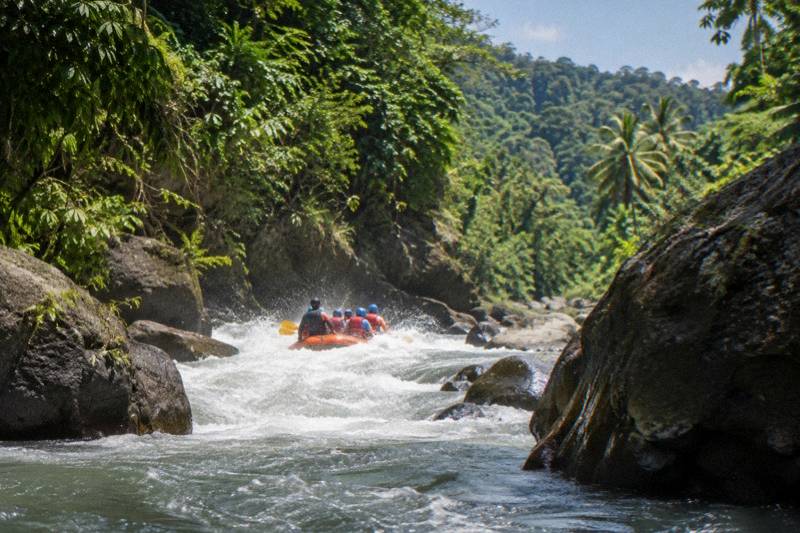
Is White Water Rafting Good In Costa Rica?
An honest look at white water rafting near Manuel Antonio and Quepos: which rivers run, what difficulty to expect, safety questions to ask, and who should skip the paddle.
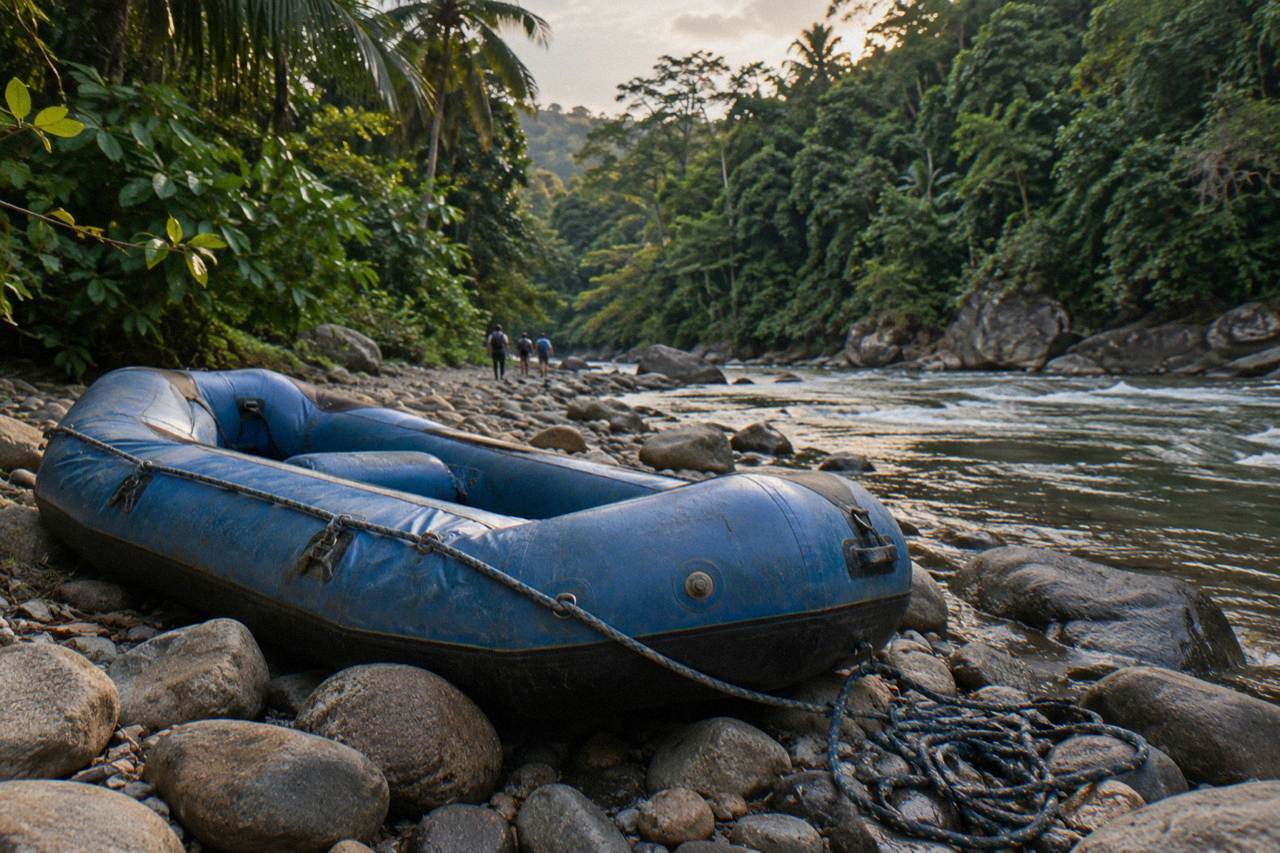
Yes, and the region around Manuel Antonio and Quepos is one of the more convenient places in the country to test that claim. Two raftable rivers sit within a short drive of town, the Savegre River whitewater trip with a waterfall stop is rated 5 from 831 reviews at from $129.95 per person, and the Savegre operator builds hotel pickup, lunch and gear into the price. The honest caveats are seasonal water levels and your own comfort on moving water. If rafting is just one item on your list, the honest guide to whether Manuel Antonio earns its reputation weighs what the area offers against what it costs.
Costa Rica rafting gets talked about as a national institution, and around Quepos that talk has a physical basis. The Savegre and Naranjo rivers both drain the coastal mountains east of town and reach the Pacific within a single half-day outing, which is unusual. In most rafting destinations you sign up for a full logistics expedition; here, the Manuel Antonio rafting tours leave from your hotel area, run a stretch of river, feed you, and have you back before dinner. The Savegre trip is a 6 hour affair from $129.95 per person, rated 5 from 831 reviews, with pickup listed for selected hotels, lunch, snacks, taxes and helmet use included, and free cancellation listed. The Naranjo River whitewater trip from $120 per person compresses the same idea into 4 hours, rated 5.0 from 166 reviews.
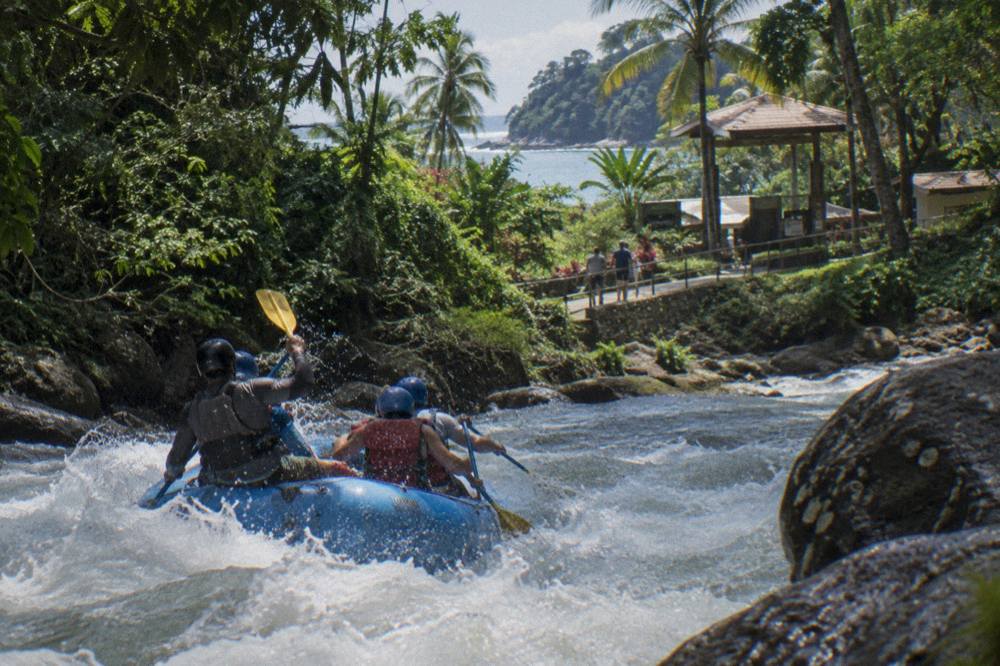
What "good" means deserves a sentence of unpacking, because rafting quality is three different questions wearing one hat. Is the scenery good? Near Quepos, unambiguously: both rivers run through rainforest, and the Savegre trip adds a waterfall stop that breaks up the paddling. Is the whitewater good? That depends on the month, because river levels here swing with the green season rather than dam releases. Is the operation good? The listings themselves carry the answer: certified guides, helmets and vests on the Naranjo line's includes list, professional guide and full gear on the Savegre line, and free cancellation on both. Both listings state a lot of inclusion for the money.
One framing note before the details. If your question is really "is this a good family activity" or "am I going to fall in", those get their own sections below, because the answers differ by river and by operator policy. What the record supports plainly: this is a mature, regularly reviewed activity here, with review pools in the hundreds and the eight-hundreds, not a fringe adrenaline product with twelve reviews and a leap of faith.
Which Rivers Near Quepos Can You Raft?
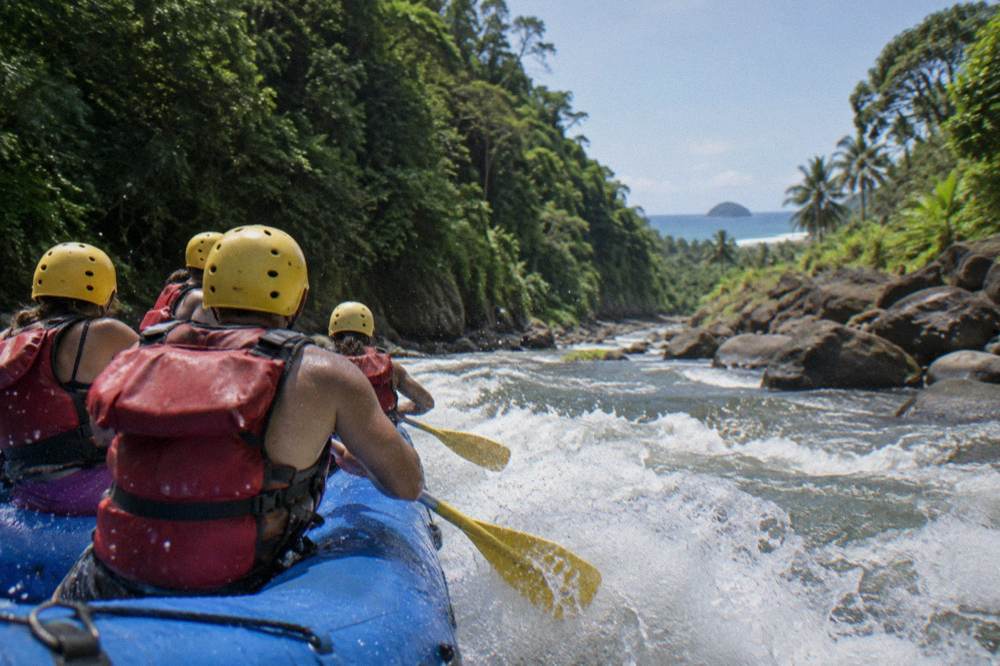
Two rivers carry commercial rafting trips out of the Quepos and Manuel Antonio area: the Savegre River and the Naranjo River. The Savegre trip is the longer day, 6 hours from $129.95 per person, rated 5 from 831 reviews, on water the listing itself describes as Class II-III plus a waterfall stop. The Naranjo trip is the shorter hit, 4 hours from $120 per person, rated 5.0 from 166 reviews. And if you're wondering what a swim on either river looks like, what happens if you fall off while white water rafting explains how guides and safety kayakers get you back in the raft.
The Savegre drains a large watershed south of the Naranjo, and its character shows that: the listing names it a Class II-III run, which in rafting language means continuous splashy water with defined rapids rather than big drops. Six hours sounds long, but that figure includes hotel pickup from selected hotels, the drive to the put-in off the road at Km 2 outside Quepos, a snack, the run itself, a waterfall stop, and lunch. The includes list on the listing is unusually complete: all taxes and fees, snacks, driver and guide, helmet use, lunch. Gratuities and souvenir photos are sold separately. Free cancellation is listed.
The Naranjo River trip is the local's shortcut. It departs from C. 4 in Quepos, runs 4 hours from $120 per person, and its includes list names snacks, a professional guide, an air-conditioned vehicle, and vests, helmets and paddles. Photos are a separate purchase, as is lunch. Its review pool is smaller, 5.0 from 166 reviews, which is still a real pool and not three friends and a cousin. Pickup is not stated on the listing, so check the listing for transport rather than assuming it.
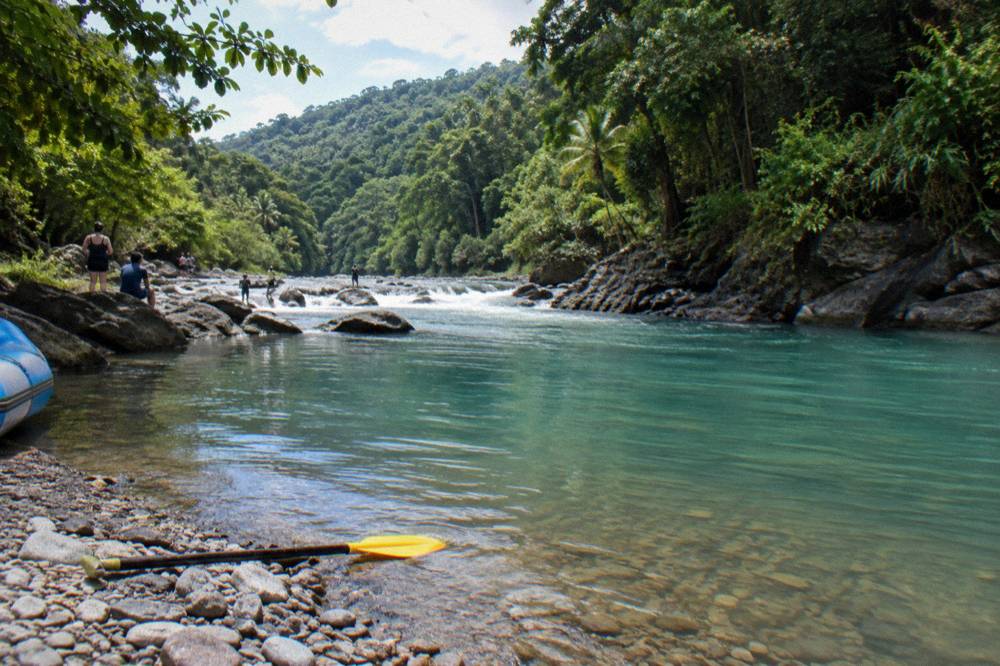
A third option belongs in this conversation even though it is not rafting, because it solves the group problem. The Waterfall Ziplining and Canyoning combo at ADR Adventure Park, from $158.20 per person over 6 hours, rated 5 from 842 reviews, departs from the same Km 2 road area and bundles ziplines, canyoning, lunch, snacks, all activities and pickup from selected hotels. When half a party wants to paddle and the other half absolutely does not, splitting the group between a river and a canopy course that leave from the same zone is a workable day. The dedicated Savegre River rafting guide on this site goes deeper on that watershed if the longer trip is the one you are weighing.
If the Savegre day is the one already pulling at you, the booking question is simple: dates around the seasonal transition go fast, and both rafting listings here carry free cancellation, so reserving early and adjusting later costs nothing but a few minutes.
| Trip | Price from | Duration | Rating and reviews | Listed inclusions |
|---|---|---|---|---|
| Savegre rafting plus waterfall | $129.95 per person | 6 hours | 5 from 831 reviews | Pickup (selected hotels), lunch, snacks, taxes, helmet |
| Naranjo River whitewater | $120 per person | 4 hours | 5.0 from 166 reviews | Snacks, guide, transport, vest, helmet, paddle |
| Waterfall ziplining and canyoning (ADR) | $158.20 per person | 6 hours | 5 from 842 reviews | Pickup (selected hotels), lunch, snacks, all activities |
Is The Savegre Or The Naranjo Better For A First Timer?
For a first rafting trip, the Savegre listing is the easier one to reason about, because it names its water: Class II-III. The Naranjo listing does not state a class rating, so a cautious first-timer should ask the operator directly what the day's section and level will be. The Savegre's 831-review pool at a 5 rating, six-hour pace and included lunch also suit a nervous beginner better than a compressed four-hour run.
Class ratings are the honest shorthand here. The Savegre listing itself says Class II-III, which is beginner territory with enough texture to stay interesting. Guide pages for the river add seasonal nuance: green season flows can push individual rapids harder, and operators modify or cancel sections for safety when water is high, which is standard practice and a good sign rather than a bad one. The Naranjo is described in general seasonal guides as typically Class III-IV on sections like El Chorro, with some sections limited to the dry season, but the Naranjo listing states no class, so treat those guide-page characterizations as context and ask the operator's booking page what section you are buying. That single question, "which section and what class today", is the best first-timer question in this whole article.
How Difficult Are The Rapids, Really?
A Class II-III run like the Savegre listing describes means steady waves, rock gardens you steer around, and a real chance of getting wet without a mandatory swim. Class III is the rating most healthy adults can do on their first day. Class IV, which guide pages attribute to Naranjo sections in season, expects prior rafting experience or at least a confident swimmer's attitude, and operators judge who boards.
The numbers only carry you so far, so here is the texture. Class II water is read-and-paddle: the guide calls strokes, the raft bounces, everyone laughs. Class III adds consequence, a hole or a wave train that can and occasionally does put a swimmer in the water, which is why the pre-trip safety talk covers swimming position, grabbing the outside rope, and getting hauled back in. Class IV narrows the margin for error and most commercial outfitters worldwide screen paddlers for it. The Savegre trip's own description, Class II-III with a waterfall stop, sits in the sweet spot: enough to earn the word "whitewater".
Season changes the honest answer more than the class number does. River levels on both the Savegre and the Naranjo swing between the green season, roughly May to November, and the dry season, roughly December to April. Guide pages for the Savegre describe green-season flows energizing the run, potentially toward harder ratings in heavy September and October rain, with operators adjusting for safety; dry-season months run lower and gentler. No river-level bulletins are published for either river: nobody publishes a Savegre gauge you can check from your sofa, so the operator's same-day judgment is the live information. Ask them.
Is White Water Rafting Safe For Beginners And Families?
The listings support a yes with conditions. Both rafting trips carry free cancellation, name professional guides and helmets in their includes, and hold 5.0-range ratings across combined review pools of about a thousand guests. Safety is not a statistic any honest publisher can print, though: the Savegre listing states a minimum age of 6 and the Naranjo listing 12; read each operator's weight and fitness terms before booking children or anyone with a health condition.
The honest framing is that commercial rafting is an engineered risk. Guides are trained, gear is issued, and the pre-trip talk exists precisely because swimmers happen. The Savegre listing includes a professional driver-guide and helmet; the Naranjo listing includes a professional guide plus vests, helmets and paddles; both list free cancellation, which matters because it lets you back out on the morning if the sky looks wrong without eating the cost. The blog companion piece on zip line safety in Costa Rica covers the same operator-vetting questions for the canopy side, and the zipline tours guide names which listings bundle both activities.
Three questions separate a well-run trip from a mediocre one anywhere in the world, and Costa Rica is no exception. Ask who checks the gear and how often harnesses, helmets and vests are retired. Ask how many guides ride with a full raft and whether a safety kayaker follows on higher water. Ask what the operator's own stated weight, age and swimming requirements are, and treat a vague answer as an answer. None of this is unique to the country, but it is the checklist that turns "is it safe" from a vibe into a decision. That same habit of asking pointed questions serves you well once you're off the river too, and this plain-spoken guide to walking around Quepos safely covers which parts of town feel easy on foot and what to skip after dark.
What Does A Rafting Trip Cost And What Is Included?
The two rafting listings here run from $120 per person on the Naranjo, 4 hours, and from $129.95 per person on the Savegre with waterfall stop, 6 hours. Both prices carry real inclusions: the Savegre line lists pickup from selected hotels, lunch, snacks, taxes and helmet; the Naranjo line lists transport, guide, snacks and full paddle gear. Souvenir photos and gratuities are sold separately on both.
That is a thin slice of the local adventure market, usefully so. The full catalogue around Manuel Antonio spans from $23 per person for a two-hour park walk to $158.20 per person for the zipline and canyoning combo, with rafting sitting in the upper middle, more than a catamaran day, less than a Nauyaca waterfall full day at $155 per person. The tour prices guide breaks the whole ladder down. Two comparisons help position rafting honestly. The Nauyaca Waterfall Tour, 7 hours from $155 per person, rated 5 from 456 reviews, is the non-paddling waterfall day: entrance fees, lunch, snacks and an air-conditioned vehicle, no rapids. And the Damas Island mangrove boat with lunch, from $75 per person over 4 hours, rated 4.9 from 2,910 reviews, is flat water with wildlife instead of waves, which is the right rafting substitute for anyone whose doctor would frown at paddling.
| Activity | Price from | Duration | Water | Rating and reviews |
|---|---|---|---|---|
| Damas Island mangrove boat with lunch | $75 per person | 4 hours | Flat, mangrove | 4.9 from 2,910 reviews |
| Naranjo River whitewater | $120 per person | 4 hours | Whitewater | 5.0 from 166 reviews |
| Savegre rafting with waterfall | $129.95 per person | 6 hours | Whitewater, Class II-III | 5 from 831 reviews |
| Nauyaca Waterfall Tour | $155 per person | 7 hours | Swim at falls | 5 from 456 reviews |
When Is The Best Season To Raft Near Manuel Antonio?
Green season, roughly May to November, brings higher water and livelier rapids on both rivers; dry season, roughly December to April, brings lower, gentler runs and more reliable sun. The Central Pacific dry season is projected to start between 13 and 30 November 2026, so a December through March trip buys calm conditions, while a September trip buys the biggest water with the highest chance of a rerouted or adjusted run.
The rainfall record for Quepos makes the swing vivid: the town averages about 45.9 mm of rain in January, the heart of the dry season, while the wettest months of September and October each carry roughly ten times that on the same climate table, and November tapers off fast. Rafting guides describe green-season flows as energizing the Savegre, potentially pushing individual rapids a class harder in heavy September and October rain, with operators modifying or canceling sections for safety. Dry season inverts the picture: lower, warmer, more predictable water that suits first-timers, at the cost of some of the drama. Neither season is wrong; they are different purchases. The weather by month guide runs the full table.
The weather service's own outlook adds a timely wrinkle. Its subseasonal forecast for late October into November 2026 points to very dry conditions establishing across the Central Pacific, with the dry season projected to start between 13 and 30 November 2026, published through the IMN subseasonal outlook. A late-November or early-December booking this year therefore lands right on the transition: falling water, thinning crowds, and operators still running their green-season section knowledge. If you want the season's last big water, book the front edge of that window; if you want a gentle first run, book after it.
One road note for the drive to the put-in. Transfers to the Savegre and Naranjo use Route 34, where the public works ministry announced roughly $35 million in slope stabilization and bridge works on the Ruta Nacional 34 program, including the Parrita and Savegre crossings. Those works are described as ongoing strategic projects with no closure alerts issued in the last month of checking, so plan a normal transfer window and let the operator's pickup schedule absorb any variability.
Who Should Skip White Water Rafting?
Anyone who cannot swim confidently, is pregnant, has an unmanaged heart or back condition, or would panic rather than follow instructions under a guide's voice should choose flat water instead. The honest alternative already exists in the same catalogue: the Damas Island mangrove boat with lunch, from $75 per person, rated 4.9 from 2,910 reviews, delivers rainforest, wildlife and a meal with no rapids at all.
This section earns its bluntness because the marketing never supplies it. Rafting assumes you can hold a paddle under load, take an instruction instantly, and stay calm if the raft dips. Operators enforce this through their own age, weight and medical policies, which this catalogue does not carry and which you must read on each booking page; where the listing is silent, the honest sentence is "check the listing". A listing that will not state its limits is a listing worth skipping.
The refusal is not a consolation prize around here. The mangrove boat tours run the same rainforest corridor as the rivers do, quietly, with sloths, monkeys and birds commonly reported by guests, and the sailing trip with lunch and open drinks, from $95 per person over three and a half hours, rated 4.7 from 653 reviews, puts a non-paddling crowd on the ocean with snorkeling gear instead. Families split by courage levels do this constantly: one van to the Savegre, one van to the marina, same dinner table at 6 pm, when sunset lands about 5:10 pm in November and drifts toward 6:00 pm by July.
What Should You Bring And Ask Before Booking?
Bring quick-dry clothes, secured sandals or water shoes, a change of dry clothes for the ride home, and reef-safe sun protection; ask the operator which section runs that day, what the class is, and what the stated age, weight and swimming limits are. Everything else, helmet, vest, paddle, guide, is on both rafting listings' includes lines. Free cancellation is listed on both, so book early and re-ask questions the day before.
The packing list is short because the operators carry the technical load. What ruins days is the small stuff: a phone with no dry bag, cotton shorts that stay soaked for six hours, contact lenses under a wave. The what to bring guide covers the full regional kit, and it applies double on a river day, where everything you carry will get wet either from spray or from the swim you did not plan.
The questions matter more than the gear, and they take five minutes on the booking page. Which section runs today and at what class. How many guides per raft and is a safety kayaker along. What are your stated weight, age and medical limits. Is pickup included on my option, since the Savegre line lists pickup for selected hotels only and the Naranjo line does not state pickup at all. What is your policy if the river is too high or too low, since operators here adjust sections or cancel for safety? Any operator that answers these plainly has passed the real safety test; the one that hedges has told you something too.
By now the original question answers itself. White water rafting in Costa Rica, and specifically out of the Quepos and Manuel Antonio area, is good in the way a destination activity should be good: reachable, reviewable, priced with the gear inside the number, and honest about its dependence on the season. The Savegre trip with its waterfall stop is the fullest expression of it, and the Naranjo is the condensed one. Pick your month, ask your five questions, and the river does the rest.
Common Questions About White Water Rafting In Costa Rica
Is White Water Rafting Good In Costa Rica?
Yes, especially from the Quepos and Manuel Antonio area, where two rivers sit within a short transfer. The Savegre trip runs Class II-III water with a waterfall stop, from $129.95 per person, rated 5 from 831 reviews, and the Naranjo trip runs 4 hours from $120 per person, rated 5.0 from 166 reviews. Quality depends on season: green season brings bigger water, dry season brings gentler runs.
Which river is better for beginners, the Savegre or the Naranjo?
The Savegre listing names its water, Class II-III, which is standard beginner territory, and its 6 hour format with lunch and a waterfall stop suits a first trip. The Naranjo listing states no class rating, so ask the operator directly which section runs and at what level before booking it as a first-timer.
What is the best month for rafting near Manuel Antonio?
September and October bring the highest water and the liveliest rapids, along with the heaviest rain on the Quepos climate record. December through April runs lower and gentler. The Central Pacific dry season is projected to start between 13 and 30 November 2026, so early December lands on calm, reliable water.
Do the rafting tours include lunch and pickup?
The Savegre listing includes lunch, snacks, taxes, helmet use and pickup from selected hotels. The Naranjo listing includes snacks, a professional guide, transport and full paddle gear, and does not state hotel pickup, so check the listing for transport. Souvenir photos and gratuities are separate purchases on both.
What should I ask a rafting operator before booking?
Ask which section runs that day and at what class, how many guides ride per raft and whether a safety kayaker joins on higher water, and what the operator's own stated age, weight and swimming limits are. Also confirm the cancellation policy; both listings here carry free cancellation, which lets you re-ask everything the day before without financial risk.